A United States federal judge has ruled that President Donald Trump’s administration violated the constitutional rights of international students when it sought to punish them for criticising Israel’s genocidal war on Gaza.
In California on Friday, District Judge Noel Wise heaped criticism on the US Department of State and the Department of Homeland Security (DHS) after the agencies attempted to deport noncitizens over protected speech.
Recommended Stories
list 1 of 3Mahmoud Khalil alleges conspiracy in lawsuit against Trump officials
list 2 of 3US court affirms release of pro-Palestine scholar as legal battle continues
list 3 of 3Judge nixes Trump lawsuit alleging Harvard did not protect Jewish students
“Stated plainly, in the United States, freedom of speech belongs to the people,” Wise said in her 90-page decision. “It is not the government’s to take.”
Wise, who was appointed by former President Joe Biden, added that, in the US, speaking out about the government and its leaders was a testament to the health of the country’s democracy.
“That strength is diminished when members of our society — citizens and noncitizens alike — must self-censor and ‘behave’ or suffer the government’s retaliation,” she said.
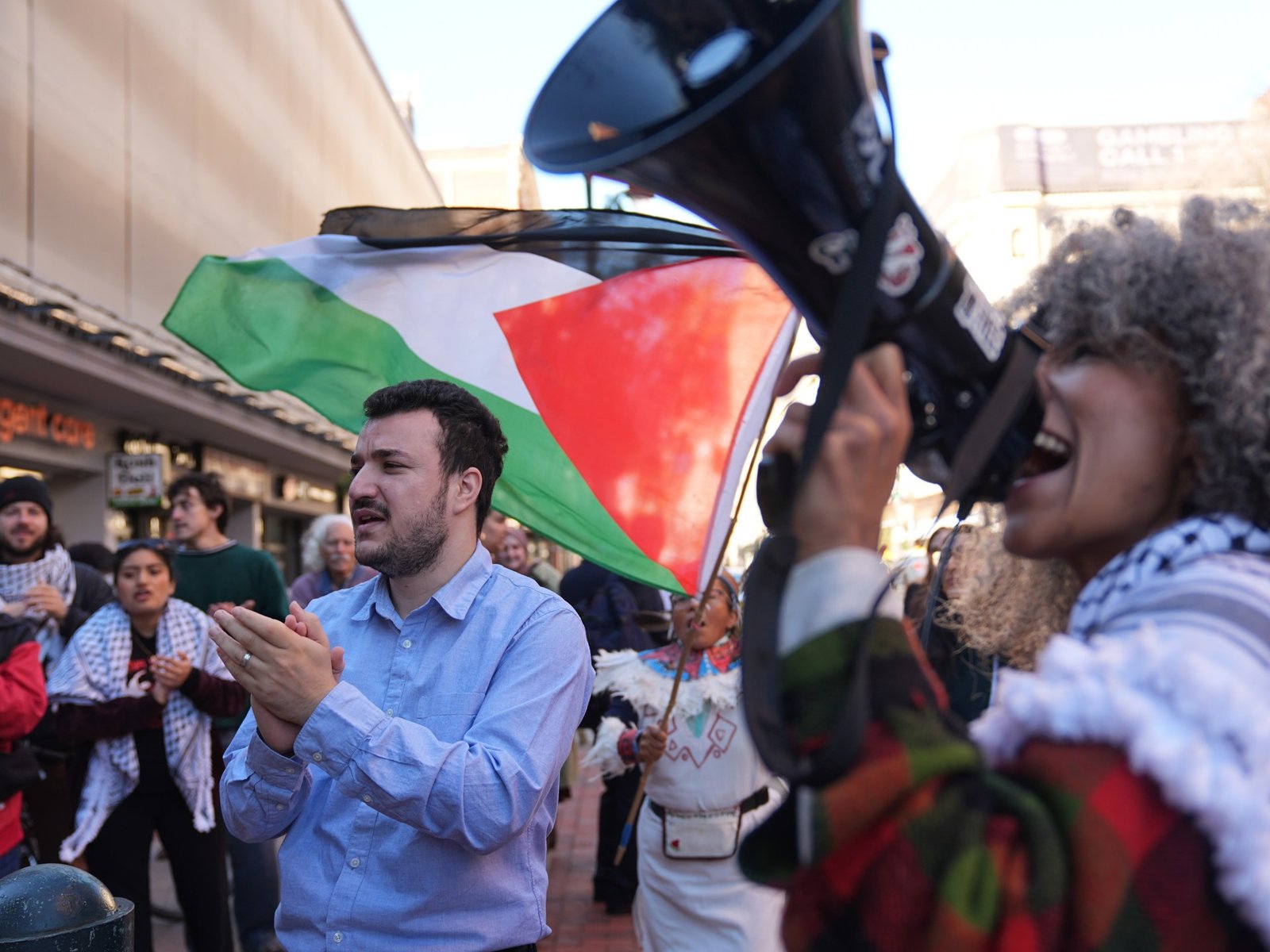
The ruling centred on how the second Trump administration revoked visas and detained international students studying in the US after they engaged in pro-Palestinian advocacy.
The detentions began with Columbia University graduate Mahmoud Khalil in March 2025.
Columbia had been an epicentre for the student protest movement, and Khalil, a graduate student and permanent US resident, had emerged as a key negotiator for the student groups.
Khalil, who is fighting his deportation in a separate case, praised the ruling on Saturday in a post on social media.
“No one should fear speaking up for Palestine,” Khalil wrote on X.
Arrests like Khalil’s formed the basis for the lawsuit against US Secretary of State Marco Rubio, one of the defendants in the case. In August 2025, Stanford University’s independent student newspaper, the Stanford Daily, filed a complaint claiming that some of its noncitizen writers had chosen not to cover pro-Palestinian protests due to the administration’s actions.
Two anonymous plaintiffs also joined the suit, identifying as foreign nationals with no criminal record. They said they too felt the need to self-censor, for fear of losing their student visas.
The Trump administration, however, has pointed to the Immigration and Nationality Act as justification for its deportation efforts.
Part of that law asserts that the secretary of state can “exclude” foreign nationals from the country if their presence could cause “potentially serious adverse foreign policy consequences for the United States”.
But critics have argued that the standard is largely untested in court and does not supersede the First Amendment of the Constitution, which protects free speech.
In her ruling, Wise chastised Rubio for what she described as a “standardless” enforcement of his visa revocation policy.
“The record does reveal one clear pattern in the enforcement actions the government has taken to revoke noncitizens’ visas since March of 2025,” the judge wrote. “The secretary revokes visas when noncitizens are critical of the government or the causes or people it favors. This exemplifies ‘seriously discriminatory enforcement.’”
Conor Fitzpatrick, a lawyer at the Foundation for Individual Rights and Free Expression (FIRE), the nonprofit that filed the lawsuit, hailed the ruling as a win for First Amendment rights.
“Today’s ruling proves that free speech isn’t a privilege, but the inalienable right of every man, woman, and child,” Fitzpatrick said in a statement.
The Trump administration has faced other setbacks in its student deportation campaign as well.
In September 2025, for instance, a federal judge in Massachusetts ruled that US officials had violated the First Amendment when they attempted to detain and deport noncitizen students and academics for pro-Palestinian advocacy.
The case had been brought by a coalition of education groups, which argued that the deportation policy had created “a climate of repression and fear on university campuses”.
Al Jazeera has reached out to the State Department and DHS for comment.