Should death penalty remain exception in rape cases, not the rule?
The anger is understandable.
But the law applies a much narrower test.
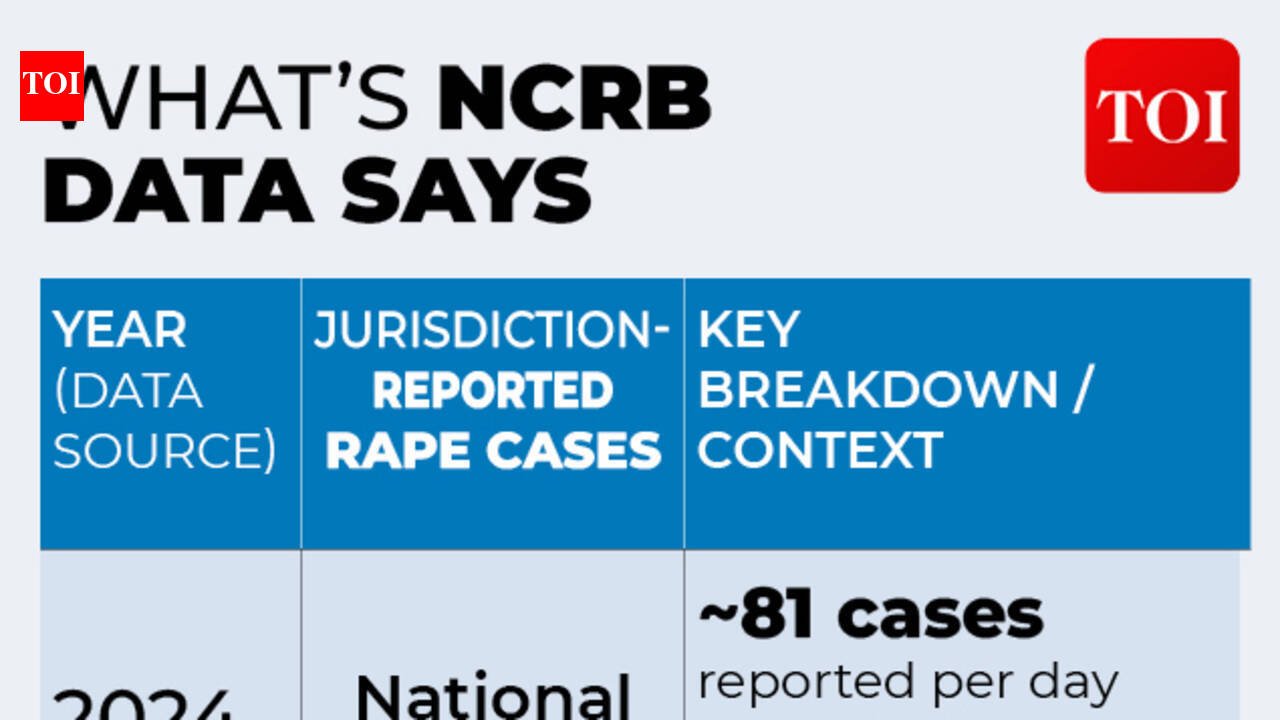
Not every rape case, however grave, crosses the threshold for the death penalty.India recorded 29,536 rape cases in 2024, according to the latest National Crime Records Bureau data.
In Delhi, 1,058 rape cases were registered that year, while Delhi Police reported 1,901 cases in 2025.The figures come amid renewed attention on sexual violence, with a series of recent cases in Delhi and across the country bringing questions of punishment, deterrence and justice back into focus.While Indian law provides for stringent punishment, including the death penalty in certain rape cases, capital punishment remains restricted to specific circumstances.So when does a rape case cross the legal threshold for the ultimate punishment?
What makes one case “rarest of rare”, while another results in life imprisonment?And should death remain an exception rather than the rule?
Why women's safety is back at the centre of debateA series of recent cases has once again put women’s safety under scrutiny.
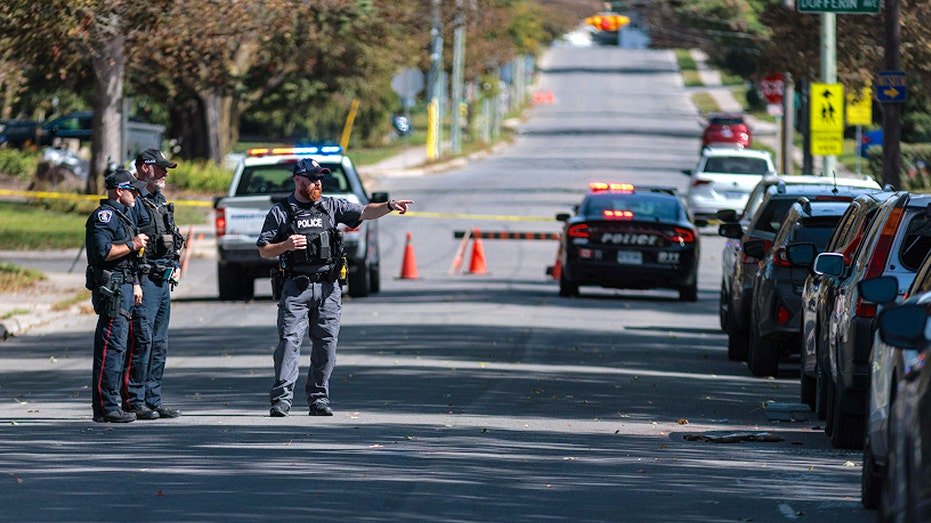
In September, a 17-year-old girl was allegedly gang-raped by three men posing as police personnel at Astha Kunj Park near Kalkaji Mandir in Delhi.
The case triggered student protests demanding stronger measures for women’s safety, and police arrested the accused.In August, another 17-year-old girl was allegedly gang-raped by a bus driver and conductor after boarding a bus from Greater Noida.
She was later dropped near Kashmere Gate.
The National Human Rights Commission took suo motu cognisance of the case and sought reports from authorities.Against this backdrop, the Supreme Court on Monday took suo motu cognisance of recent rape incidents in Delhi-NCR, flagging what it described as a "systematic failure" to ensure basic public safety.Concerns have extended beyond Delhi.In Bihar, three incidents involving alleged sexual harassment and assault were reported within days.
In Jamui, a teenage boy and girl were allegedly stopped and assaulted by a group of men on September 19, with three accused arrested after a video surfaced online.
In Samastipur, a minor girl was allegedly assaulted and molested, while another case in Banka’s Mandar Hill area involved allegations of a woman being harassed and her male friend assaulted.The cases have also spilled onto the streets.
Students and young people in the national capital are holding protests demanding safer public spaces, stronger policing and greater accountability.2026 witnesses shocking incidents of sexual assault When does rape become 'rarest of rare'?Indian law permits the death penalty in certain aggravated rape cases, including those involving minors and cases where the victim dies or is left in a persistent vegetative state, under provisions of the Bharatiya Nyaya Sanhita and the POCSO Act.But the existence of the death penalty does not mean it follows automatically in the most brutal cases.Advocate Sumit Nagpal said courts consider factors including the brutality of the offence, injuries caused, the vulnerability of the survivor and the long-term consequences while determining punishment.Rupali Jain, who practises in the high court and Supreme Court, said the harm caused by rape, while grave, cannot by itself justify capital punishment."As harm is inherent in every rape, it cannot alone justify death.
The court must also apply the 'criminal test', the offender’s age, antecedents, background, custodial conduct and prospects of reform, as reiterated in Manoj v.
State of Madhya Pradesh (2022)," she said.The "rarest of rare" doctrine gained renewed attention following the 2012 Nirbhaya case.
On December 16, 2012, a 23-year-old woman was gang-raped and brutally assaulted inside a moving bus in Delhi.
She died from her injuries days later.Four adult accused were sentenced to death by the trial court in 2013.
The Delhi high court upheld the punishment in 2014, and the Supreme Court confirmed the death sentences in 2017, holding that the case fell within the “rarest of rare” category.Activist Yogita Bhayana in conversation with TOI However, the Supreme Court has also held that the brutality or heinousness of an offence alone does not automatically make it a "rarest of rare" case.
Courts must weigh aggravating circumstances against mitigating factors, including the possibility of reform and rehabilitation.But the death penalty is not automatic, even in cases involving extreme violence.The Bilkis Bano case offers another example of how courts apply the 'rarest of rare' test differently.In the Bilkis Bano case, 11 men were convicted and sentenced to life imprisonment for gang rape, murder and other offences linked to the 2002 Gujarat riots.
Bilkis was 21 and five months pregnant when she was raped, and several members of her family were killed.The case shows why the "rarest of rare" test is not based only on how brutal or shocking a crime appears.
Courts must also consider other factors, including the background of the accused and whether there is any possibility of reform.Activist Yogita Bhayana, however, argues that the impact of rape on the survivor should receive greater weight when courts consider the threshold."Every rape case is rarest of the rare in terms of the victim," she said, arguing that the legal system can focus heavily on physical brutality while overlooking the lasting impact on survivors.Bhayana said she believes the death penalty should remain available in rape cases and argued for greater weight to be given to the consequences of the crime for survivors while deciding punishment.What changes when the accused is a minor?The legal process changes significantly when the accused is under 18.Under the Juvenile Justice (Care and Protection of Children) Act, 2015, a child aged between 16 and 18 who is accused of a “heinous offence”, including rape, can undergo a preliminary assessment by the Juvenile Justice Board.The Board looks at the child’s mental and physical capacity to commit the offence, whether they understood its consequences and the circumstances in which the alleged offence took place.Minor victims in rape cases in India: NCRB data Depending on that assessment, the case can be transferred to the Children’s Court, which then decides whether the child should be tried as an adult.Rupali Jain said the existing law already provides a framework for dealing with serious offences committed by juveniles, and the focus should remain on how it is implemented rather than simply lowering the age threshold.She also pointed out that the Juvenile Justice Act does not allow the death penalty, or life imprisonment without the possibility of release, for a child in conflict with law.However, activist Yogita Bhayana argues that the distinction between different degrees of brutality can be deeply troubling for survivors.“The miner will be treated as miner unless he brutally kills her, rape her in a very gruesome manner.
Then otherwise, it will not be in the rarest of the rare category.
So we need to change the whole thing,” she said, arguing that the system should focus more closely on the impact of the crime on the survivor and called for greater awareness and stronger mechanisms to deal with sexual offences.Does a harsher sentence always mean justice?For survivors, justice does not necessarily end with an arrest, conviction or sentence.Activist Yogita Bhayana said the distinction between "high-profile" and ordinary rape cases often comes from media attention rather than the nature of the crime or the survivor’s experience."There is no case which is high profile.
What becomes media-highlighted becomes high profile," she said, pointing out that even Nirbhaya came from a humble, lower-middle-class family.She said survivors often continue to deal with trauma, repeated questioning and the pressures of the legal process long after public attention has moved on."Attention doesn’t mean justice," Bhayana said.Two cases with different court sentences Dr Vinodh Sreeram, senior psychiatrist & addiction specialist at Maarga Mind Care, Bengaluru, said rape can deeply alter a survivor’s sense of safety, relationships and ability to return to everyday life.He cautioned against judging trauma only by visible injuries or by how brutal an assault appears.
Two survivors of similar incidents can experience very different psychological effects depending on factors such as age, past experiences, their relationship with the accused and the support available to them."The absence of visible injury should never be mistaken for the absence of psychological trauma," he said.On whether the death penalty can provide psychological closure, Sreeram said there is no single answer.
Some survivors or families may see a severe sentence as justice, but "closure rarely comes from the sentence alone".Being believed, treated with dignity, protected from further harm and supported through recovery can be just as important, he said.
Repeated questioning, cross-examination, delays and prolonged appeals can themselves become additional sources of distress.Why tougher laws alone may not be enoughRecent protests in Delhi have again brought demands for safer public spaces, stronger policing, better surveillance and greater accountability to the forefront.Advocate Sumit Nagpal said the biggest challenge is not necessarily the absence of laws, but the capacity to enforce them."The bottleneck is capacity, not the statute.
India has roughly twenty judges per million people against a recommended fifty, and police strength sits well below sanctioned levels in most states.
Until that gap closes, every reform stays on paper," he said."So the real agenda is unglamorous: more investigators, more courts, more forensic capacity, fewer vacancies.
No amendment will substitute for that."Delhi University students take out protest march amid rains to Miranda House college in north campus over women safety after Kalkaji gang rape.
Activist Yogita Bhayana said the biggest gap remains implementation.
While reforms, awareness and gender-sensitisation efforts have increased, she said survivors continue to face inadequate support, delays in fast-track courts and a lack of sensitivity within the system.She also warned that repeated exposure to sexual-violence cases can make institutions become "immune" to such crimes."For them, they see it like an everyday thing," she said, arguing that continued training and sensitisation are needed to ensure sexual violence is not treated as routine.Dr Vinodh Sreeram said debates around harsher punishment must also account for the realities of reporting, particularly because many survivors know the accused and may face fear, stigma and family pressure.Join conversation Share your thoughts in the comments Be respectful · TOI community guidelines A trauma-informed justice system, he said, should focus on sensitive questioning, privacy, timely trials and access to psychological support.“Justice is not only about the severity of punishment.
It is also about ensuring that survivors are heard, protected, treated with dignity and given the opportunity to rebuild their lives,” Sreeram said.The death penalty is only one part of the debate.
The larger challenge is to prevent such crimes, ensure quicker justice and make sure survivors get the support they need.