Indonesia’s decision to reach an in-principle agreement with India to procure an additional battery of the BrahMos supersonic cruise missile system marks another milestone in New Delhi’s expanding defence diplomacy in the Indo-Pacific. Coming after the Philippines became the first export customer for the missile, and with countries such as Vietnam and Malaysia also evaluating the system, BrahMos has increasingly become a symbol of India’s growing defence industrial capabilities.
The missile’s appeal extends beyond its technical specifications. It reflects a convergence of strategic requirements in Southeast Asia, India’s push to become a major defence exporter, and the changing security architecture of the Indo-Pacific.
Some other countries interested in the weapon system are South Korea, Algeria, Greece, Egypt, Venezuela, UAE, and Chile.
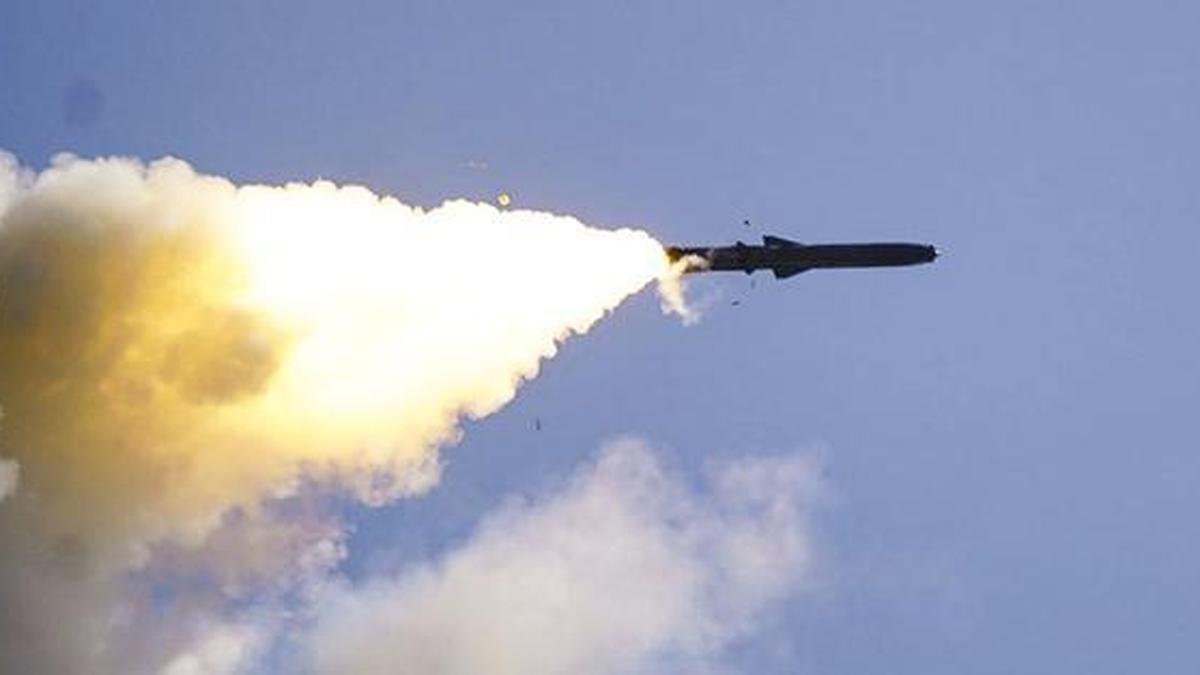
Jointly developed by the Defence Research and Development Organisation (DRDO) and Russia’s NPO Mashinostroyenia, BrahMos is among the world’s fastest operational supersonic cruise missiles. Travelling at nearly Mach 2.8 throughout its flight, it combines speed, precision and survivability in a manner that relatively few operational systems currently offer.
Unlike subsonic cruise missiles, BrahMos significantly compresses an adversary’s reaction time. Its supersonic speed, low-altitude terminal flight profile and high kinetic energy make interception considerably more difficult. The missile follows a fire-and-forget principle, navigates through pre-programmed waypoints and can be launched from land-based mobile launchers, warships, submarines and combat aircraft.
For countries seeking credible maritime deterrence without investing in significantly larger naval fleets, these characteristics make BrahMos an attractive option. A network of mobile coastal missile batteries can substantially complicate the operational planning of an adversary’s naval forces while remaining comparatively economical.
Another factor contributing to international interest has been the missile’s reported operational employment during Operation Sindoor. Defence analysts argue that successful performance during an actual military operation carries considerably greater weight than repeated developmental trials, particularly for prospective buyers evaluating long-term acquisitions. Combat validation often strengthens confidence in a weapon system’s reliability, maintenance ecosystem and operational effectiveness.
Why are Southeast Asian countries interested?
The growing interest from Southeast Asian countries is closely linked to evolving maritime security concerns in the Indo-Pacific.
Several countries in the region continue to face competing territorial claims and increasing military activity in the South China Sea. While most have avoided entering formal military blocs, many have sought to strengthen deterrence by acquiring anti-access and area-denial (A2/AD) capabilities that raise the cost of potential coercive action.
For middle powers with extensive coastlines but relatively modest naval resources, long-range anti-ship cruise missiles provide an efficient means of strengthening maritime defence. Rather than attempting to match larger navies platform-for-platform, these countries can deploy land-based missile batteries capable of threatening hostile surface combatants operating hundreds of kilometres from the coastline.
The interest in BrahMos therefore reflects broader regional efforts to improve maritime domain awareness, coastal defence and sea-denial capabilities amid an increasingly contested Indo-Pacific.
Why does BrahMos suit Indonesia’s requirements?
Indonesia’s strategic geography largely explains its interest.
As the world’s largest archipelagic state, Indonesia straddles several of the world’s most critical maritime choke points, including the Malacca, Sunda, Lombok and Makassar Straits. A substantial share of global maritime trade passes through these sea lanes, making their security critical not only for Indonesia but also for international commerce.
Indonesia currently operates the Russian-origin Yakhont anti-ship missile on a limited number of naval platforms. BrahMos offers greater operational flexibility through its compatibility with multiple launch platforms and its ability to be deployed as mobile coastal defence batteries.
Its range enables coverage of strategically important maritime approaches and such deployments would strengthen Indonesia’s ability to safeguard its Exclusive Economic Zone, protect maritime infrastructure and reinforce deterrence across key sea lanes without requiring a major expansion of its surface fleet.
For Jakarta, the acquisition would complement broader efforts to modernise its armed forces while preserving strategic autonomy through diversified defence partnerships.
What does India gain from exporting BrahMos?
The significance of BrahMos exports extends well beyond commercial revenue.
First, defence exports have become an important component of India’s foreign and security policy. Exporting advanced weapon systems strengthens long-term military relationships through training, maintenance, logistics support, upgrades and joint exercises. Such partnerships often endure for decades, creating sustained strategic engagement between supplier and recipient.
Second, BrahMos supports India’s ambition of emerging as a major defence manufacturing hub. India’s defence exports have expanded rapidly in recent years, reaching a record ₹38,424 crore, with Indian-made military equipment now being exported to more than 80 countries. The government has set a target of achieving annual defence exports worth ₹50,000 crore by 2029. High-value platforms such as BrahMos are expected to play a central role in meeting that objective.
Third, successful exports strengthen the credibility of India’s indigenous defence industry. Demonstrating the ability not only to develop advanced weapon systems but also to sustain them through production, maintenance and lifecycle support enhances India’s standing in the increasingly competitive global defence market.