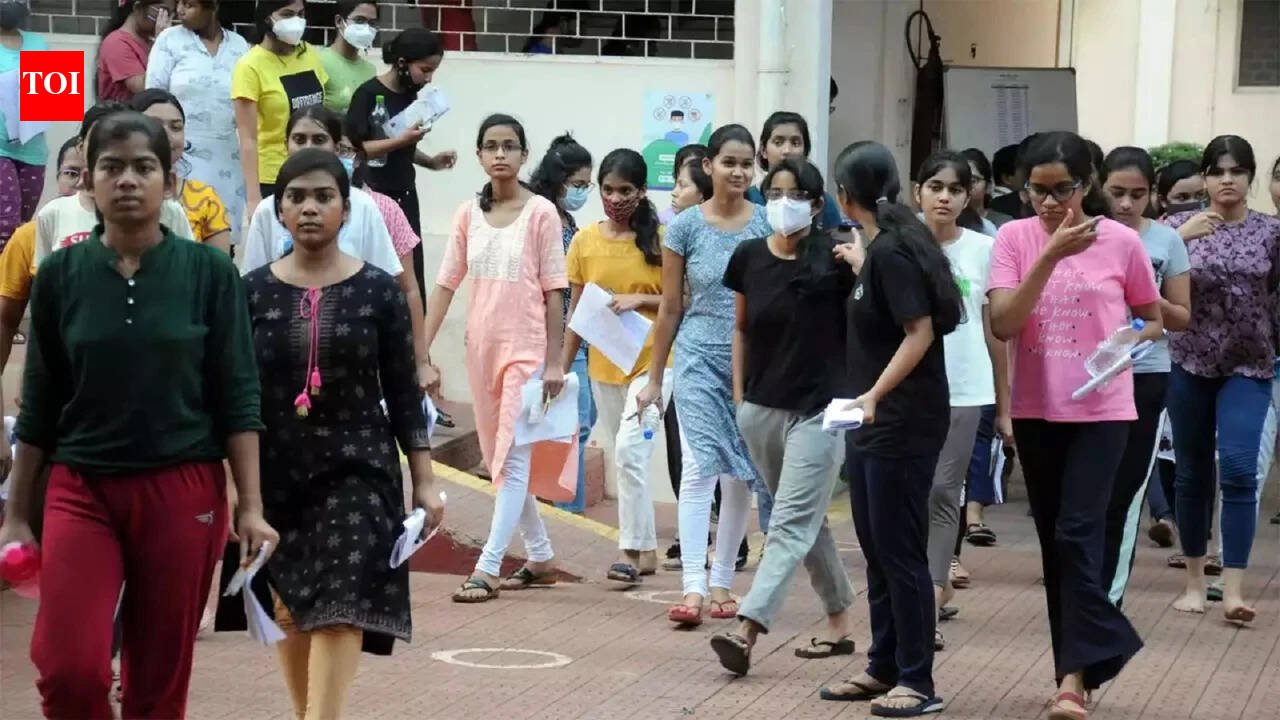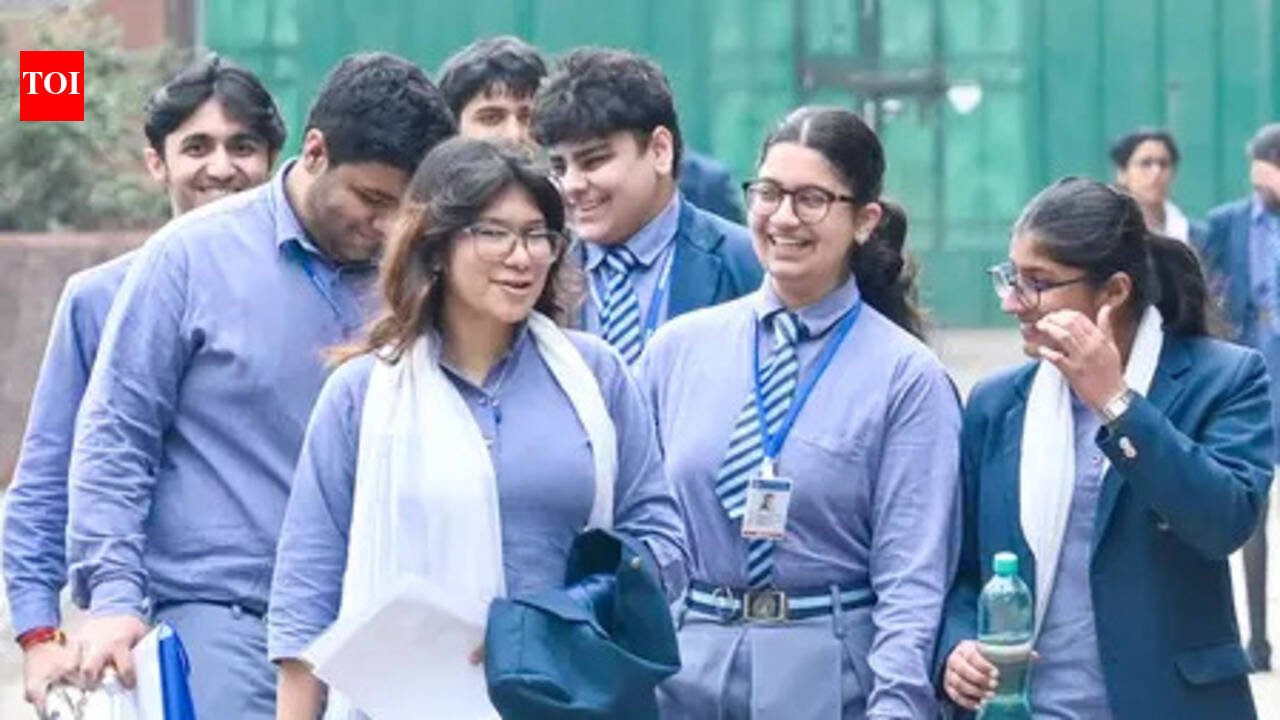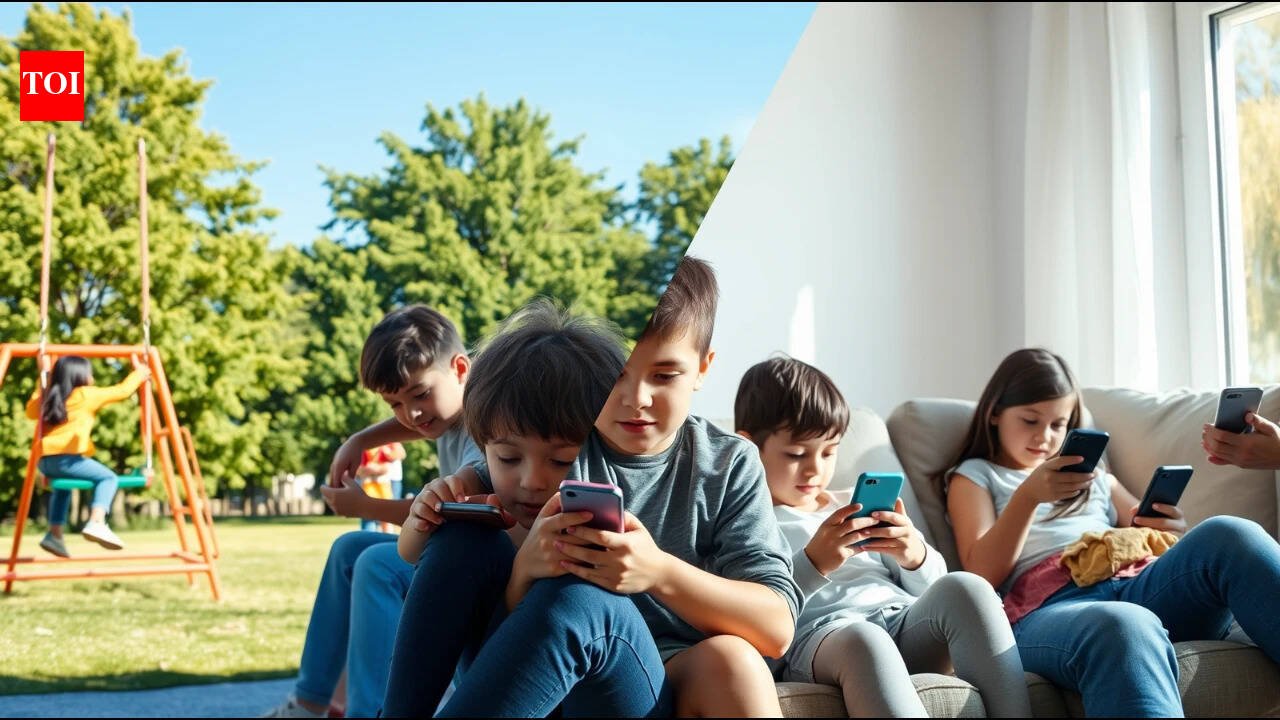
Supreme Court examines whether sports should become a fundamental right for children. (AI Image) Supreme Court examines whether sports should become a fundamental right for children. (AI Image) Supreme Court examines whether sports should become a fundamental right for children. (AI Image) Supreme Court examines whether sports should become a fundamental right for children. (AI Image) Supreme Court examines whether sports should become a fundamental right for children. (AI Image) For a generation growing up with smartphones, tablets, online classes, gaming and endless streams of short videos, the playground is facing an unusual competitor: the screen.
The question is no longer simply whether children should play sports.
It is whether physical activity should be treated as an essential part of a child's education and development, rather than something that happens only if there is time left after academics.That question has now reached the Supreme Court.
In Kanishka Pandey vs Union of India & Ors., the Court is considering a PIL that seeks recognition of the right to sports and physical literacy as a fundamental right under Article 21A, along with compulsory sports education and physical activity in school curricula.
The matter was heard by a Bench of Justice Vikram Nath and Justice Sandeep Mehta on Thursday.The significance of the hearing goes beyond the legal question of whether sports can eventually receive constitutional recognition.
It touches a much more familiar problem for parents and schools: what happens when children increasingly spend their free time looking at screens instead of running, jumping, swimming or playing on a field?As reported by Bar and Bench, the Supreme Court observed that the issue was “absolutely essential” in the digital age because children are increasingly moving away from fields.
The observation is noteworthy because it recognises a reality that many parents and teachers see every day.
The smartphone has not merely become a communication device; for many children, it is also a source of entertainment, social interaction, gaming and recreation.The real issue is not mobile phones alone It would, however, be simplistic to turn this into an argument against smartphones.
Digital technology is now an integral part of education and childhood.
Children use devices for learning, communication, creativity and access to information.
The challenge is what happens when screen-based activity begins to crowd out physical activity, outdoor play and face-to-face interaction.This is where the sports debate becomes important.A child does not learn everything inside a classroom.
Sports can teach cooperation, discipline, persistence, dealing with failure and respecting rules in ways that textbooks cannot fully replicate.
Physical activity is also connected with a child's overall well-being and quality of life.The constitutional question, therefore, has an educational dimension.
If education is meant to prepare a child for life, should physical literacy be considered as fundamental as academic literacy?A 90-minute proposal could change school life The case is not new.
The PIL was originally filed in 2017, and Senior Advocate Gopal Sankaranarayanan has been assisting the Court as amicus curiae.His recommendations have included amendments relating to sports education and physical literacy and a greater obligation on the State to promote sporting activity.
One particularly striking proposal was that school boards such as CBSE and ICSE should provide 90 minutes of school time for physical activity.That proposal deserves attention even independently of the constitutional question.In many schools, physical education is still treated as a break from “real” academic work.
Sports periods can be among the first to disappear when examinations approach.
Playground space can also compete with the demand for classrooms, laboratories and other infrastructure.If physical activity is formally recognised as an essential component of education, that hierarchy could change.What if every child had a genuine right to play?
A fundamental right to physical literacy would not necessarily mean turning every child into a competitive athlete.
That distinction is important.Not every child wants to become a cricketer, footballer, swimmer or badminton player.
But every child can benefit from opportunities to move, play and develop physical confidence.It could mean that schools must provide meaningful opportunities for physical activity regardless of whether a student has sporting talent.
It could also push policymakers to think about playgrounds, trained physical education teachers, accessible facilities and opportunities for children with disabilities.The Supreme Court has not, at this stage, declared sports to be a fundamental right.
The Court has heard the PIL, indicated that the issue is important and directed that the amicus report be shared with the States and other parties.
The matter will be heard next on September 22.That distinction matters.
The present hearing is about considering the larger constitutional and educational question, not announcing a new fundamental right.Perhaps the bigger verdict is already before us Even if the Court ultimately does not declare sports a fundamental right, the discussion itself raises a question that schools and parents cannot easily avoid.How much of childhood should be spent online?There is no constitutional judgment required to establish that children need time away from screens.
Nor does every hour spent on a phone represent a problem.
But when digital entertainment becomes the default form of recreation and outdoor play becomes an exception, education policy needs to take notice.The Supreme Court's observation may therefore be read as a reminder that the purpose of education is not simply to produce children who can score marks.
It is also to help them develop into healthy, capable and socially engaged individuals.The debate over sports as a fundamental right may take time to reach its legal conclusion.
But the question it has placed before schools is immediate: are we educating children for a digital future while forgetting to prepare their bodies for life outside the screen?