Good morning. Few government reports have been as long-awaited and well-trailed as the Alan Milburn report into youth unemployment, or Neets (young people not in education, employment or training), that is finally being published this morning. The title, From a Welfare State to a Working State, gives a clue as to the extent of Milburn’s ambition and, if it gets implemented in full, it will be remembered as one of the landmark social reforms of the 21st century (so far).
And even if Milburn only achieves 50% of what he wants (which, sadly, is probably quite a good success rate for the authors of independent government reports), he will change Britain significantly, as Polly Toynbee argues in a must-read column about the report today. She says:
There will, no doubt, be protest from right and left. But never has a policy been so pitch-rolled to flatten critics and sceptics with undeniable evidence that it will be to the good. There is a cornucopia of plans for schools, colleges, the NHS, councils and early years education. Ideas come from visits to see what works elsewhere, notably the Netherlands and Denmark. Seeing proportionally far fewer Neets in those countries, Milburn asked what they did about school and college drop-outs. “They didn’t understand that term,” he tells me. In those countries, if children start to struggle with school attendance, “they go straight round to find them and work out their problem. Here they disappear.” Politically, this duty will fall on local mayors (or councils, where mayors have not yet been introduced). Their colossal task is to pull together schools, FE colleges, jobcentres, NHS services and local employers. Heaving them out of their silos to collaborate will test mayoral devolution to its limits. With extra funding comes accountability for creating a continuous decline in the number of Neets in their area. Everywhere, this will be delivered through youth hubs – welcoming places, “not jobcentres where they’re met by security guards, but places only for young people,” Milburn tells me. Last week he visited a model hub in Liverpool, Merseyside Youth Association. Hiring and training a new cohort of work coaches and advisers has begun, so hubs can offer supported internships, short flexi-jobs to ease people into work and experience for those with none on their CVs. Incentives to employers to hire them may include cuts to employers’ national insurance contributions for those aged 21-24 in retail and hospitality. Ordinary earners under 21 are already NI-free … It’s for Labour and Milburn, who will remain in post to oversee all of this, to prove, with falling Neet numbers, the value of good social investment. If even half these plans work, that will be a great social advance – a generational shift from appeasing the old to finally directing hope and resources towards the young. And it will be about time.
There will, no doubt, be protest from right and left. But never has a policy been so pitch-rolled to flatten critics and sceptics with undeniable evidence that it will be to the good. There is a cornucopia of plans for schools, colleges, the NHS, councils and early years education. Ideas come from visits to see what works elsewhere, notably the Netherlands and Denmark. Seeing proportionally far fewer Neets in those countries, Milburn asked what they did about school and college drop-outs. “They didn’t understand that term,” he tells me. In those countries, if children start to struggle with school attendance, “they go straight round to find them and work out their problem. Here they disappear.”
Politically, this duty will fall on local mayors (or councils, where mayors have not yet been introduced). Their colossal task is to pull together schools, FE colleges, jobcentres, NHS services and local employers. Heaving them out of their silos to collaborate will test mayoral devolution to its limits. With extra funding comes accountability for creating a continuous decline in the number of Neets in their area.
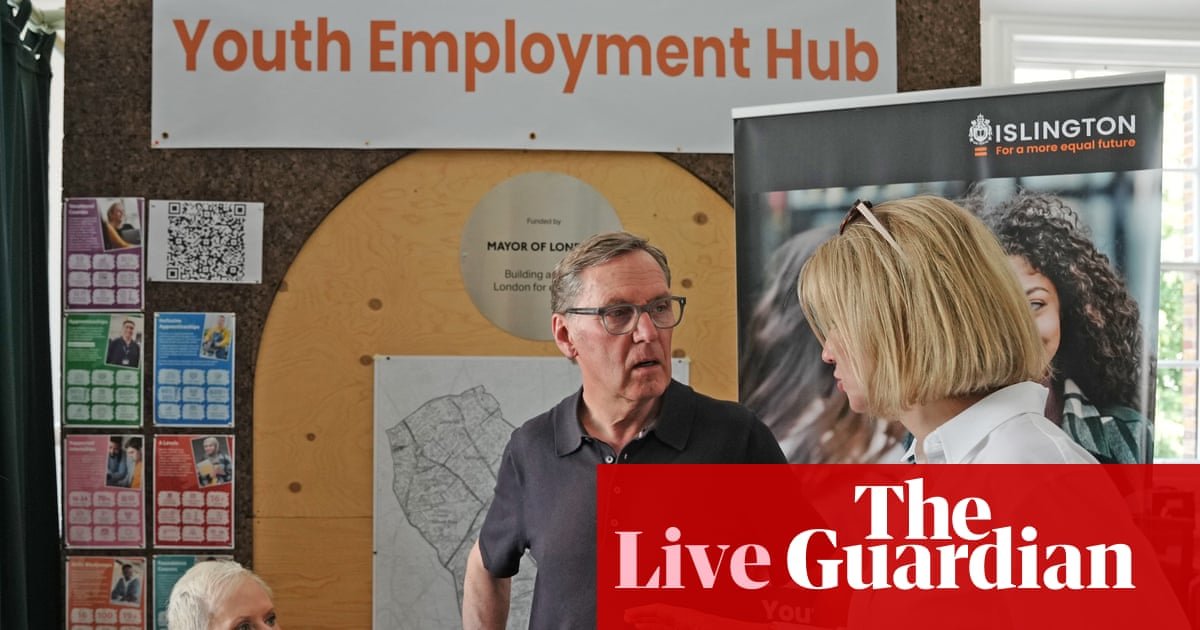
Everywhere, this will be delivered through youth hubs – welcoming places, “not jobcentres where they’re met by security guards, but places only for young people,” Milburn tells me. Last week he visited a model hub in Liverpool, Merseyside Youth Association. Hiring and training a new cohort of work coaches and advisers has begun, so hubs can offer supported internships, short flexi-jobs to ease people into work and experience for those with none on their CVs. Incentives to employers to hire them may include cuts to employers’ national insurance contributions for those aged 21-24 in retail and hospitality. Ordinary earners under 21 are already NI-free …
It’s for Labour and Milburn, who will remain in post to oversee all of this, to prove, with falling Neet numbers, the value of good social investment. If even half these plans work, that will be a great social advance – a generational shift from appeasing the old to finally directing hope and resources towards the young. And it will be about time.
The full report is being published this morning. But it won’t contain any surprises – Milburn has been talking about his proposals for weeks now, and all the main ideas are already in the public domain. Here is our overnight story by Richard Partington, Kiran Stacey and Aletha Adu.
So far, none of the reaction from the charity sector has been particularly hostile. The opposition parties have generally welcomed the bits of the plan that overlap with their own policies, while criticising the rest. But, for the government, the reaction that matters the most will come in the Commons, when Labour MPs get the chance to say what they think.
Milburn has been giving interviews this morning. And he has claimed that, under his plan, the government could start to save money from the welfare budget before the end of this parliament. This is an important pledge because John Healey, the chancellor, was criticised recently by the Tories for failing to propose cutting benefits before the next election.
We should be doing that. We can get the benefits bill down. And by the way, we can do that quickly. We can start in this parliament to get savings from welfare. But what we’ve got to do is start creating opportunities and support for young people.
But those savings would not at first offset the extra government spending his plan would require. Milburn says his proposals would require “an immediate upfront payment” of £500m in the next financial year.
On the Today programme, Milburn argued that, over time, his plan would save money. He explained:
We can either get the benefits bill down through crude cuts. And when that happens, all that then happens is more young people are in destitution and poverty and frankly will show up somewhere else on the ledger in more housing costs or health costs or crime costs. Or we can do it through more jobs. And my view is that it’s got to be more jobs. And over time then, what happens by the time the 10-year programme gets to a conclusion, we will have saved about £13.8bn in welfare.
We can either get the benefits bill down through crude cuts. And when that happens, all that then happens is more young people are in destitution and poverty and frankly will show up somewhere else on the ledger in more housing costs or health costs or crime costs.
Or we can do it through more jobs. And my view is that it’s got to be more jobs.
And over time then, what happens by the time the 10-year programme gets to a conclusion, we will have saved about £13.8bn in welfare.
Milburn was referring to the amount saved from the welfare budget. His plans would require extra spending in other areas, and his plan would involve around £5.8bn a year of funding by 2036-37, offset by £3.6bn of welfare savings and £2.4bn of extra tax revenue from people in work.
When it was put to him that in the short term, his plan “costs, doesn’t save”, Milburn replied: “Correct.” And when it was put to him that the “crossover point” when overall savings would overtake overall costs would only happen after 10 years, Milburn replied: “That’s when it happens.”
Here is the agenda for the day.
9.30am: Andy Burnham chairs cabinet, where Alan Milburn will speak about his youth unemployment report.
9.30am: The Department for Work and Pensions publishes quarterly universal credit figures.
Morning: Kemi Badenoch and Helen Whately, the shadow work and pensions secretary, are on a visit in London.
10.30am: Marsha de Cordova MP and Sandro Gozi MEP, co-chairs of the UK-EU Parliamentary Partnership Assembly, hold a press conference after its meeting in London.
11.30am: Milburn holds a press conference to mark the publication of his report.
11.30am: Miatta Fahnbulleh, the energy secretary, takes questions in the Commons.
Noon: Downing Street holds a lobby briefing.
After 12.30pm: Pat McFadden, the work and pensions secretary, is due to give a statement to MPs about the Milburn report.
I’m afraid we are no longer able to have comments open below the line every day on this blog. If you want to contact me, please email politics.live@theguardian.com. You can use this email to flag up corrections, comments for publication, questions or complaints.