Home-grown food may become a niche product for wealthy in our supermarkets as British farmers’ incomes plummet
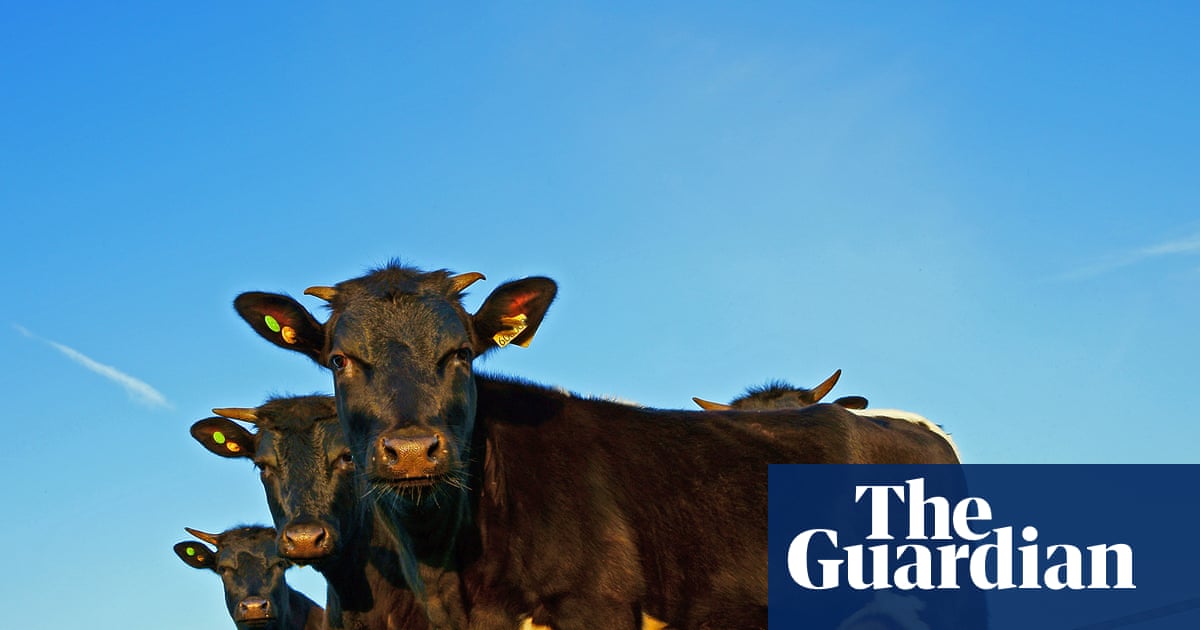
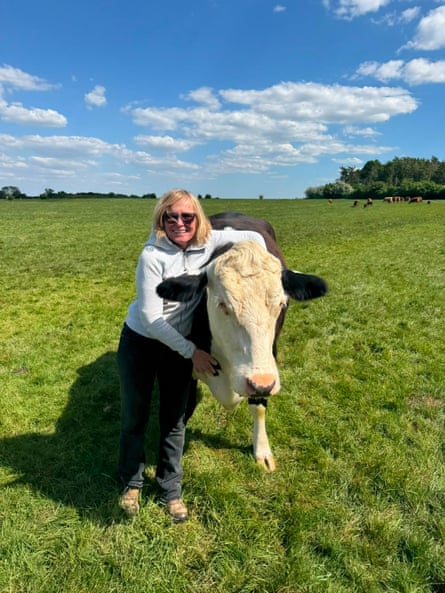
For Liz Webster, who farms 647 hectares (1600 acres) in Wiltshire, south west England, the latest impact of Brexit has been particularly brutal. About £400 per animal has been wiped off the price she can get for her beef cattle, a hefty blow at a time when all the inputs – feed, energy, fertiliser – are going through the roof.
The fall in price, on livestock that typically fetch £2,000 to £3,000 per animal, is the result of a flood of cheaper meat arriving from Australia, the result of one of the new trade deals the government has signed since the UK left the European Union. Prices for beef in the supermarkets have remained broadly the same, but farmers have seen their income plummet.
“It’s just inevitable that if it continues, British food will disappear, unless it’s niche, appealing to a particular wealthy market, because in the mainstream supermarkets British food won’t be able to complete,” she says.
For farmers, it seems Brexit is the gift that keeps on taking away. A study published last year found the quantity of farmed exports to the EU, the biggest market for farm produce, had fallen by nearly half (47%) and the value by 35%, while the variety of exports also reduced by a third. Separate analysis by the National Farmers’ Union published earlier this year found exports from the poultry sector fell by 38%, beef exports 24%, lamb 14% and dairy 16%. Brexit has also cost the UK consumer – a study in 2023 found it had already added £7bn to food prices for consumers.
Nor has Brexit been the only disaster to strike farmers in the last decade: Covid, energy shocks from the Ukraine and Iran wars, and extreme weather events have all compounded the damage. “There’s been so many global challenges, to try and decipher how much is down to leaving the EU and how much down to global turmoil is difficult,” says Tom Bradshaw, president of the NFU. “But we always warned that [the issue with Brexit] wasn’t going to be the immediate impact, it was sort of a death by a thousand cuts, a slow burn, and that’s exactly what we’re now seeing.”
Brexit wreaked three massive changes to British farming: the withdrawal of the UK from the EU’s common agricultural policy (Cap), the subsidy system that held sway since the mid-1970s; changes to trade policy, which let in floods of imports, many of which farmers say are produced to lower standards than UK equivalents; and the introduction of trade friction with the EU, previously the biggest food export market.
Added to these have been changes to environmental and animal welfare regulations that affect farmers, difficulties with visas for the seasonal workers many farmers rely on at harvest, and a huge increase in paperwork – ironically, for a rupture its supporters said would cut red tape.
“It’s been the ultimate in shooting ourselves in the foot,” says Webster, who set up a group, Save British Food, to campaign for re-entry to the EU. “It’s dire for farms, but it’s mostly dire for the British people because it means they’re being forced to eat food which is bad for their health and it leaves us exposed in terms of national [food] security.”
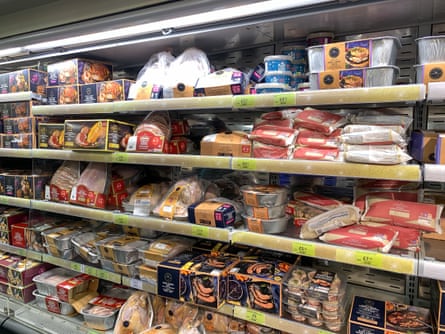
The government says that 65% of the food we eat is still grown here, and ministers say they are making the best of a bad job. “Brexit has been terrible for farming and even the Tories admit they made it worse by selling farmers down the river in bad trade deals,” Stephen Morgan, farming minister, says. “This Labour government is backing British farmers: cutting millions in red tape through a new EU agreement, securing a landmark £800m Gulf trade deal, and delivering a record £11.8bn farming budget.”
The most tangible of the effects on farmers has been the reform of subsidies, the biggest shake-up in more than a generation. The Cap awarded payments to farmers based on how much land they farmed. Michael Gove, environment secretary at the time and one of the key architects of the Conservative party’s Brexit, hailed sweeping reforms that would lead to “public money for public goods”.
His pledges were welcomed, initially, by farmers and green campaigners. The Cap has been called “welfare for the rich”, so notorious is it for rewarding the biggest farmers (though it is so opaque that it is hard to even tell who they are), with scant regard for the consequences of their overuse of pesticides, fertilisers and other trappings of intensified agriculture.
Gove’s reforms would mean farmers – in England at least – had to start showing that their stewardship of the land was protecting nature, maintaining air and water quality, nurturing the soil and providing havens for wildlife. These are known collectively as ELMS – environmental land management schemes, under which farmers agree to take a series of actions, from sowing cover crops that nourish soil, to leaving wildflower borders.
At least, that was the theory. In practice, delays and revisions, difficulties with measurement and direction, frequent changes of ministers and other disruptions got in the way. Now, farmers in England are facing the end of all the old form of land-based payments next year, but the switch to the replacement sustainable farming incentive (SFI), landscape recovery scheme, and other ELMS measures have been fraught and patchy.
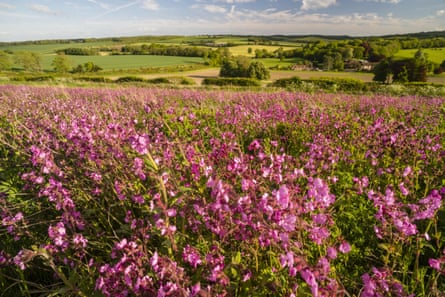
The farm budget is about £2.3bn a year for England alone, roughly the same as it was before Brexit, but it has not grown with inflation. In England, only about half of farmers receive payments now, with the rest either unable or unwilling to apply for the available schemes. Farm support systems in the devolved governments now differ widely – roughly another £1bn a year is spent among them.
Introducing friction to trade with Europe has sent some small producers to the wall. “It’s been more significant for farming and food than for other sectors, particularly those wanting to trade livestock products from the UK into the EU market,” says Tom Lancaster, head of land, food and farming at thinktank the Energy and Climate Intelligence Unit. “It’s become much harder, particularly for smaller producers who can’t really afford the sort of haulage costs of having to send a small load.”
All sorts of businesses found themselves stranded: exports of seed potatoes were banned; shellfish sales were suspended; the market for bull semen dried up.
The reset promised by the Labour government could ease some of these issues, but not all, says Lancaster. “There’s a live debate at the moment over who the winners and losers will be from the realignment with the EU,” he says. For some small businesses, the last five years of destruction will have been too much ever to bounce back from.
The Conservatives also promised that Brexit would be green, with farmers playing a key role in this. But a report this week from the Wildlife Trusts found the reality has been anything but. Instead, the UK has diverged from the EU on key environmental regulations, and Labour’s pitting of “bats and newts” as the enemies of developments needed to solve the housing and economic crises has plunged nature into a worse plight.
Matthew Browne, head of public affairs at the Wildlife Trusts, says: “We were promised a green Brexit, but what we got was a greyer UK. Brexit freedoms have been used to attack the laws that help nature and people flourish, risking a dangerous future and a standard of living below that of our EU neighbours.”
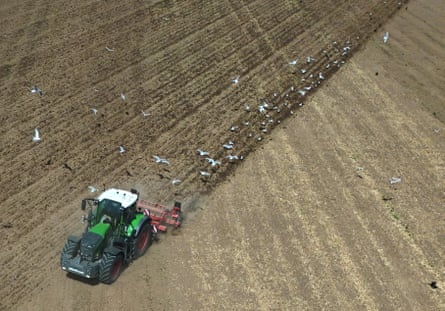
Concerns over farmers doing the minimum for their public subsidy – taking the easiest methods such as scattering wildflower seeds in margins, rather than the more difficult but more valuable actions such as restoring ponds or peatland areas – contributed to the government’s decision to abruptly close the SFI last year.
But Vicki Hird, strategic lead on agriculture at The Royal Society of Wildlife Trusts, worries there has been little focus on organic farming. “We are importing more organic food than ever, instead of growing it – that’s a bit mad.”
Meanwhile, in the EU, the Cap is still controversial, and key environmental protections have also been rolled back across the bloc. Furious farmer protests in 2024 involving tractor blockades and burning hay bales nearly sabotaged a landmark law to restore nature and contributed to a weakening of green strings attached to the Cap, which still makes up a third of the EU’s budget.
As it is, Ariel Brunner, regional director of BirdLife Europe and Central Asia, a nature protection group that has lobbied for reform, concludes: “[The Cap] remains a policy that is terribly wasteful, harmful to the environment, and socially regressive.” Before Brexit, the UK had been one of the leading voices striving to make the system fairer, greener and more efficient.
Brexit vote: 10 years on