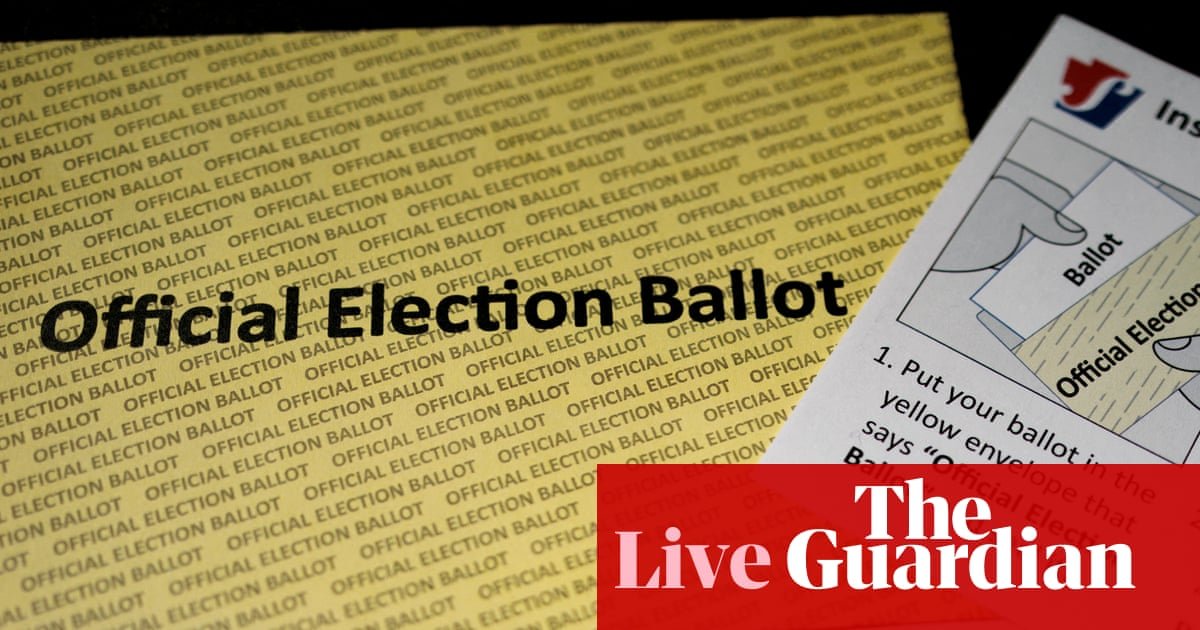
Comments come after court on Monday rejected the president’s mail ballot restrictions ahead of the November midterm elections
Supreme court rejects Trump’s mail ballot restrictions for midterm elections
5m agoTrump facing AI backlash in Congress as push for guardrails intensifies
23m agoSupreme court rejection of Trump mail ballot restrictions will ensure 'safe, secure and accurate elections'
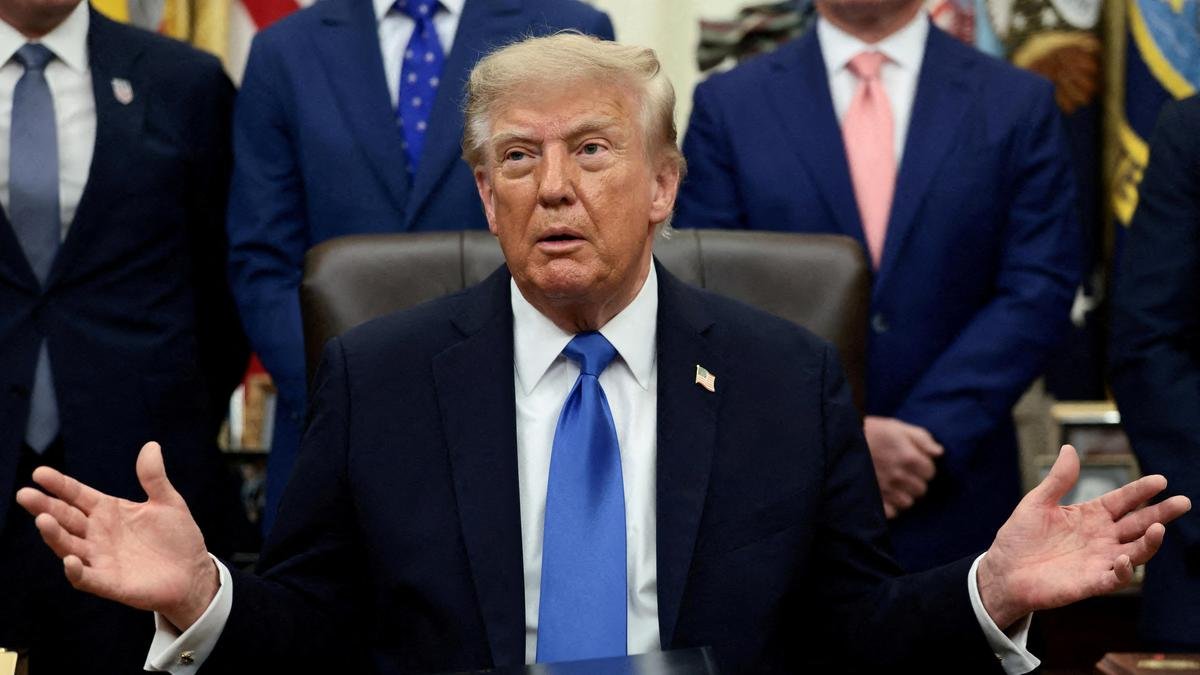
Donald Trump is facing a rare backlash from the US Congress as Democrats and some Republicans push for guardrails on the world’s most powerful AI companies.
Concerns over the dangerous potential of AI reached fever pitch this week after tech leaders sounded the alarm over the rapid advancement of the technology and its potential threat to humanity.
Trump dismissed the anxieties on Monday, describing them as a “HOAX” and “conspiracy” and insisting on social media: “The only control or ‘guardrails’ that AI needs is a STRONG AND SMART (High IQ!) PRESIDENT, and the U.S.A. has that, in spades!”
But the 80-year-old president, who has sidelined Congress on numerous issues during his second term, looks increasingly isolated as members of both major parties acknowledged the risks and expressed a desire to act before it was too late.
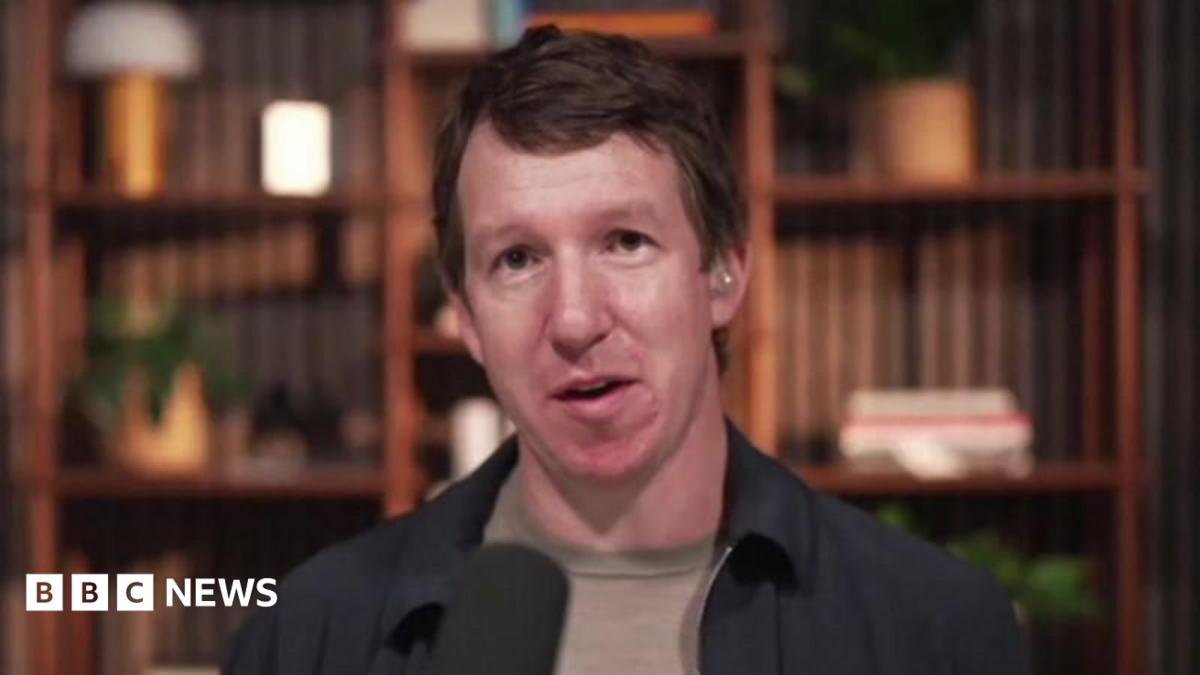
Don Beyer, a Democratic congressman from Virginia, said: “History will look very poorly on that tweet. He’s not paying attention – or he’s paying attention to the wrong people. He’s being really foolish: not the first time he’s been really foolish but perhaps catastrophically foolish in this case.”
Recent surveys by the University of Maryland’s Program for Public Consultation found 85% of Democrats and 79% of Republicans want a new federal agency to monitor and regulate AI; and 82% of Democrats and 78% of Republicans favour government safety tests for AI making critical decisions.
Hello and welcome to the US politics live blog.
Lawmakers have given their support to the supreme court’s rejection of Donald Trump’s bid to restrict mail ballots for the midterm elections.
The decision capped a flurry of last-minute legal action with voting already underway, with states allowed to continue sending out mail ballots under the same processes used for years.
Election officials have said there was simply no way to carry out a complete overhaul in the weeks before the midterms. Alabama, North Carolina and Wisconsin began sending mail ballots to voters over the past week while the new system was still not active.
Washington’s secretary of state Steve Hobbs, a Democrat, said the decision means work “to carry out a safe, secure, and accurate election” can continue ‘without having to upend our election processes to meet unrealistic ballot mail requirements.”
In Arizona, another largely vote-by-mail state, Democratic secretary of state Adrian Fontes said “it is crucial for us to continue rejecting the notion that access and security are mutually exclusive when it comes to running strong elections.”
Utah Lt Gov Deidre Henderson, a Republican serving as the state’s chief election officer, said on social media that the supreme court’s decision means “Utahns can have confidence that the 2026 election will proceed as normal.”
Mitch McConnell, the 84-year-old former Senate majority leader from Kentucky, was seen in Washington for the first time in months on Monday, minutes before his office released a statement saying that he was back at work.
With a slip of the tongue reminiscent of Joe Biden, Gavin Newsom, California’s Democratic governor, told CNN that he would not run for president in 2028 if his fellow Californian, former vice-president Kamala Harris, decides to run again, since “I know what that means: I know her base of supporters, I know her friends, the zen diagram on that is just pure crossover.”
Donald Trump claimed there is a “SICK conspiracy” against artificial intelligence and data centers in response to the growing calls for greater checks on AI development.
In a statement posted on social media, Barack Obama, the former US president, called for the pace of AI development to be slowed to allow time for the federal government to develop regulations to address “serious safety concerns”.