Andhra Pradesh’s push to hold local body elections has acquired significance beyond the routine renewal of grassroots institutions, with the State government seeking to balance a constitutional deadline, access to Central grants, reservation politics and possible judicial scrutiny.
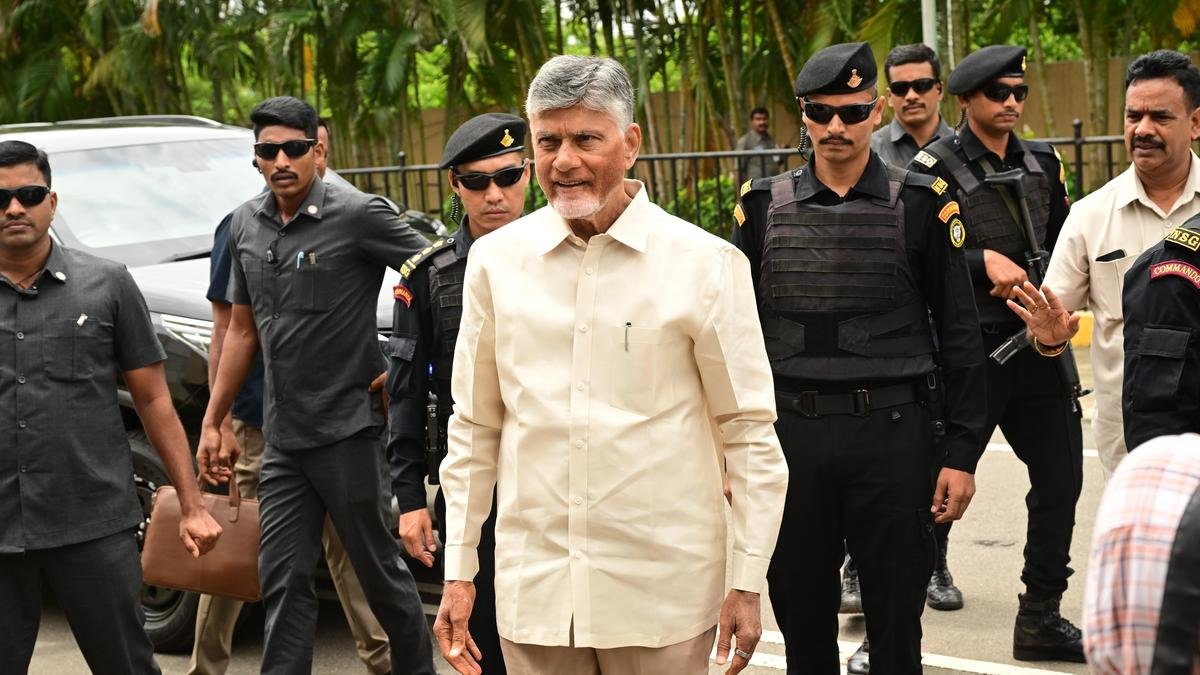
Chief Minister N.
Chandrababu Naidu’s call for early elections has highlighted the financial urgency.
The State is seeking ₹2,300 crore in rural grants and ₹1,562 crore in urban grants, with the government maintaining that elected local bodies are essential to access the funds.
Cabinet clears quota for BCs in local bodies, direct election of Mayors in Andhra Pradesh The larger financial stake is the ₹28,785 crore allocated to Andhra Pradesh for local bodies under the 16th Finance Commission for 2026-27 to 2030-31.
Of this, ₹16,627 crore is earmarked for rural local bodies and ₹12,158 crore for urban bodies.
The grants are intended to strengthen drinking water, sanitation, solid waste management and other civic services.
For the TDP-led NDA government, delaying elections could therefore affect the State’s ability to draw Central assistance at a time when its finances remain under pressure.
The government is also keen to enter the polls with the coalition’s recent political momentum intact and has asked coalition leaders to identify candidates capable of providing effective leadership at the grassroots.
The elections could become the first major test of the ruling alliance’s organisational strength below the Assembly level.
Andhra Pradesh Assembly passes Bill to restore direct election of Mayors, Chairpersons of ULBs The Cabinet’s decision to proceed with Backward Classes (BC) reservations adds another dimension.
It has favoured reservations for BCs in rural and urban local bodies in accordance with the law, while retaining existing reservations for Scheduled Castes and Scheduled Tribes.
Local elections provide a wide arena for social groups to translate their numerical strength into political representation.
Lotus should bloom in Andhra Pradesh local body elections, Nitin Nabin tells BJP cadre The timing is complicated by electoral rolls.
The administration is seeking to complete the polls before October 3, when revised electoral rolls are scheduled to be published.
Conducting elections with the existing rolls could avoid fresh procedural complications.
A delay could invite challenges over voter eligibility and ward-wise demographic changes.
This is particularly important for reservations.
Changes in population figures can alter the concentration of SC and ST voters and consequently affect reservation of local constituencies.
Any substantial change could require the reservation exercise to be revisited, potentially prolonging the process.
BJP forms special committees for local body elections in Andhra Pradesh The expiry of local body terms has already created a constitutional and administrative dilemma.
Urban local bodies completed their term on March 15, while Gram Panchayats completed theirs on April 4.
The terms of remaining rural institutions, including Mandal Parishads and Zilla Parishads, are due to end by September 23.
In the absence of elections, administrators or Special Officers have to run these institutions.
While this ensures administrative continuity, it cannot substitute for elected local government.
Articles 243E and 243U envisage a five-year term for Panchayats and Municipalities and require elections before expiry of the existing term to ensure continuity.
The Finance Commission framework makes the issue more compelling.
A substantial portion of grants is subject to conditions relating to elected local bodies, online publication of provisional and audited accounts and compliance with State Finance Commission requirements.
80% of the allocation is basic grants, divided between untied and tied components, while the remaining 20% is performance-linked.
Tied grants are intended for drinking water, sanitation and solid waste management, while performance-linked funds depend, among other things, on revenue generation and audit compliance.
Thus, the election deadline is closely linked to the State’s ability to demonstrate compliance with requirements attached to Central funding.
The judiciary could also prove decisive.
Delays in local body elections have repeatedly attracted judicial scrutiny, with courts emphasising that constitutional elections cannot be postponed indefinitely.
Prolonged delay could expose the government and election authorities to litigation and directions prescribing timelines.
The emerging picture is a race against time.
The Naidu government wants elections to restore elected local governance; secure Central grants and consolidate its political position.
The Election Commission must ensure that the process withstands legal scrutiny, particularly on reservations and electoral rolls.
For the Opposition, the polls offer an opportunity to test the coalition’s grassroots support.
For the government, they provide a chance to convert its Assembly-level mandate into organisational strength across villages, towns and cities.
The local body elections are therefore not merely about electing sarpanches, councillors and parishad representatives, but also about control of Andhra Pradesh’s grassroots political machinery and access to funds needed to make it work.