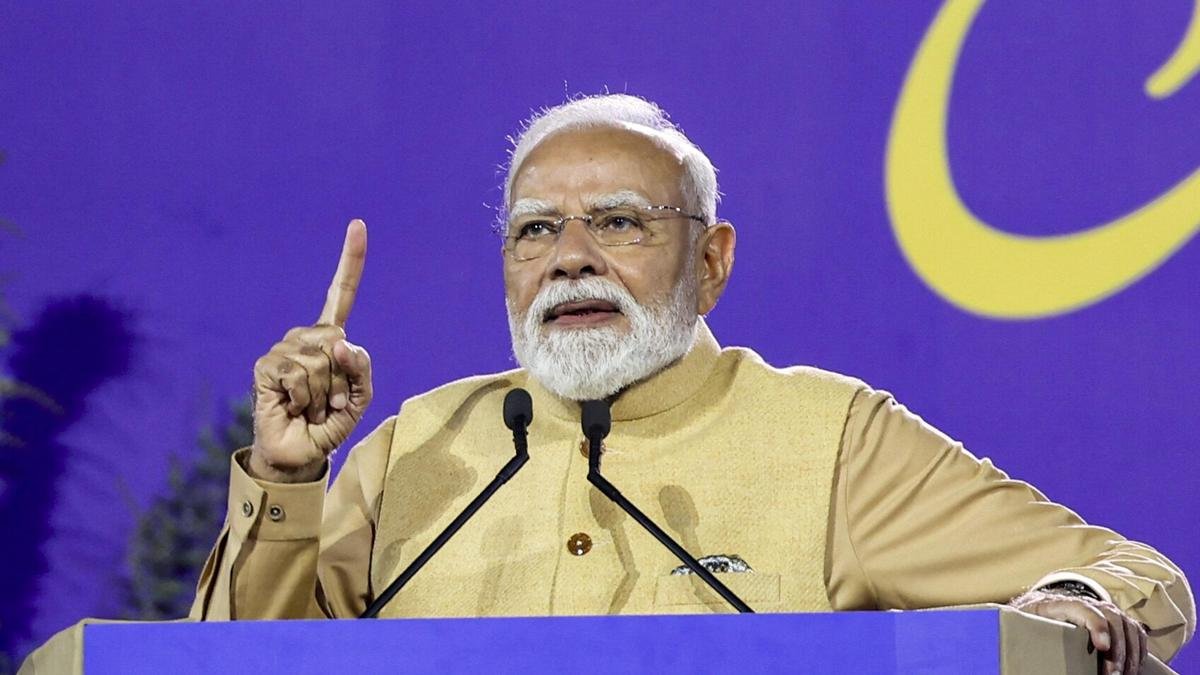
Prime Minister Narendra Modi on Thursday (July 9, 2026) praised Australia’s ban on social media access for teenagers, in the clearest indication so far that the Union government is mulling similar curbs.
“I have followed you closely, and the way you have legislated and worked to protect society in IT and social media is inspiring the world,” Mr.
Modi told Australian Prime Minister Anthony Albanese in remarks open to the press.
The Prime Minister is on a bilateral visit to Australia.
Australia’s Online Safety Amendment (Social Media Minimum Age) Act, 2024 requires social media platforms to detect and block access to minors below the age of 16.
In conversations and public remarks, officials at the Ministry of Electronics and Information Technology (MeitY) have said that India is exploring a “graded” set of restrictions that would allow some social media access while blocking some categories of content depending on the age cohort of a minor.
Social media bans for minors are growing around the world, as anxieties around platforms’ effect on children’s mental health have grown.
British PM announces ban on social media for under-16s Growing problem: Vaishnaw IT Minister Ashwini Vaishnaw had confirmed the discussions during a press conference at the AI Impact Summit earlier in February.
“It's a problem which is growing day by day,” Mr.
Vaishnaw then said.
“And certainly there is a need for protecting our children, protecting our society from these harms...we are in a conversation regarding age-based restrictions with the various social media platforms and...the right way to go about this,” he said.
It is not yet clear if the government is planning to bring this into action with a law in Parliament or with amendments to the Information Technology (Intermediary Guidelines and Digital Media Ethics Code) Rules, 2021, which have been the main legal way for the government to introduce rules for requirements like labelling AI-generated images.
In April, State governments moved to announce their own respective social media bans.
Andhra Pradesh announced that it would pursue a law regulating children’s social media use, as did Karnataka.
“Officials have been tasked with studying best practices from countries such as Singapore, Australia, and Denmark to build a robust legal and technological framework [to enforce the law] tailored to India’s needs,” the AP government said in a statement.
Neither Karnataka nor Andhra Pradesh has tabled a draft law in their respective legislatures.
Regulating the internet is a Union subject, under the purview of MeitY.
That may be of little consequence, were the proposals to move forward before the Union government has its say.
Meta said in April in a statement that it would “comply with social media bans where they are enforced”, even as it said that such a measure may not be the best to tackle the issue of children’s wellbeing online.
Digital rights advocacy Internet Freedom Foundation (IFF) has opposed a total ban, arguing that social media exposure can engender greater civic participation at a young age, and that it is an extreme step.
“When a playground is unsafe, we make efforts to fix the equipment, ensure appropriate guardrails, and prioritise safety as opposed to banning the use of the playground entirely,” IFF said.
“Given that the internet is not disappearing anywhere in the near future, and that even with a ban, young people will eventually find themselves online, the better approach than blocking access is making the internet a safer place.”