Who are the Democrats running in the midterms, and where do they stand? Our US political reporters are live now to discuss the state of the Democrats, the party’s moderate and leftwing candidates and key races to watch Sign up or sign in to post a question
3m agoWhat should the primary focus be for Democrats if they win?
9m agoCan being too united be a bad thing?
16m agoWhat are the races to watch to understand the state of the Democrats?
23m agoWill the Democrats consolidate the way Republicans did around Trump?
18h agoWelcome to the Conversation
KafkasDog asks: Trumpism has substantially distressed your democracy. If the Dems are in control of the House and Senate after November should their primary focus be on addressing and repairing the damage or bringing Trumpism to heel?
David: It has to be both. Democrats should try to stop the rot, blocking funding for ICE and the Iran war, launching investigations into corruption (including Trump’s makeover of Washington), trying to protect the independence of the justice department and so on. We may see another debate over to impeach or to not impeach. But they also need to offer a positive agenda as an antidote to Trumpism. It’s not enough to say “We’re not Trump” or to promise “We’ll turn back the clock to 2015”.
Lauramax100 asks: Could being too united be a bad thing? It was a real turn-off when party elders tried so hard to interfere in the NYC mayoral election even after primary voters made their choice. Could celebrating a broad coalition and letting local people choose be a better approach? The Republicans weren’t totally united pre-Trump, and arguably his attempt to have an iron grip on all GOP politicians may be one part of that party’s undoing.
Joseph: Unity can easily tip into groupthink, and the reluctance of leaders like Schumer and Jeffries to back Mamdani after he clearly (resoundingly?) won the primary looked to many like exactly that … the elite and old guard second-guessing where the voters have moved, which is why even allies like AOC called it a bad look. Trump’s “iron grip” model has won elections, but I’d argue it’s brittle: it depends on near-total deference to one man, punishes dissent that might otherwise catch mistakes early, and leaves the party with little to correct course once he’s gone. The Democrats’ instinct to litigate every nominee’s ideological purity risks the opposite type of failure. It’s a party so busy relitigating primaries that it struggles to actually fight the other side. They must come to terms with what the voters are not asking for, but now demanding of their elected officials.
Joseph: Unity can easily tip into groupthink, and the reluctance of leaders like Schumer and Jeffries to back Mamdani after he clearly (resoundingly?) won the primary looked to many like exactly that … the elite and old guard second-guessing where the voters have moved, which is why even allies like AOC called it a bad look.
Trump’s “iron grip” model has won elections, but I’d argue it’s brittle: it depends on near-total deference to one man, punishes dissent that might otherwise catch mistakes early, and leaves the party with little to correct course once he’s gone. The Democrats’ instinct to litigate every nominee’s ideological purity risks the opposite type of failure. It’s a party so busy relitigating primaries that it struggles to actually fight the other side. They must come to terms with what the voters are not asking for, but now demanding of their elected officials.
David: I agree with Joseph that the Trump cult is brittle: like an authoritarian regime, investing so much in one leader means a lack of flexibility and diversity of thought. And, like an authoritarian regime, Republicans will now have to wrestle with the succession question of who comes next. Democrats holding feisty debates of ideas is a healthier way to go. But as we’ve seen, especially in the social media era, that can easily become corrosive and turn into a circular firing squad. Some have observed that Democratic moderates are more venomous towards progressives than they are towards Republicans! They have to get the balance right and unite around their nominee in 2028.
David: I agree with Joseph that the Trump cult is brittle: like an authoritarian regime, investing so much in one leader means a lack of flexibility and diversity of thought. And, like an authoritarian regime, Republicans will now have to wrestle with the succession question of who comes next.
Democrats holding feisty debates of ideas is a healthier way to go. But as we’ve seen, especially in the social media era, that can easily become corrosive and turn into a circular firing squad. Some have observed that Democratic moderates are more venomous towards progressives than they are towards Republicans! They have to get the balance right and unite around their nominee in 2028.
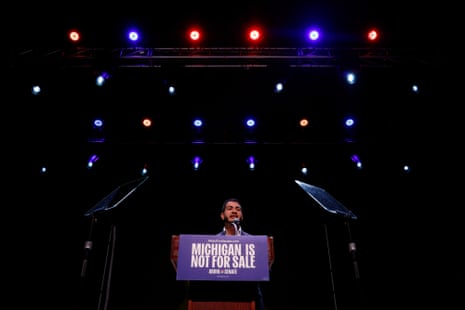
nycreader2 asks: Abdul El-Sayed has become a major symbol of the debate over the party’s direction. Are there other races or candidates we should be watching if we want to understand where Democrats are heading?
Rachel Leingang: There are so many interesting races this year – and I don’t think there will be one clean narrative about who wins. El-Sayed’s race remains one of the most interesting, though Democrats (and a couple independents) in typically redder places could win running economic populist campaigns that largely avoid cultural issues, and there will likely be more progressives in Congress based on who won the primaries. I’m based in the Midwest, so I’m paying close attention to: – David Crowley vs Tom Tiffany in the Wisconsin governor’s race – Rebecca Cooke’s third attempt to unseat Derrick Van Orden in Wisconsin’s third congressional district – Basically every federal and statewide race in Iowa: Rob Sand for governor, Josh Turek for Senate, three of the four congressional races – Dan Osborn’s run as an independent for US Senate in Nebraska, as well as a couple congressional campaigns there – Adam Hamilton, a Democratic pastor, is making a case he could win in Kansas – Sherrod Brown’s attempt to return to the US Senate in Ohio, along with a few congressional races there that could flip seats – In Michigan, Will Lawrence’s progressive campaign in a split district
Rachel Leingang: There are so many interesting races this year – and I don’t think there will be one clean narrative about who wins. El-Sayed’s race remains one of the most interesting, though Democrats (and a couple independents) in typically redder places could win running economic populist campaigns that largely avoid cultural issues, and there will likely be more progressives in Congress based on who won the primaries. I’m based in the Midwest, so I’m paying close attention to:
– David Crowley vs Tom Tiffany in the Wisconsin governor’s race
– Rebecca Cooke’s third attempt to unseat Derrick Van Orden in Wisconsin’s third congressional district
– Basically every federal and statewide race in Iowa: Rob Sand for governor, Josh Turek for Senate, three of the four congressional races
– Dan Osborn’s run as an independent for US Senate in Nebraska, as well as a couple congressional campaigns there
– Adam Hamilton, a Democratic pastor, is making a case he could win in Kansas
– Sherrod Brown’s attempt to return to the US Senate in Ohio, along with a few congressional races there that could flip seats
– In Michigan, Will Lawrence’s progressive campaign in a split district
Shrai Popat: Just to piggyback off Rachel here, a few that I’ve been covering and fascinated by across the country: – Troy Jackson in Maine. He’s the replacement Democratic nominee after the truly wild primary race blew up when Graham Platner was accused of sexual assault (which he denies) and ended his campaign. Jackson, who is a logger and former state lawmaker, is trying to unseat Susan Collins – a moderate Republican who is hoping to secure a sixth term in office. – Chris Pappas in New Hampshire. He’s a moderate congressman who has kept his once purple district blue. He’s hoping to keep the open Senate seat in Democratic control, but facing a tough contest against John E Sununu – a former senator from a political dynasty who has been comfortable criticizing Trump in the past (even though he bagged the president’s endorsement this cycle). Notably, Pappas beat his progressive challenger in the primary. New Hampshire really is emblematic of what a purple state looks like. Fully Democratic congressional delegation but Republican control of the legislature. Harris won in 2024, but the state still elected a GOP governor. What’s interesting to me in both of these New England Senate races is how Trump’s support could easily be an albatross for both of these Republicans as opposed to an asset. They’ll have to navigate unpopular opinions about the administration among moderates/swing voters, but also satisfy the Maga base. Another race that continues to be a prime example of picking a Democratic nominee with huge momentum is the Texas Senate race. Here, James Talarico, a polished state lawmaker, is facing a Trump loyalist – Ken Paxton, the state’s attorney general. Talarico has touted his religious beliefs, and walked back some of his more socially progressive comments. He’s also praised the incumbent senator John Cornyn, who lost the GOP primary to Paxton this year.
Shrai Popat: Just to piggyback off Rachel here, a few that I’ve been covering and fascinated by across the country:
– Troy Jackson in Maine. He’s the replacement Democratic nominee after the truly wild primary race blew up when Graham Platner was accused of sexual assault (which he denies) and ended his campaign. Jackson, who is a logger and former state lawmaker, is trying to unseat Susan Collins – a moderate Republican who is hoping to secure a sixth term in office.
– Chris Pappas in New Hampshire. He’s a moderate congressman who has kept his once purple district blue. He’s hoping to keep the open Senate seat in Democratic control, but facing a tough contest against John E Sununu – a former senator from a political dynasty who has been comfortable criticizing Trump in the past (even though he bagged the president’s endorsement this cycle). Notably, Pappas beat his progressive challenger in the primary. New Hampshire really is emblematic of what a purple state looks like. Fully Democratic congressional delegation but Republican control of the legislature. Harris won in 2024, but the state still elected a GOP governor.
What’s interesting to me in both of these New England Senate races is how Trump’s support could easily be an albatross for both of these Republicans as opposed to an asset. They’ll have to navigate unpopular opinions about the administration among moderates/swing voters, but also satisfy the Maga base.
Another race that continues to be a prime example of picking a Democratic nominee with huge momentum is the Texas Senate race. Here, James Talarico, a polished state lawmaker, is facing a Trump loyalist – Ken Paxton, the state’s attorney general. Talarico has touted his religious beliefs, and walked back some of his more socially progressive comments. He’s also praised the incumbent senator John Cornyn, who lost the GOP primary to Paxton this year.
NorthLondonIsRed asks: Since Zohran Mamdani’s election as NYC Mayor some Democratic leaders (Schumer, Jeffries) have kept their distance from him and the DSA, while others (Hochul, Harris, AOC, Sanders) have pushed for unity. As the party’s left wing gains national visibility ahead of the 2026 midterms will Democrats consolidate the way the GOP did under Trump — or will the centrist/progressive divide deepen into a functional three-party split?
David Smith says: I think they’ll be fine before the midterms. They will have progressives running in some districts and moderates in others, with anti-Trump sentiment as the glue holding them together. One exception might be Michigan, where many Democrats have got on board with progressive Abdul El-Sayed but some have not. After the midterms, however, there is potential for a split. If El-Sayed loses, there will be lots of finger pointing and claims that a progressive can’t win in 2028. But if El-Sayed and democratic socialists do well, it could be game on for Alexandria Ocasio-Cortez 2028.
Alice Speri: I don’t think this is going to be as much of an issue in the midterms. I think even Democrats who are unhappy about the DSA wins will prioritize defeating Republicans. I do think these tensions will be dominating the presidential primaries though and many are already gearing up for that. Third Way, a centrist Democratic group, announced a $15m effort to go to “war” against DSA. I don’t think that whatever unity Democrats manage to find in November will last.

We’re less than two months from the midterm elections that could have an outsized impact on the future of the United States.
With the primaries wrapped, our reporting team is fanned out across the country to tell the stories behind the horse race, from Washington to the Midwest and along the West Coast.
One of the key questions is, with the Democrats poised to take the House and perhaps even the Senate, what the rise of the party’s progressive left means for the broader Democrat coalition. How will candidates such as Michigan’s Abdul El-Sayed co-exist with the party’s more established centrists – and will the growing influence of democratic socialists push the party in a new direction?
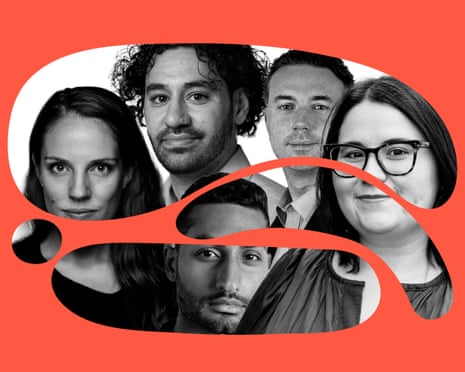
Political breaking news correspondent Joseph Gedeon, Midwest political correspondent, Rachel Leingang, US politics live blogger Shrai Popat; Washington bureau chief David Smith and reporter, Alice Speri are here live answering your questions.
Sign up or sign in to join the discussion.