Spanish Prime Minister Pedro Sanchez has accused Israel and Russia of spreading and amplifying disinformation related to the mass influx of migrants to Ceuta last month, citing research by the European External Action Service (EEAS), the European Union’s foreign service.
“After July 30 and 31, rumours and disinformation spread on social networks linked to Russia and Israel, and to an ultra-right international that always uses migration to attack both Spain and Europe and divide it,” Sanchez told Spain’s Cadena Ser radio on Monday.
Recommended Stories
list 1 of 4Spanish police evict hundreds of migrants from Ceuta beach to shelters
list 2 of 4Spain requests emergency funding from the EU over Ceuta migrants
list 3 of 4Anti-migrant protesters burn tents in Ceuta and block Red Cross aid
list 4 of 4Spain asks EU for help to process 5,000 Ceuta migrants amid local unrest
Sanchez said it was “evident” that the two countries had used the crisis to criticise the Spanish government, as they were at odds with Madrid over its position on the wars in Ukraine and the Middle East.
At least 70,000 people crossed into Spain’s North African enclave from Morocco over several days in late July, triggering a Europe-wide migrant alert.
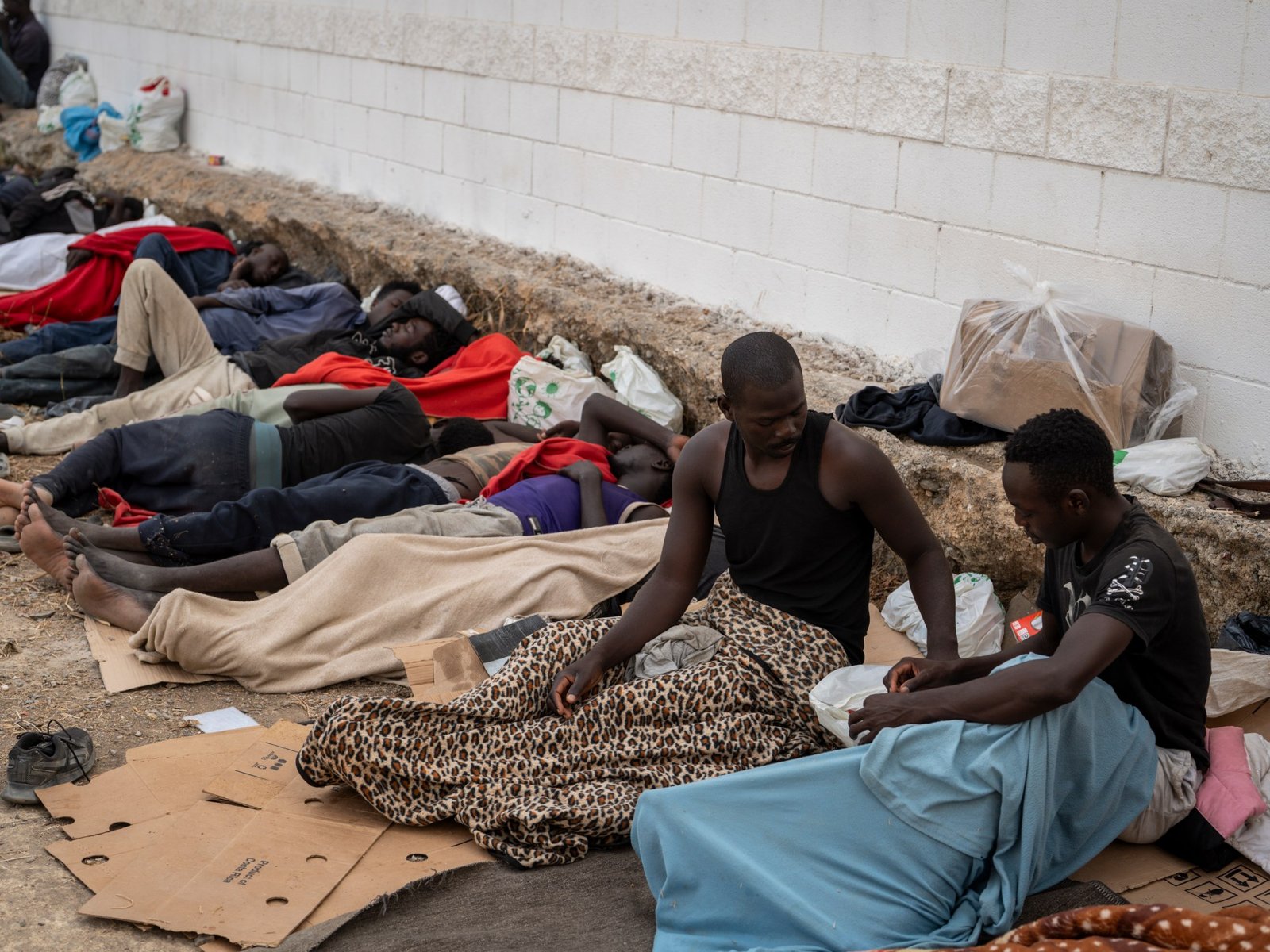
Although the vast majority returned to Morocco within hours, thousands have remained in the territory, many living rough on the streets.
The prime minister also ruled out any responsibility on the part of the Moroccan authorities in the sudden influx of migrants.
“No intelligence service with which the Spanish government normally cooperates” had suggested “any … involvement in one way or another of the Moroccan authorities”, Sanchez said.
“We must be aware that this crisis can only be resolved through cooperation and not through distrust towards Morocco,” said Sanchez, promising an additional 168 million euros ($195m) in aid for Ceuta to respond to the crisis.
Sanchez said on Monday that at the time of the influx, disinformation was being spread online, including by human trafficking groups, that if someone entered Ceuta by swimming, it was impossible for them to be deported to Morocco – a false claim.
We are continuing to investigate what happened, Sanchez said, adding an appeal for European solidarity to deal with the migration crisis on the continent.
Residents of Ceuta, which is just 18sq km (7sq miles) in area and has a population of 80,000, have held regular demonstrations over what they say are security and hygiene problems linked to the migrant influx.
Spain’s left-wing government has said between 3,500 and 7,000 migrants remain in the territory, including unaccompanied minors. Ceuta’s right-wing politicians allege it is at least 10,000.