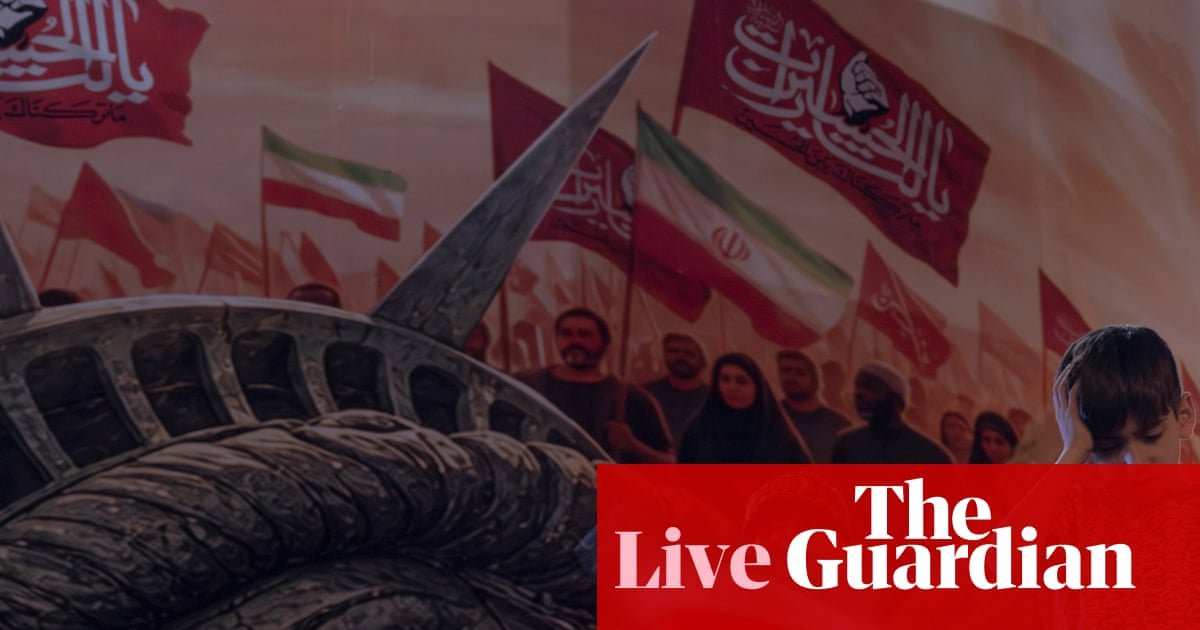
Middle East crisis liveUS-Israel war on Iran Trump says US will ‘hit Iran hard’ as hostilities resume – Middle East crisis live Iran responded to an assault on its Larak Island by targeting US bases in Jordan First US military attacks on Iran in a month prompt retaliation LIVE Updated 5m ago Yohannes Lowe (now); Martin Belam and Adam Fulton (earlier) Mon 31 Aug 2026 15.20 BSTFirst published on Mon 31 Aug 2026 09.01 BST Share Key events 41m ago Trump vows the US will 'hit' Iran 'hard' after Tehran targeted US bases in Jordan 1h ago US denies Iran's claim that oil tanker hit mines in strait of Hormuz 2h ago Israel signs $3.5bn defence export deal with Greece 3h ago Iranian president says he seeks a diplomatic end to the war even though US has 'not fulfilled its commitments' 3h ago Death toll from Israeli attacks on Gaza reaches 73,456, says health ministry 4h ago UAE says Iran drone attack 'dangerous escalation' 6h ago UAE denies Iranian claim that al-Minhad airbase was targeted in attack 6h ago Head of National Iranian Oil Company dismisses Trump’s claim of Kharg Island attack 6h ago US and Iran trade strikes for first time in a month Iranian children stand in front of an anti-US billboard in Tehran From 41m ago The US president, Donald Trump, has told Fox News’s chief foreign correspondent, Trey Yingst, that the US will respond to Iran targeting US military bases in Jordan overnight.
“We’re going to hit them hard,” Trump told Fox News.
“There will be a response,” he added, after Jordan’s army confirmed it had intercepted eight missiles early this morning.
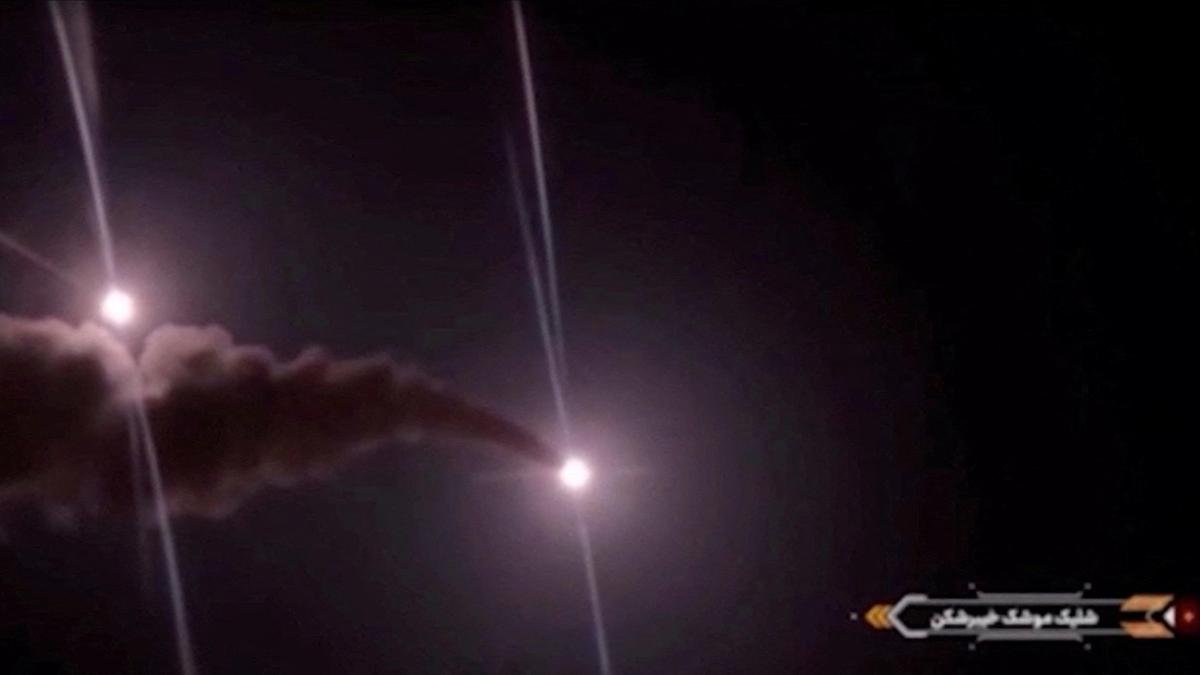
In response to the US assault on Larak Island late on Sunday, the IRGC “targeted technical infrastructure, maintenance facilities and enemy fighter jet positions at the US-operated King Hussein and al-Azraq airbases in Jordan” with ballistic missiles, causing “heavy damage”, according to state TV.
In the interview with Fox News on Monday, Trump said all of the missiles were intercepted by American air defence systems, except one which was allowed to pass through the airspace because it was identified as not on course to hit anything “significant”, according to Yingst.
Key events 41m ago Trump vows the US will 'hit' Iran 'hard' after Tehran targeted US bases in Jordan 1h ago US denies Iran's claim that oil tanker hit mines in strait of Hormuz 2h ago Israel signs $3.5bn defence export deal with Greece 3h ago Iranian president says he seeks a diplomatic end to the war even though US has 'not fulfilled its commitments' 3h ago Death toll from Israeli attacks on Gaza reaches 73,456, says health ministry 4h ago UAE says Iran drone attack 'dangerous escalation' 6h ago UAE denies Iranian claim that al-Minhad airbase was targeted in attack 6h ago Head of National Iranian Oil Company dismisses Trump’s claim of Kharg Island attack 6h ago US and Iran trade strikes for first time in a month In a brief post to his Truth Social platform, Donald Trump claimed Iran is a “failed nation” with no navy, air force or currency.
“IT IS DEAD!” he wrote, saying the only things Tehran have in its favour are a sympathetic US media, a “willingness to kill their protesters” and a “good line of bullshit”.
Trump said the Iranian leadership is in “total disarray” and is “incapable” of properly representing the country.
It is true that Iran has suffered enormously because of the US-Israel war, with Iranians facing high food inflation and a depreciation of the nation’s currency, the rial, under pressure from US efforts to isolate Iran by threatening the country’s few remaining trade partners while blockading its main ports in the Persian Gulf and choking off oil exports.
Trump, frustrated at being unable to win an aerial victory over Iran, has regularly lashed out on social media against the regime, threatening the country with attacks that often do not materialise.
He has emphatically denied reports in the American press that the US is suffering a munitions shortage and has vowed to seek “long term jail sentences” for officials who leak information about the military’s weapons stocks.
The US president, Donald Trump, has told Fox News’s chief foreign correspondent, Trey Yingst, that the US will respond to Iran targeting US military bases in Jordan overnight.
Scott Bessent, US secretary of the treasury, has said that Tehran is taking Washington’s sanctions seriously, arguing that Iran is resorting to kinetic military responses only because it is losing economically.
Reuters reports Bessent added that the US will maintain its economic pressure on the country, claiming that Iran’s economy does not need to collapse, but rather, he said, the Iranian government needs to come to its senses.
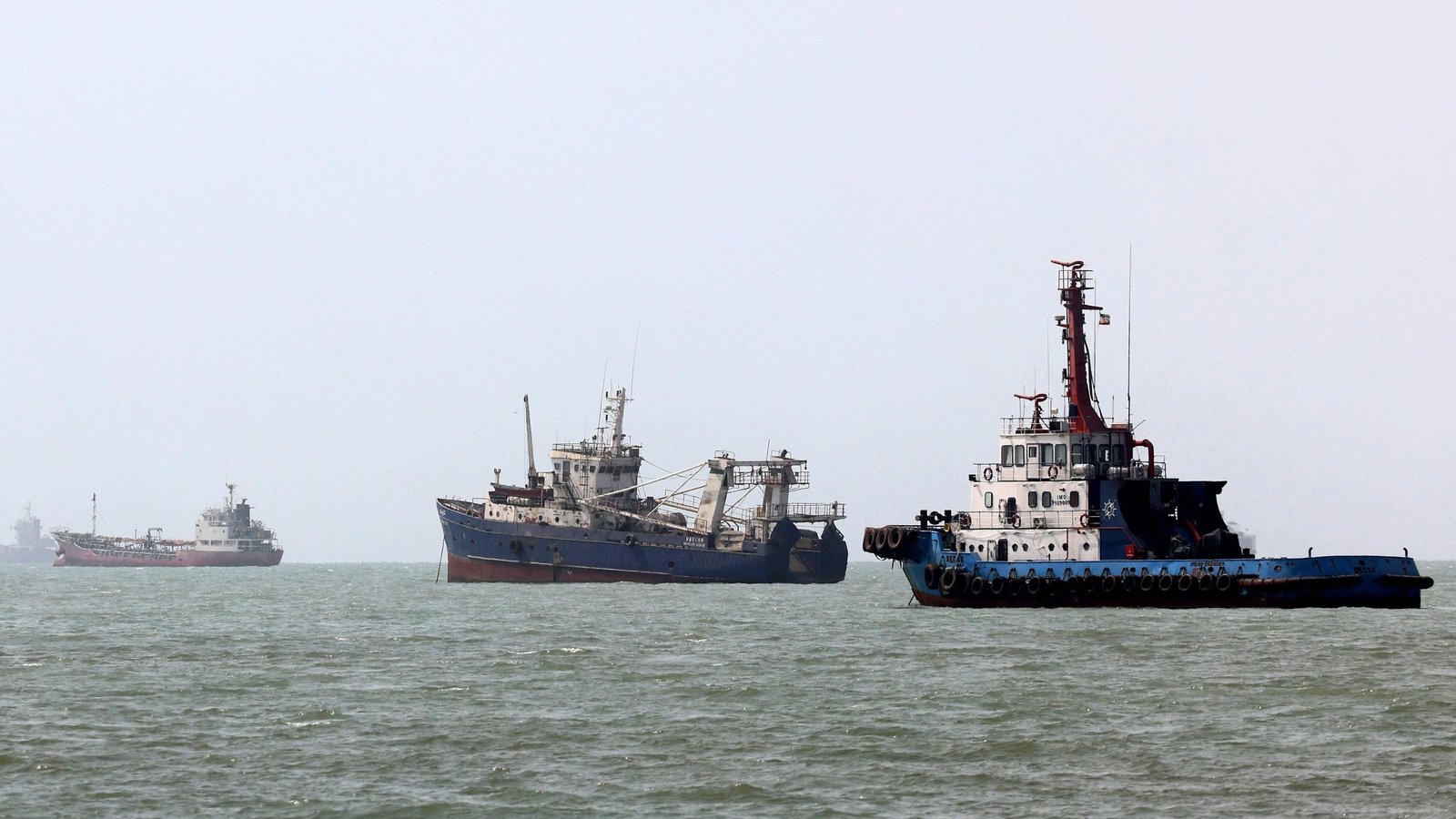
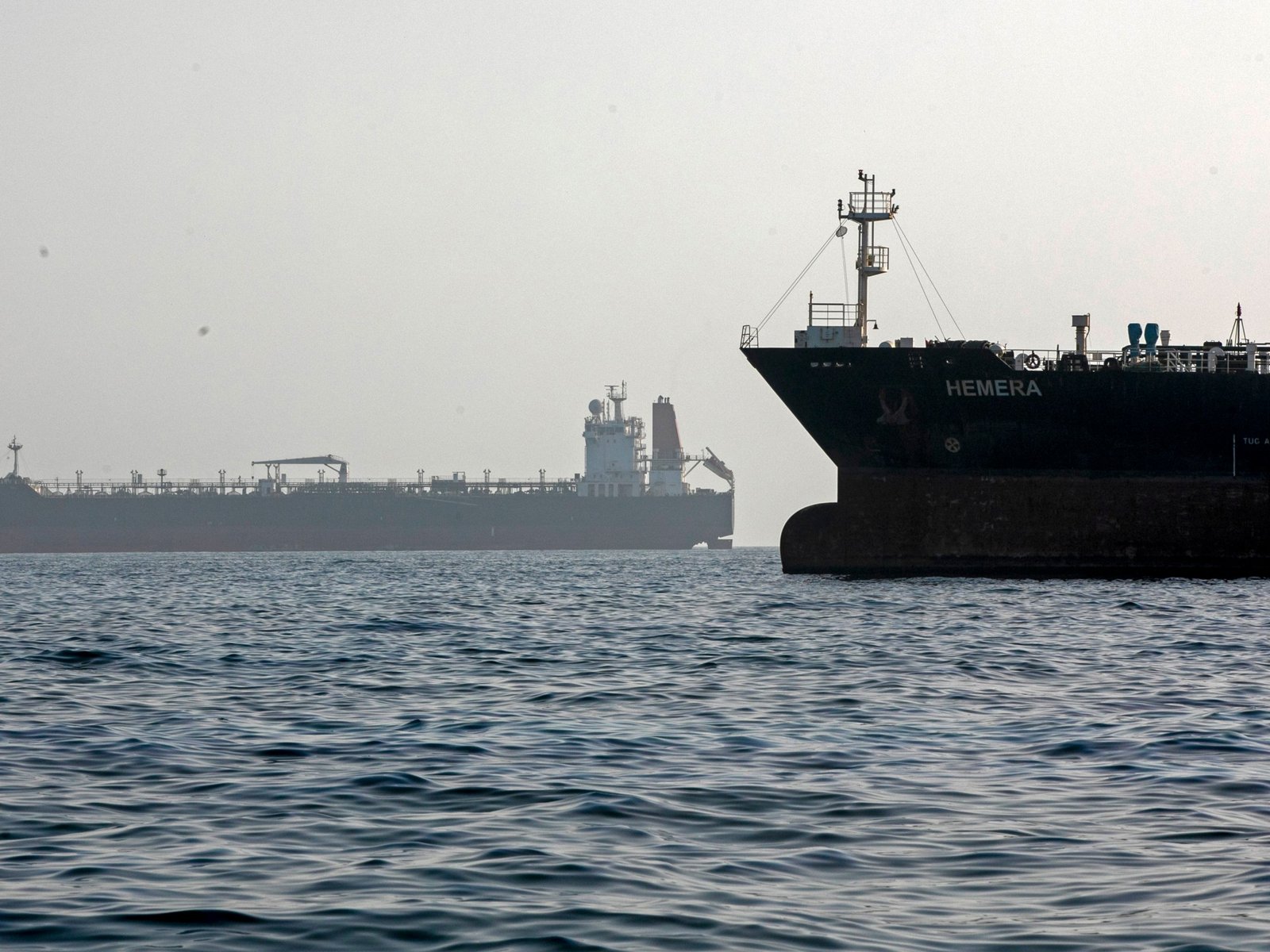
Reuters has a quick snap that US Central Command (Centcom) has denied claims made by Iran state TV and the Islamic Revolutionary Guard Corps that a ship had struck mines in the strait of Hormuz.
In a statement posted to social media, Centcom said “Iran’s claim that a supertanker passing through strait of hormuz struck two mines and was brought to a complete stop is false.” The denial followed reports in state media earlier today that Iran had said an oil tanker caught fire in the strait after it hit two naval mines.
“A rogue supertanker attempting to pass through the illegal route south of the strait of Hormuz caught fire in massive fires after striking two naval mines and was brought to a complete stop,” Iran’s Revolutionary Guards said in an earlier statement.
Israel signed a multibillion-dollar weapons deal with Greece on Monday, the largest between the two countries, AP reports.
Israel’s defence ministry said the $3.5bn (€3bn / £2.6bn) export deal, dubbed Achilles Shield, is one of the country’s largest and includes a multilayered air defence system for Greece using Israeli technology.
The Greek defence ministry said in was part of “the greatest reform of its armed forces in its history”, as the Nato member looked to ramp up defence spending.
The deal was signed in Tel Aviv by Israeli defence ministry director general, Maj Gen Amir Baram, and Maj Gen Ioannis Bouras of Greece.
A handout image of the signing of the defence deal between Israel and Greece.
The statement read: We continue to strive for a path of agreement and understanding, and we believe that continuing the war is neither in our interest, nor in the interest of the region.
We believe that the solution to the existing problems is dialogue and cooperation, and all capacities must be used to prevent the spread of insecurity and conflict.
Indian prime minister, Narendra Modi (L), meets Iranian president, Masoud Pezeshkian, on sidelines of the SCO Summit in Bishkek, Kyrgyzstan.
Pezeshkian, seen as a relative moderate in Iran, has already met with Indian prime minister Narendra Modi on the sidelines of the summit and told him that Tehran still seeks a negotiated solution to end the war with the US, despite the flare up in hostilities over the last 24 hours.
According to the Tasnim news agency, the Iranian president told Modi that fighting was in no one’s interest and that dialogue and cooperation were the way to resolve existing problems.
But, according to Fars news agency, Pezeshkian said the US has “not fulfilled its commitments”, which he presumably means the US continuing a blockade of Iranian ports and holding on to frozen Iranian assets.
He also said “there are currents within America that see their interests in the continuation of war”, without eleaborating.
There are sharp disagreements within Iran on how to proceed in the conflict, with the new hardline leadership reportedly favouring confrontation with the US, wanting to squeeze reparations out of Washington and a right to toll the strategic strait of Hormuz.
Medics said two people were killed and several others injured when an Israeli airstrike hit a crowd of people near the municipal public park in Gaza City on Monday, an area densely populated with families displaced by Israel’s assault.
Gaza’s health ministry says at least 1,320 people have been killed by Israeli attacks since a ‘ceasefire’ was signed between Israel and Hamas last October.
Hamas accuses Israel of violating the ceasefire and undermining efforts to implement a broader plan by the US to end the war on Gaza.
A view of Palestinian displacement camps amid widespread destruction from Israeli airstrikes in Gaza City.
In its latest update, Gaza’s health ministry said that 73,456 people, mostly women and children, have been killed in Israeli attacks across Gaza since October 2023, when Isreal launched its assault on the territory following the Hamas-led attack on southern Israel on 7 October 2023, in which about 1,200 people were killed.
A number of legal and rights experts have concluded that Israel has committed genocide – considered the most serious international crime – against the Palestinian population of Gaza.
Israel denies the charge, despite the widespread evidence that supports the conclusion.
Coinciding with this week’s G20 meeting, the EU has issued a statement saying it will work with the US and other allied countries to maintain economic pressure against Iran.
“The EU welcomes efforts at ensuring that Iran ceases its destabilising activities and engages in peace negotiations with good faith, also through additional economic pressure, including through the US-led Operation Economic Outcast,” it said in reference to the pressure strategy the White House describes as “an unprecedented campaign to sever every remaining economic lifeline sustaining” the Islamic republic.
“The EU will continue to work closely with the United States and other G7 and international partners to maintain pressure on Iran and contribute to de-escalation and regional stability,” the EU statement added.
Lebanon’s state-run National News Agency is reporting that Israeli artillery shelling targeted the southern Lebanese town of Houla on Monday.
It also reported overnight Israeli attacks in the areas of Mansouri and Buyout Al-Sayyad, also in southern Lebanon.
The renewed war on Lebanon started after Hezbollah, the Iranian backed Lebanese militant group and political party, struck Israel with rockets on 2 March in response for the killing of Iran’s former supreme leader.
Israel responded with an aerial assault and invasion that killed more than 4,300 people and occupied about 6% of the country’s territory, displacing a huge amount of the population, many of whom remain unable to return home.
Attacks have decreased since the signing of a US-Iran memorandum of understanding on the broader US-Iran war in June, and a US-sponsored framework deal between Lebanon and Israel agreed later that month.
But, as my colleague William Christou notes in this story, Lebanon still reports intermittent Israeli strikes causing casualties, and the broad demolitions of civilian buildings in southern villages and towns.
The UAE condemned an Iranian drone attack intercepted over its territorial waters, calling it a “dangerous escalation”.
In a statement on X, the UAE’s foreign ministry “strongly condemned the hostile Iranian attack on the country involving a drone that was intercepted by air defence systems over UAE territorial waters”.
The ministry also said the UAE reserved the “full and legitimate right to respond”.
See post at 09.51 for more details.
Iran’s foreign minister, Abbas Araghchi, has called Israeli prime minister Benjamin Netanyahu a “serpent”, accusing him of tricking Washington into launching the war.
“In Hebrew, Netanyahu openly crows that he suckered the U.S.
Administration into a war on Iran on behalf of Israel.
Netanyahu explicitly laughs about how he ‘influenced’ America through 1,000 hours of airtime on US networks,” Araghchi wrote in a post on X.
“In English, he praises POTUS’ leadership.
Serpent,” he added.
A presentation by Netanyahu in the White House Situation Room in February was key in convincing Trump to launch joint strikes against Iran – even despite the skepticism of his vice-president and a pessimistic intelligence assessment, the New York Times reported.
A man walks past a mural of Iran’s former supreme leader, Ali Khamenei, along a street in downtown of Tehran on 31 August 2026.
Khamenei was killed in joint US-Israeli strikes on the opening day of the war on 28 February.
After launching the unprovoked war against Iran on 28 February, which many experts agree is illegal, Trump and Netanyahu fell out when it quickly became clear a quick regime change victory was unlikely to happen.
Since then, the two leader’s relationship has become increasingly strained, with their goals sharply diverging, especially over the Israeli assault on Lebanon, which has threatened to derail US diplomatic efforts to end the war in Iran.
Donald Trump listens as Benjamin Netanyahu speaks at the US president’s Mar-a-Lago club in Palm Beach, Florida, in December 2025.
In making the sanctions threat last Monday, the US treasury secretary, Scott Bessent, announced an initial set of sanctions on 60 individuals, entities and vessels for alleged involvement in trade with Iran, but there were no Chinese financial institutions on the list, despite their involvement in financing the Iranian oil trade.
The omission reflected US caution.
Asked why the Trump administration had not declared immediate sanctions and had stopped short of naming potential sanctions targets, Bessent replied: “Why would I want to blow up the global financial system?” Financial and trade experts say the administration is well aware of the risk of Chinese retaliation before a scheduled summit next month between Donald Trump and Xi Jinping.
China could strike back through financial markets or with limits on its export of critical minerals.
Iran has been economically wrecked by the war and the accompanying US blockade, but it maintained its defiance in response to Bessent’s threats of total isolation.