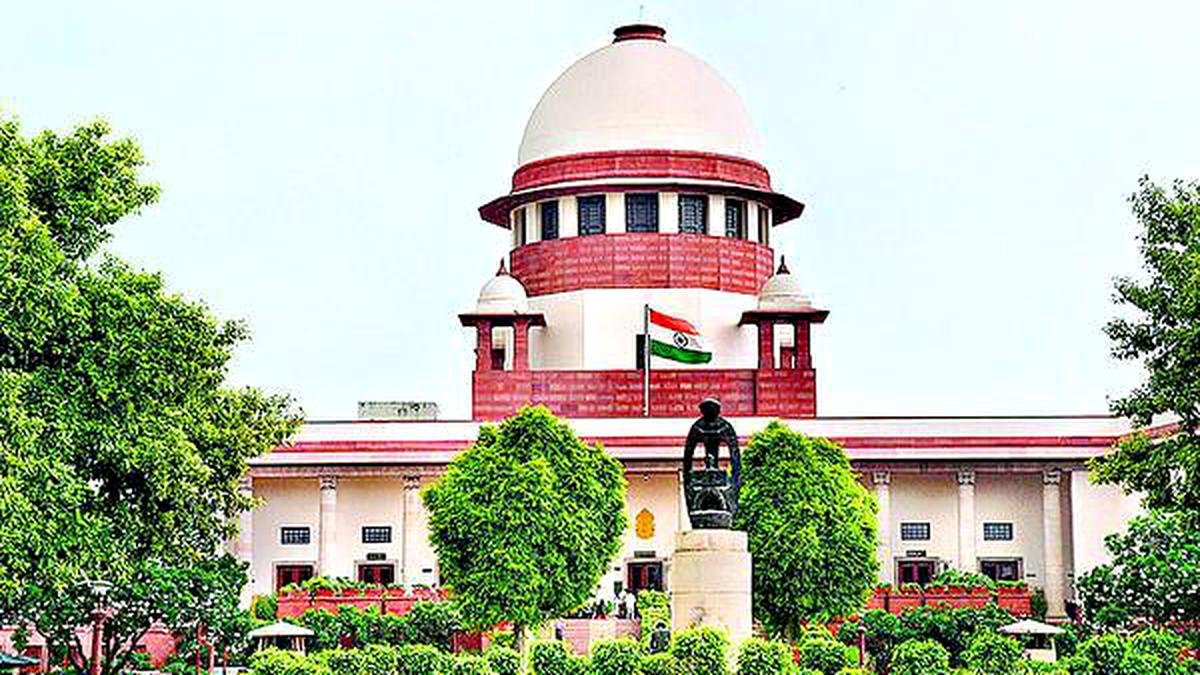
The Supreme Court on Thursday (September 10, 2026) asked Solicitor General of India Tushar Mehta to ensure “immediate action” by the Delhi Police on the complaint filed in Parliament Street Police Station by a 14-year-old student, who alleged open threats and harassment from vigilantes and miscreants for her role in the Cockroach Janta Party protests against NEET-UG question paper leaks.
“These are anti-social elements.
They commit violence against a child, and they roam free.
Now, they are again trying to browbeat and intimidate the child and her family, so that they do not proceed with any legal action.
This is a very serious issue.
Her cause is absolutely justified,” Chief Justice of India Surya Kant, heading a three-judge Bench, observed.
The ‘cockroaches’ who refuse to crawl away Out of respect for the teenager’s privacy and safety, the Bench did not name her and asked her lawyer not to mention it in open court while livestreaming was on.
The student’s counsel submitted that a “vigilante” had “bragged” on social media about the hurt caused to her and her family.
“She is a bona fide victim.
She is also a vulnerable victim.
No irreversible harm should befall the child or her family,” the lawyer said.
Justice Joymalya Bagchi, part of the Bench with Justice V.
Mohana, said the Uttar Pradesh Police should take responsibility for the safety of the student and her family.
Street police station relates to allegations of miscreants threatening, harassing, intimidating and having indulged in acts of violence against her.
If they are true, we would like you to take immediate action on the FIR, and file a report here.
Police protection must be given to the victim and family by the police in Uttar Pradesh where she is presently claiming to reside,” Justice Bagchi addressed the top law officer.
Recently, the Delhi Police had arrested Hindutva influencer Swatantra Bhardwaj in connection with the alleged assault on the father of a student during the NEET-UG protests.
Bhardwaj was detained in Bulandshahr after the CJP had staged a protest outside the Parliament Street police station.
‘HPEC our extended hand’ Counsel argued that vulnerable victims like her client should be able to safeguard their privacy by directly approaching the apex court or accessing the Supreme Court-appointed High-Powered Enquiry Committee (HPEC), which was set up to investigate police and anti-social excesses against protesting students on July 20.
Cockroach Janta Party protests | Collection of The Hindu’s ground reports “The Committee is our extended hand.
Whatever the committee does and finds, it will be placed before us only.
Protection of vulnerable witnesses should not be less than that given in judicial proceedings… There should not be any obstacle to access for vulnerable victims,” Chief Justice Kant observed.
Senior advocate N.
Hariharan, for petitioners including students, asked who would register FIRs if the HPEC found police officers liable for the excesses committed against protestors.
“Once a cognisable offence is made out, who will register the FIRs?
Will the Supreme Court or HPEC order the registration?
Will the police investigate their own case?” Mr.
Hariharan asked the court.
The cockroach dilemma facing India’s political parties The Bench asked him to wait until the enquiry concludes and the allegations are clarified.
“We will iron out these creases then, and pass clarification orders,” Chief Justice Kant assured.
Senior advocates Menaka Guruswamy, Gopal Sankaranarayanan and advocate Vrinda Grover flagged the need for a separate Supreme Court hearing on constitutional questions involving issues like the use of facial recognition at the Jantar Mantar protest site and the alleged storage of surveillance data with private entities.
Ms.
Grover pointed out that a separate petition challenged the alleged use of metal projectiles against unarmed students.
“These are broader constitutional questions.
How can a fact-finding committee examine constitutional questions?” Ms.
Guruswamy asked.
NEET-UG 2026 | A collection of explainers and expert opinions Conflict of interest Advocates Prashant Bhushan and Neha Rathi voiced grievances about an HPEC member, alleging a “conflict of interest”.
Justice Bagchi said the court would look into grievances brought on record regarding this particular member of the HPEC, but would not tolerate any “presumption of bias” against the entire committee.
“This is not an apprehension of bias, but the committee should inspire confidence,” Mr.
Sankaranarayanan responded.
The Supreme Court constituted the HPEC in August, headed by former apex court judge Justice R.
Subhash Reddy, to probe all issues and allegations, including police excesses on students during nationwide protests against NEET-UG paper leaks.
Besides Justice Reddy, the committee includes Justice Ravi Shankar Jha, former Chief Justice of Punjab and Haryana High Court; Justice Shalinder Kaur, former judge of the Delhi High Court; Rishi Kumar Shukla, former Director of the Central Bureau of Investigation; and Dr.
L.R.
Bishnoi, retired Director-General of Police, Meghalaya.
Mr.
Mehta said the committee would have its first meeting on September 15, 2026.