We boiled litres of water to find the best electric kettles, from hard-water heroes to vintage-style, repairable and wifi-connected models
The best air fryers, tried and tested for crisp and crunch
Despite the march of progress, the humble kettle remains a kitchen staple. It’s what we turn to in times of strife, when spirits are flagging, or to start our day. When a visitor calls, one of the first things we often do is put the kettle on.
Many small appliances have evolved beyond their original form, but the kettle’s basic principles remain largely unchanged. Water goes in and heats until a thermostat switches it off; the water then pours out, and we enjoy a cuppa. However, the technology that goes into a kettle has been slowly improving: better insulation to keep water hotter for longer and reduce reboils; different temperature settings to suit every drink from green tea to herbal brews; and more features such as filters and concealed elements to keep scale out of our cups.
When your existing kettle makes its last brew and must be taken to the big recycling centre in the sky, it pays to check out what’s on offer to replace it. The next one you buy may make more of a difference to your day than you might think.
Why you should trust me
When a friend heard I was writing this, she asked me, “Aren’t all kettles the same? They all boil water, don’t they?” And while she’s right about the second part, it took me at least 15 minutes to explain why she was wrong about the first. I’ve been testing kettles for years, and they vary greatly – in design, weight, ease of maintenance, ease of use and build quality. Some will last for decades while others will barely make it past the basic guarantee period. In short, yes, all kettles boil water – but they are far from being all the same.
How I tested
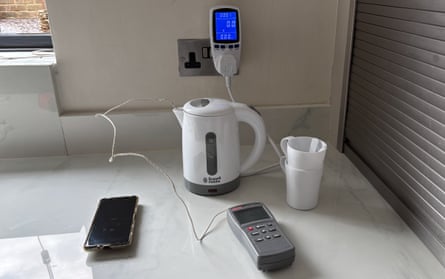
As you can imagine, I boiled a lot of water. Litres upon litres of the stuff. Enough to turn my kitchen into the steamiest hammam and clear my pores of blackheads I’ve had since I was a teenager.
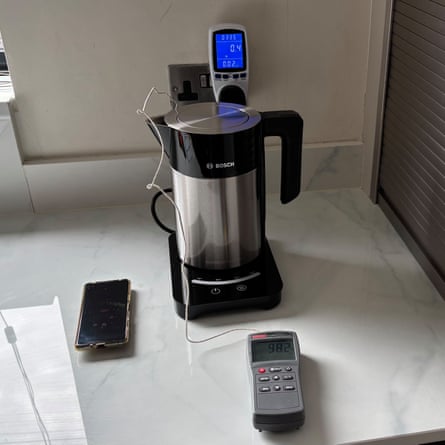
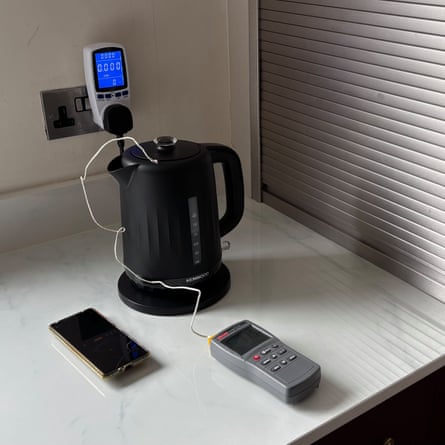
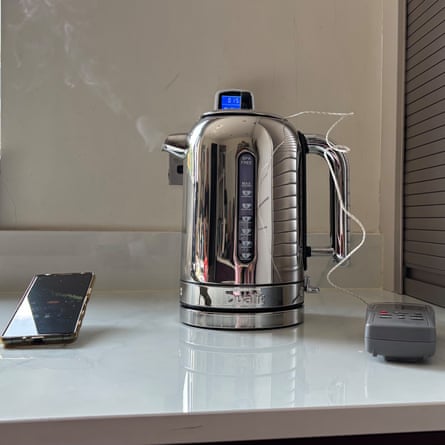
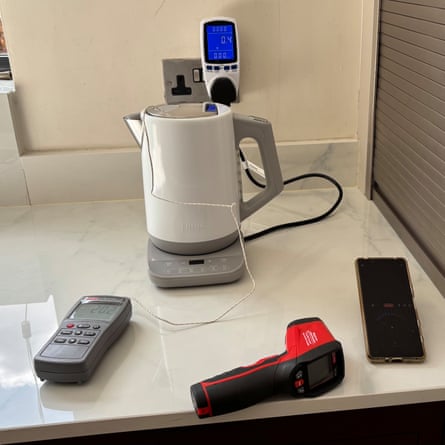
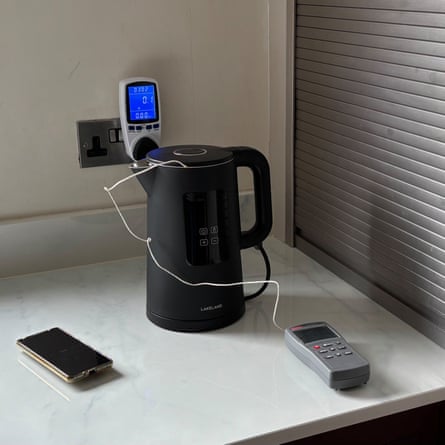
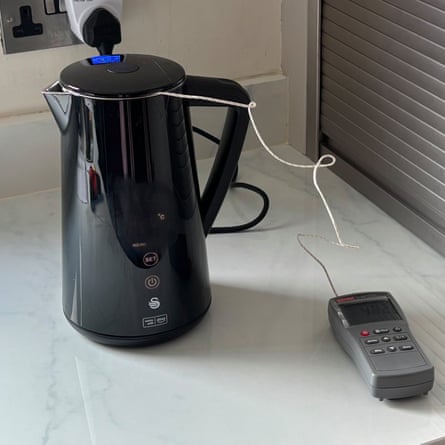
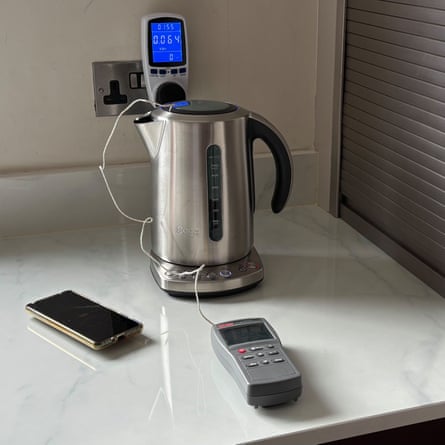
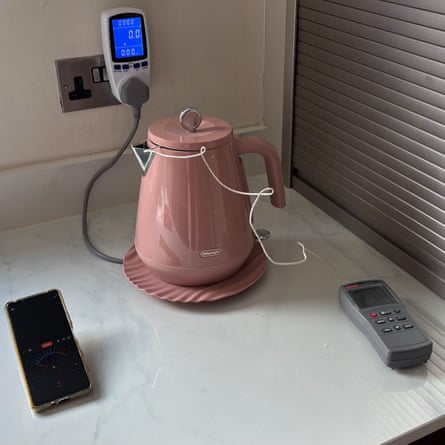
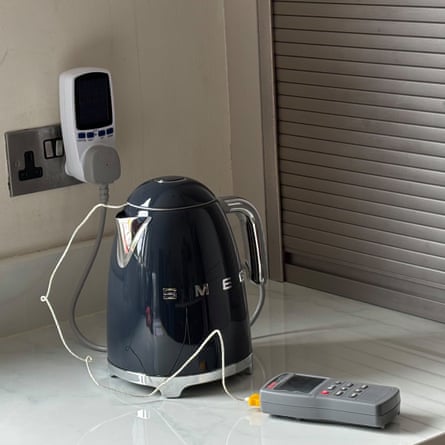
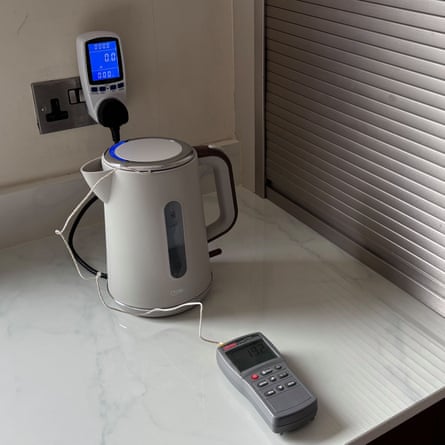
Testing wasn’t just about making gallons of tea and having a deep skin cleanse on the cheap, though. I also brought a lot of gadgets to the party: a power meter to assess electricity use for each kettle when boiling exactly one litre of water from cold; a timer to measure how long that took; and a probe thermometer to gauge how long it took for the kettle to click off once it had reached boiling point.
External temperature was measured using an infrared thermometer and the highest reading noted, while maximum noise levels were recorded with the Decibel X app. After boiling, water temperature was checked at the 30-minute, one- and two-hour points to see how much it had cooled.
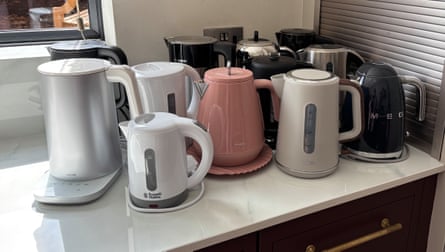
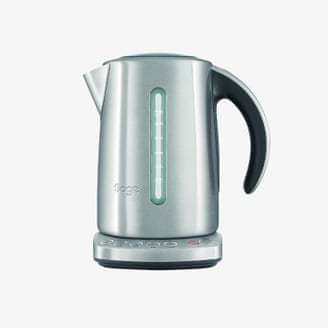
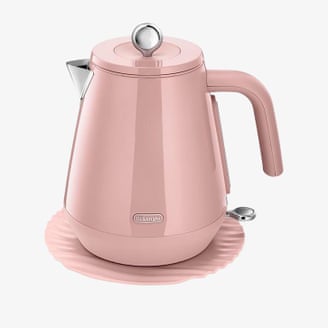
I tested 13 kettles in total. The ones that made the cut were selected on the basis of good energy efficiency or low minimum fill, plus ease of use or maintenance. Value for money has also been considered, as have longer guarantees and durable build quality that should translate into a lengthy lifespan for the appliance. Energy costs below have been calculated based on the 1 October to 31 December 2026 price cap in Great Britain. All samples have been returned to their supplier or donated to Caterham Round Table to raise funds for local causes and charity projects.
The best kettles in 2026
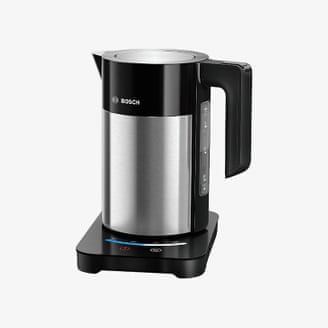
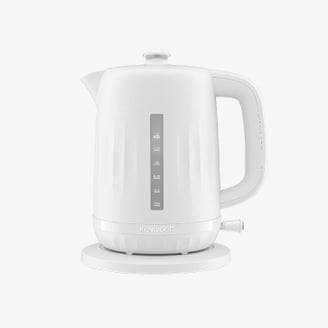
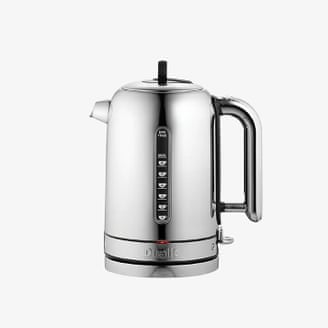
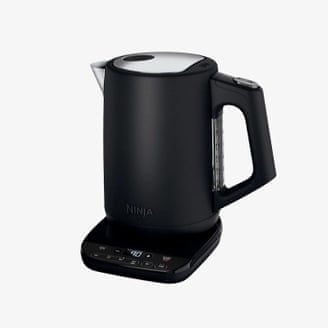
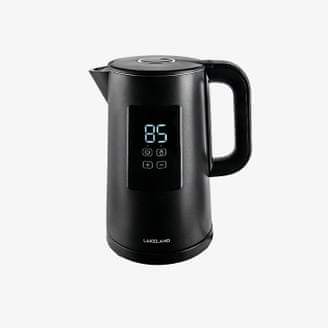
The best of the rest
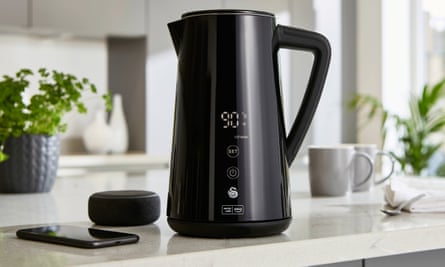
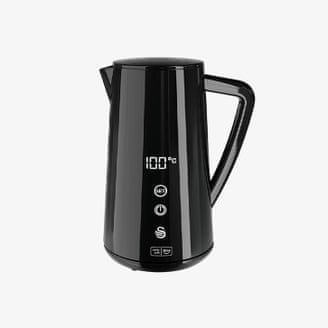
What you need to know
What key features should I look out for?
How you use your kettle will probably dictate which functions you’ll find the most useful, but generally, any feature that helps to save energy is valuable. For example, kettles that are dual-walled help to trap heat inside, so the water stays warmer for longer while the outside stays cool to the touch.
Those with low minimum fills enable you to boil just enough water for a single cup, so you don’t waste energy heating more than you need. Some kettles also have a keep-warm function that stops the water cooling below a certain temperature, which is ideal for those who become distracted after boiling or drink consecutive cuppas. It’s a good idea to check for safety features too, such as an auto shut-off to prevent it from boiling dry if there’s not enough water.
Other features are more “nice to haves”: variable temperature models enable you to choose water heated to lower temperatures than boiling, such as 70C or 80C, for other types of tea or for filling a hot-water bottle. Concealed elements, which are easier to keep scale-free, and removable, washable limescale filters will be useful for those who live in hard-water areas. Then there’s connectivity. While wifi-enabled and voice-controlled kettles can feel a little gimmicky, they can be a gift for busy parents who usually have their hands full.
Are rapid-boiling kettles faster than normal ones?
Rapid-boil kettles don’t have a strict industry definition, so while a rapid-boil kettle should boil water quickly, it may not differ much from one that’s not labelled as such.
A more reliable indicator of how fast a kettle will boil is its power rating: this is listed either in watts (eg 3,000W) or kilowatts (eg 2.2kW). The higher the number, the more power its element can use to heat water quickly. However, this isn’t the whole story: boiling times can also be quicker in double-walled kettles (as they lose less heat to their surroundings) and those with concealed or flat elements (which provide more surface area to heat the water than a coil).
How to descale your kettle
Limescale reduces your kettle’s efficiency, costing you more to boil each time, and shortening the appliance’s lifespan. Descale it monthly, especially if you live in a hard-water area. Standing water encourages the buildup of limescale, so try not to leave water in the kettle after use.
While you can buy descaler in the supermarket, a lower-cost and more eco-friendly option is to combine a weak food-safe acid, such as white vinegar or lemon juice, with water. Fill the kettle three-quarters with either water and the juice of one lemon or equal parts water and vinegar. Let it soak for an hour, then boil the kettle (once for vinegar, three times for lemon). Once it’s cooled, rinse thoroughly. If your kettle has a removable filter, take it out and rinse it under running water at the same time.
What material is best for a kettle?
The material a kettle’s body and lid are made from can make a difference to the appliance’s durability, daily use and even the taste of your drink. The most common materials for electric kettles are plastic, stainless steel and glass.
Plastic is probably the one you’ll encounter the most. It allows kettles to be affordable, lightweight – crucial if you have difficulty lifting or pouring when it’s full – and can be almost any colour or texture.
Over time, though, plastic can be prone to damage, such as cracks or scratches, and can absorb odours. This means a plastic kettle will usually need to be replaced more frequently than others. Most modern models are made using food-grade plastic, are BPA-free (check websites and labels to be sure), and meet current safety standards: research remains inconclusive about health risks from using a plastic kettle.
Stainless steel is another popular material for kettles. It’s hard-wearing, hygienic and resistant to corrosion, scratches and damage. Stainless steel is also a recyclable material (although the recyclability of your kettle will also depend on its construction and how easily its different materials can be separated). In terms of everyday use, good-quality stainless steel is considered to be taste neutral (although a new kettle may impart a slight metallic flavour at first).
Kettles made from stainless steel tend to be heavier overall, and will become hot on the outside when boiling and for some time afterwards. They may also be louder when boiling and can stain over time.
Glass kettles have been steadily gaining in popularity – for many, watching the bubbles rise during a boil is part of the ritual. Taste-neutral – a must for tea lovers who want their blends to shine – glass kettles are usually made from borosilicate glass, just like the glassware in laboratories, which is resistant to thermal shock and rapid temperature changes. The material is also non-toxic, non-reactive and won’t corrode – plus, you can always see how much water is left.
A glass kettle tends to be heavier than plastic but lighter than stainless steel. However, while glass kettles are tough enough to withstand daily use, they can still break on impact. You may also find they don’t retain heat as well as other materials, and if you live in a hard-water area, the visible limescale may lead to a more frequent need for descaling.
How to know when to replace your kettle
According to various estimates, the average kettle lasts around six to eight years. The higher quality the kettle, the better you maintain it and how often you use it will all determine its lifespan.
However, while this is a general guide, you should stop using your kettle if you notice damage, discoloration, leaks or any electrical safety issues – such as burning smells, rattling or buzzing sounds, scorch marks, sparks or exposed wires. A kettle that trips your electrics should be replaced immediately. Contact the manufacturer if you are still within warranty or to explore repairability options.
Performance issues are also a sign that your kettle is failing. These can include a kettle that’s taking longer to boil, or that switches off before boiling point is reached (indicative of a faulty thermostat). Even if everything looks fine inside, if water begins to taste different, looks cloudy or has a smell, it’s time for a new kettle. Limescale that is hard to shift is another sign your kettle has to go: this points to deteriorating surfaces.
What to do with your old kettle
If the kettle still works, some charities accept unwanted electrical items as donations, or you could give it to a friend. Some kettles can be repaired by the manufacturer, such as the Dualit model reviewed above, or repaired locally, so check if there’s a repair cafe or other repair resource near you.
If your kettle is broken or past its best, recycling is the best option. Take it to a recycling centre, drop-off point or a store that offers a retailer take-back scheme if you’re buying a new one. Your council may also be able to pick it up at the kerbside. Use the postcode checker at Recycle Your Electricals to find your nearest options.
For more: The best toasters for toast, bagels and crumpets The best frying pans for every kind of cook Kitchen gadgets top chefs can’t live without
Rachel Ogden has worked as a consumer journalist for decades, becoming an expert unboxer before it was a thing, although she’s much less adept at repacking. Her home has hosted hundreds of small appliances, from kettles and toasters to robot vacuums. When outside, you’ll find her messing about with pizza ovens, barbecues and heaters. It takes a lot to impress her – many appliances have tried and failed