Lack of information raises fears over environmental impact of the AI boom
UK politics live – latest updates
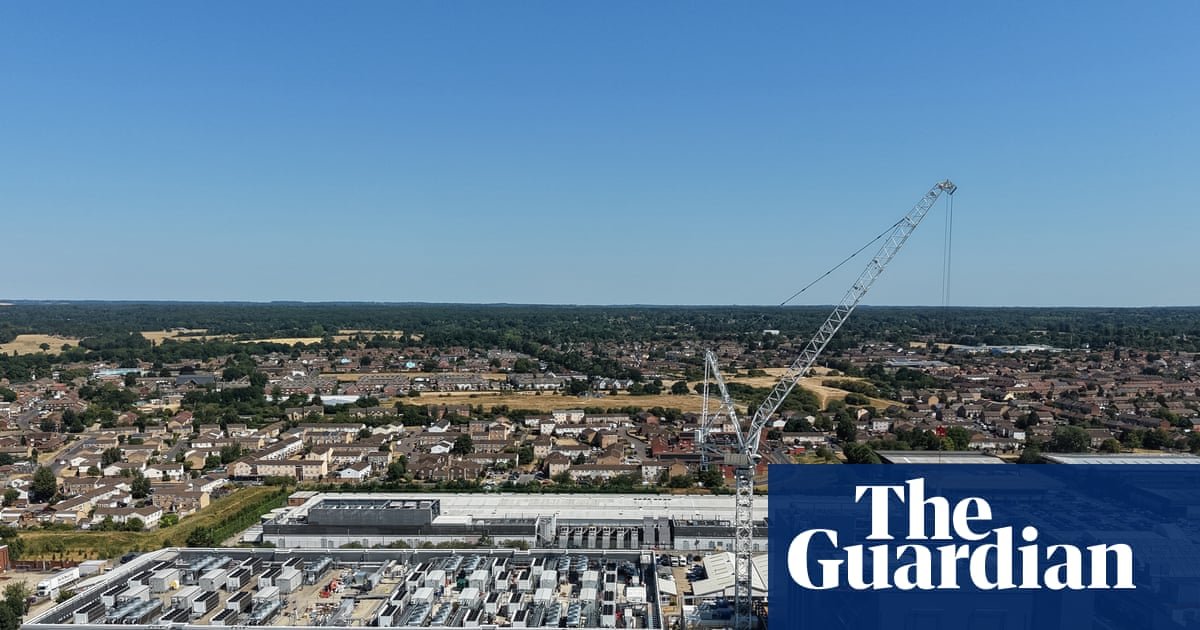
The UK government does not know what the country’s datacentres are being used for despite fears over the growing environmental impact of the AI boom.
When asked in a freedom of information (FoI) request who was using the largest sites and what for, the Department for Science, Innovation and Technology said it did “not hold the requested information”. The ministry has since been dissolved.
With hundreds of datacentres awaiting planning permission and 315 queueing to connect to the National Grid, there is growing concern over a lack of transparency and justification for these projects given their environmental impact.
Ministers announced plans in January to allow qualifying datacentres to opt into the Nationally Significant Infrastructure Project scheme. This lets developments bypass local planning committees by securing approval from the government. Campaigners say this “insulates” datacentres from local scrutiny.

Zack Polanski, the Green party leader in England and Wales, said: “The government plans to steamroller over local opposition so private companies can build these facilities – yet they can’t even explain what the benefits are and who is benefiting.”
Datacentres use a huge amount of resources. The Guardian revealed last month that two planned sites will have higher carbon emissions than ExxonMobil in the UK, with concerns raised over how this will fit within the country’s carbon targets.
The government designated datacentres as critical national infrastructure in 2024 and campaigners fear this could mean the water-hungry sites are prioritised over households in times of drought. Water UK, the trade body representing water companies in Britain and Northern Ireland, warned in July that the UK did not have enough water for the datacentre expansion.
Polanski said: “What is more ‘critical’ than people’s access to water? What is more ‘critical’ than our need to transition to a low-energy, low-pollution world so we can put the brakes on climate extremes?”
While there is consensus that datacentres can provide some essential services, there are concerns that developments with a huge environmental impact and local opposition are being prioritised regardless of their use.
Oliver Hayes of Global Action Plan, the environmental charity which submitted the FoI request, said: “It’s highly likely that we’re going to end up seeing datacentres given favourable and preferential treatment when it comes to resources that are actually running chatbots or enabling people to do benign and very wasteful, pointless things.
“At the more serious end, these datacentres could be powering chatbots that enable people to nudify teens without their consent and much worse, frankly.”
With reports that the Scottish government is inching toward a moratorium on new datacentres, there is growing pressure for the UK government to follow suit.
Friends of the Earth is calling for a ban on new sites until environmental safeguards are in place. The campaign group wants the government to publish clear environmental rules for new and existing datacentres, including requirements for 100% additional renewable energy generation for new projects.
Anisah Khan, campaigns manager at Global Action Plan, said: “When individuals across the country are facing hosepipe bans and essential housebuilding is being delayed because datacentres are gobbling up grid connections, what we need is not more chatbots at any cost.”
The government did not respond to a request for comment over its failure to say what large datacentres were being used for.
A spokesperson said: “A pause on building new datacentres would simply send investment and good jobs abroad, while leaving Britain dependent on other countries for the processing of sensitive health and defence data. Put simply: it would be a disaster for jobs and national security.”