Photograph: Lisa Bonos Photograph: Lisa Bonos Uncanny and unappetizing: appetites spoil as AI images take over food menus Consumers are increasingly encountering AI-generated images on food menus such as leathery meat and bread resembling reptile skin During a recent lunch break, Jill Sennett saw something so unappetizing she had to share it with her 26,000 X followers: Artificial intelligence-generated menu images from a Jamaican barbecue pop-up restaurant in which the meats looked like leather belts crawling with tiny beetles.
The images were reshared by more than 500 people who similarly expressed their disgust.
Eating is “such an essential human experience”, said Sennett, a 37-year-old nurse in Denver.
“I think it’s a bad cultural thing that restaurants are converting to these horrific, uncanny food images that are unappetizing.” Still, Sennett ordered chicken and macaroni and cheese.
It was one of her only lunch options, and she had eaten there before.
Increasingly, consumers are encountering AI-generated images of food on restaurant menus or marketing material.
Diners like Sennett say the images are unappealing and misleading, while restaurants say they’re trying to cut costs at a time when food and labor prices are high, so profit margins are slim.
A menu from a Jamaican barbecue pop-up restaurant.
Photograph: Jill Sennett A 2026 report from the National Restaurant Association found 26% of restaurant operators use AI to help with marketing, inventory management, employee scheduling, optimizing menus and taking orders.
But consumer backlash to the technology can be swift and fierce, especially in the Bay Area, a hotbed for AI development.
When San Francisco cafe Grind & Unwind put up a sign depicting menu options that locals quickly identified as AI-generated, vandals graffitied the storefront with a word cafe owner Lyndsey Lozano deciphered as “seriously”.
In a Reddit post titled “Yum, slop”, commenters compared the images of bread to textures like reptile skin and a loofah.
Lozano told SFGate in July that the response was “not what we were expecting”, and that the signage was only meant to be temporary.
Lozano and her husband took down the AI signage, and spent an estimated $700 to paint over the graffiti, according to SFGate.
Lozano did not respond to the Guardian’s request for comment.
Sennett takes some pleasure in AI fumbling food pictures so badly.
“It can do uncanny videos of celebrities, but it can’t depict a hamburger,” Sennett said.
“I hope it stays that way, honestly, and we can shame [restaurants] into stopping.” The manager of Jamaican Jerk and Barbecue Restaurant, the Denver restaurant that hosted a pop-up at Sennett’s hospital, confirmed that he had used ChatGPT for the menu images instead of paying a graphic designer as he does for his bricks-and-mortar location.
“We decided we would design something that was eye-catching,” he said, declining to give his name for publication.
“Restaurant people are trying to be cost-effective.” As norms for AI in advertising are still being established, some restaurant industry professionals are thinking critically about when AI might be advantageous or detrimental to their businesses.
Hunter Lewis, editor in chief of Food and Wine magazine, said he’s seeing restaurants grow as they begin to automate parts of their back-end operations.
But use of the technology should be invisible to diners, as AI images can be “a real turnoff”, Lewis noted “The American dining public is smart,” he said.
“They know what they want, and they know what is real.” Some restaurants are going viral for proclaiming they will never use AI and instead posting hand-drawn images of their burgers on social media.
When Wyoming restaurant Chugwater Soda Fountain shared its pledge, written on a piece of cardboard, the Instagram post got over 200,000 likes.
Some commenters celebrated the homespun authenticity, while others pointed out the irony of posting the message on an AI-powered platform.
Often the thing AI gets wrong is the food’s texture, said Jamie Soja, a professional photographer in the Bay Area who’s shot images for restaurant marketing and for food-delivery services.
“The color and texture and the ingredients look kind of off in the way that they’re arranged,” Soja said, adding that the lighting can also look unnatural.
AI-enhanced images seen on DoorDash.
DoorDash offers AI photo tools “to improve the presentation of an existing image of a dish,” by adjusting the lighting, color or background, the company said in an emailed statement.
The company’s policies prohibit eateries from creating or altering misleading images of menu items.
DoorDash says it reviews menu images to ensure compliance.
A cursory search showed some images marked with DoorDash’s “AI-enhanced” label, which is automatically applied when a restaurant uses its AI editing tool.
Still, it can be hard to determine whether images are AI-generated or simply overedited, even for a professional photographer like Soja.
Researchers are starting to study how seeing AI images of food affects consumers’ opinions and appetites.
In a 2024 study Charles Spence, a University of Oxford professor of experimental psychology, found consumers generally preferred AI-generated food images when they didn’t know they were made by a machine.
After that disclosure, however, diners found the images less appealing.
He found bots alter food in predictable ways: AI often adds fat, like butter on mashed potatoes, when prompted to make food images look more appealing.
Spence worries that such AI images might subconsciously nudge diners and chefs toward larger portions with higher fat content.
AI images can leave a bad taste in consumers’ mouths, particularly those who work with the technology day in and day out.
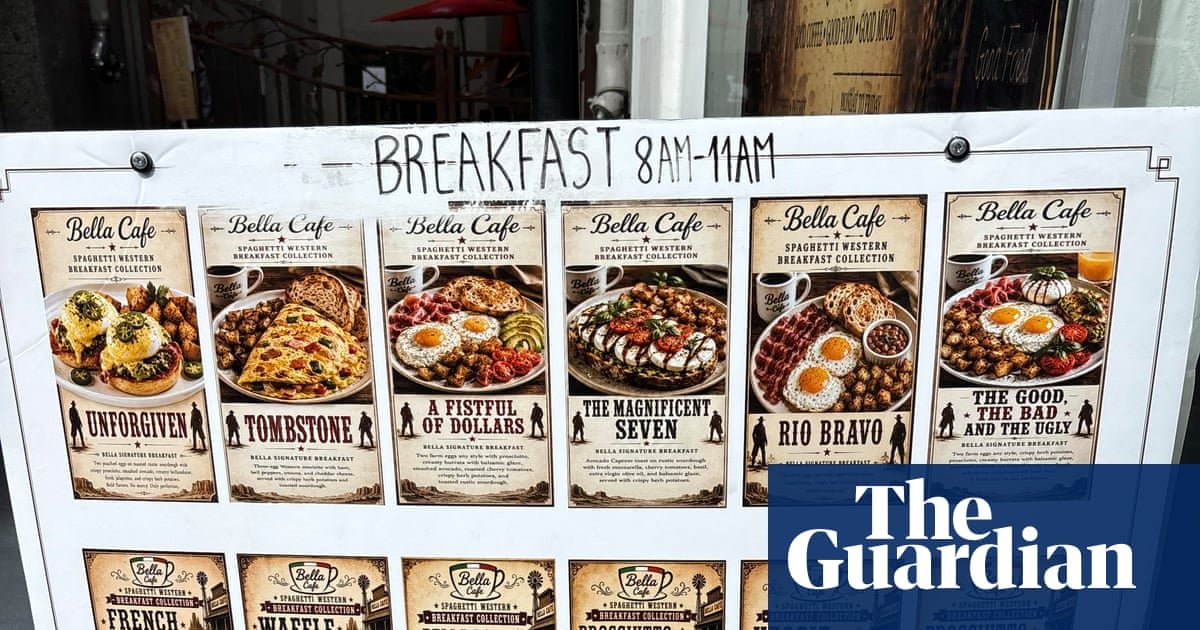
When Brandon Hill, CEO of a design and marketing agency in San Francisco, walked by Bella Cafe downtown recently, he was so put off by its AI images that he snapped a photo and shared it with his over 86,000 X followers with a Japanese caption.
“Even in San Francisco … places are starting to use generative AI for menu images.
But they don’t look all that appetizing, you know,” reads X’s English translation of the post.
AI images also make him “skeptical of what the actual meals will look like,” he said.
Despite Hill’s post, Nila Norero Salvatore, the owner of Bella Cafe, said she personally hasn’t received any complaints about the ChatGPT-designed signs on the street or those advertising the breakfast menu inside her restaurant, both of which include images of the food.
The 65-year-old said she and her husband are “old-fashioned,” adding that experimenting with AI is “fun” and “new for us.” She also uses ChatGPT to help write reference letters for workers and craft the cafe’s employee handbook.
In addition to saving money on graphic design, Norero Salvatore likes how the AI images look.
“I think it’s a great way of advertising our products, even though sometimes [people] say AI isn’t effective or it’s not natural,” she said.
Explore more on these topicsAI (artificial intelligence) Reworked Restaurants Food features Share Reuse this content