The United States Federal Reserve is set to hold interest rates steady as inflationary pressures mount, driven by heightened fuel prices as tensions between the US and Iran continue.
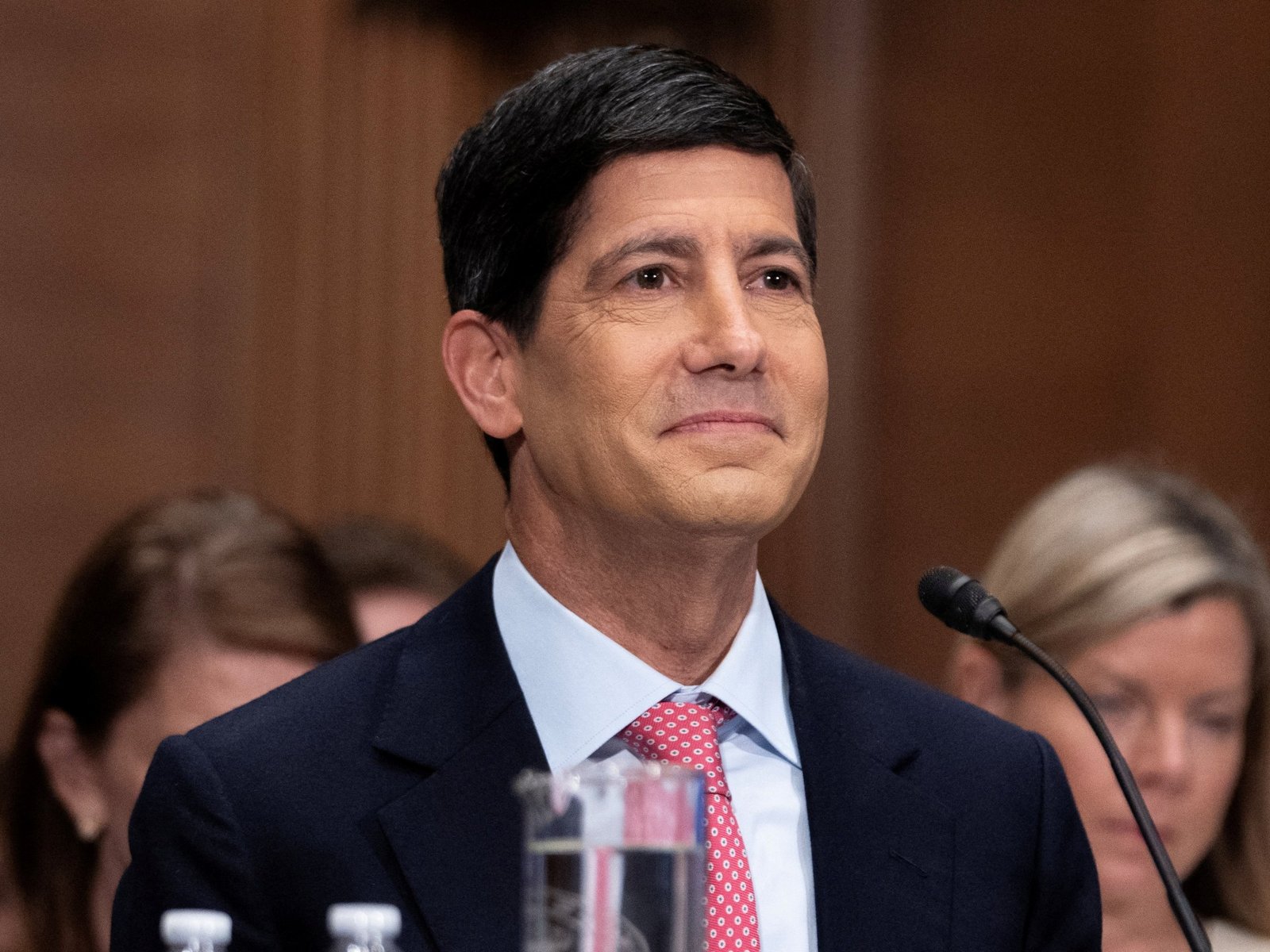
The central bank said on Wednesday that it will maintain rates at 350-375 basis points during the second monetary policy decision under new Chairman Kevin Warsh.
Recommended Stories
list 1 of 4Iraqi PM visits Turkiye to boost ties despite complex challenges
list 2 of 4How US defence aid shaped Israel’s military developments since Oct 7, 2023
list 3 of 4Iran and Oman swap proposals to manage Strait of Hormuz: What we know
list 4 of 4US bans imports of new Chinese robots over security concerns
“Inflation remains elevated relative to the Committee’s 2 percent goal, in part reflecting supply shocks that have driven price increases in certain sectors, including energy. The Committee will deliver price stability,” the central bank said in a statement upon the release of its decision.
CME FedWatch, which tracks the likelihood of monetary policy decisions, forecast a 66.3 percent chance of maintaining rates, while there was a 33.7 percent chance that rates would increase to 375-400 basis points.
Of the 12, three members, Beth M Hammack, Neel Kashkari, and Lorie K Logan, voted to raise rates by 25 basis points.
“My colleagues and I considered the economic shocks of recent years, strained supply chains arising from the pandemic, military conflicts, energy supply disruptions, substantial increases in tariff rates, and yes, the surge in AI-related investment,” Warsh told reporters.
“We are not relying on any one individual piece of data as cover or as an excuse, or as validation. What I care about and what I think the Committee cares about is trends on the data.”
Monetary policy decisions have become more uncertain as Warsh has scrapped forward guidance, which typically helps financial institutions and journalists better understand upcoming policy choices.
Flying blind
That is putting pressure on analysts.
“With little guidance on the reaction function under the new chairman, markets are filling the void with speculation that Warsh may be eyeing a surprise hike to reinforce anti-inflation credibility,” Barclays economists said in a note.
Citadel Securities earlier this week forecast a rate hike. Meanwhile, analysts at S&P Global forecast that rates would hold steady.
At the last meeting, the central bank’s governors were evenly split on whether to raise interest rates this year, as the central bank maintained rates during its first meeting under Warsh.
Warsh had previously said that there was “no tolerance” for inflation as the central bank pushes to reach the Fed’s 2 percent target.
Market shifts
Financial pressures on the broader market eased last month, with consumer inflation moderating. The Consumer Price Index report released in July for the month of June by the US Labor Department’s Bureau of Labor Statistics showed a 0.4 percent decline in consumer inflation, marking the first monthly decline since April 2020 in the early days of the COVID-19 pandemic. However, that was a correction from the previous month, when the CPI rose by 0.5 percent.
The CPI remains elevated at 3.5 percent on an annual basis, according to the report, though that is still a slowdown from 4.2 percent in May. However, consumers are still feeling the pinch, especially at the petrol pump.
Prices are on the upswing. The average price for a gallon of petrol is $4.09 ($1.08 per litre), up 3 cents from this time last week, and up from $3.86 ($1.02 per litre) this time last month, according to the American Automobile Association (AAA), which tracks daily petrol prices. By comparison, daily petrol prices were $2.98 ($0.78 per litre) when the US and Israel first struck Iran on February 28.
Those pressures are echoed by a slump in consumer confidence for the third straight month, according to The Conference Board, which released its report on Tuesday.
“Consumers anticipate little improvement in business conditions over the next six months,” Dana M Peterson, chief economist at The Conference Board, said upon the report’s release.
Political flashpoint
The decision is overshadowed by pressure from the White House. Interest rates have been a point of contention between Trump and the central bank. Trump has long pushed the Fed to cut rates, putting former Chair Jerome Powell in the crosshairs and making him the subject of investigations by the US Department of Justice.
But Warsh has yet to become a target of Trump’s scorn. “Kevin is fantastic,” he told reporters on Monday on board Air Force One. “He’s got a board, and the board members are very political.”
Trump made those claims despite the central bank’s longstanding commitment to maintaining its independence from political pressure.