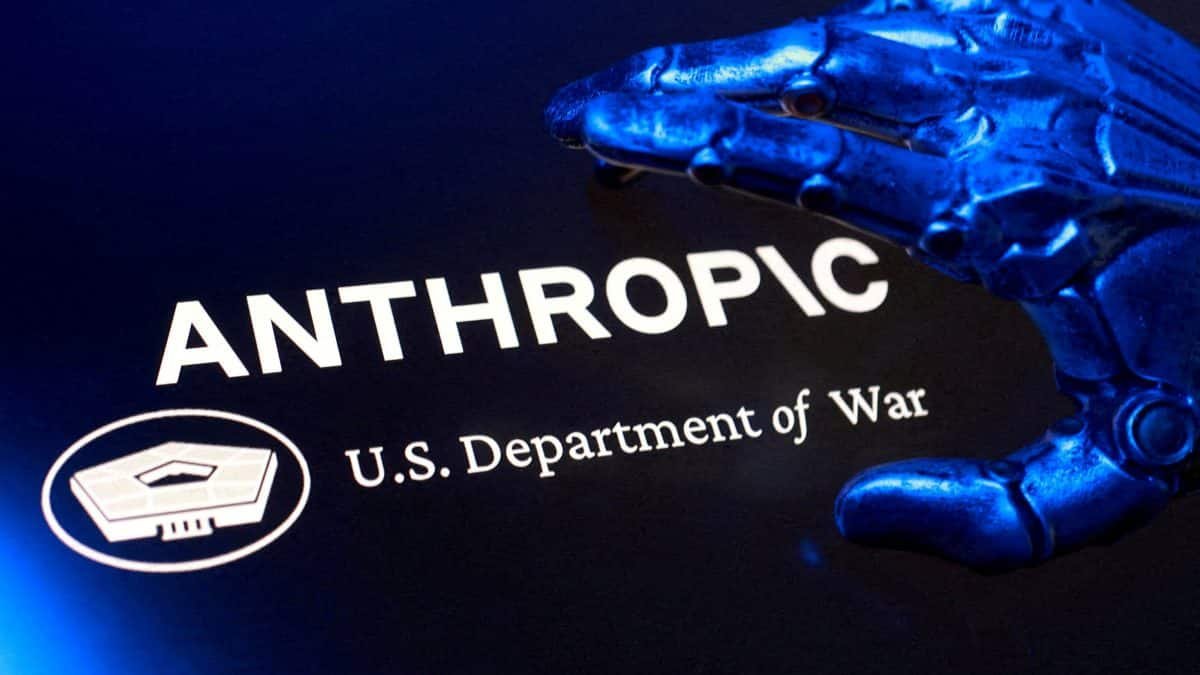
The US National Security Agency has been forced to suspend its use of one of the world’s most advanced artificial intelligence systems after a widening dispute between the Trump administration and AI developer Anthropic disrupted access to the company’s latest models, reports the New York Times.
The development has exposed a striking contradiction at the heart of Washington’s approach to artificial intelligence. While government officials have increasingly promoted the use of advanced AI for cybersecurity and intelligence work, a separate conflict with Anthropic has cut off access to technology that intelligence analysts reportedly viewed as exceptionally capable.
According to US officials, NSA cybersecurity teams had been evaluating Anthropic’s newest AI models, known as Mythos 5 and Fable 5, before the company withdrew them following export control measures imposed by the administration earlier this month. The restrictions were introduced on national security grounds and effectively halted broader deployment of the systems.
The loss is particularly significant because the NSA had been among a limited group granted early access to the models. Anthropic had previously described Mythos as powerful enough to warrant restricted distribution due to concerns about how such technology could be used if released widely.
AI’s growing role in cyber defence
The importance of the models became a subject of public discussion during a recent congressional hearing focused on intelligence and cybersecurity.
Senator Mark Warner, the senior Democrat on the Senate Intelligence Committee, told lawmakers that NSA Director Gen Joshua Rudd had informed him that Mythos “broke into almost all of our classified systems, not in weeks, but in hours”, according to the NYT report.
The remark quickly attracted attention after being cited in media reports, prompting widespread speculation about the state of AI-driven cyber capabilities. Some observers interpreted the statement as evidence that cutting-edge AI systems could rapidly penetrate even the most secure government networks.
Quick Reads
US presses Meta to agree to AI reviews as security concerns rise
Anthropic’s Mythos model found vulnerabilities in classified US government systems, official says
Officials familiar with the testing later sought to clarify the circumstances. They said the comment overstated what had actually occurred during the evaluations.
Rather than independently breaching classified systems, Mythos was deployed by NSA “red teams” conducting controlled cybersecurity exercises. Such exercises are routinely used by governments and companies to identify weaknesses before malicious actors can exploit them.
The testing environment was highly specialised. Analysts operated within isolated classified networks accessible only through tightly controlled systems and disconnected from the public internet. In those conditions, the AI model proved remarkably effective at identifying vulnerabilities and potential security weaknesses, officials said, but it did not gain unauthorised access to the networks.
Even with those limitations, the model’s performance reportedly exceeded expectations among agency personnel already familiar with sophisticated cyber tools.
US’s AI balancing act
The episode comes as governments around the world confront the rapid evolution of artificial intelligence and its implications for national security.
On Monday, cybersecurity agencies from the United States, Britain, Canada, Australia and New Zealand, collectively known as the Five Eyes alliance, issued a joint warning that AI is transforming cyber threats and defence capabilities at unprecedented speed.
The agencies urged organisations to adopt AI-powered security tools quickly, warning that advanced systems could soon reshape both offensive and defensive cyber operations. Echoing concerns raised in Congress, the alliance cautioned that major changes in cyber capabilities were likely to emerge within months rather than years.
Against that backdrop, Anthropic’s conflict with the Trump administration has become increasingly consequential.
Tensions between the company and the Pentagon escalated earlier this year during disagreements over a $200 million Defence Department contract involving AI systems intended for classified environments. The dispute centred on how artificial intelligence should be deployed in military operations.
In February, Defence Secretary Pete Hegseth designated Anthropic a “supply chain risk”, describing the company as a national security concern. The designation was notable because it marked the first known instance of the label being applied to an American firm. Anthropic has challenged the decision in court.
Despite that dispute, the White House and intelligence officials continued exploring a classified agreement that would allow the NSA to use Anthropic’s technology for intelligence analysis and cybersecurity research. That proposed contract remains unfinished.
According to officials familiar with the matter, some administration figures have recently sought a path towards resolving both the Pentagon dispute and the export-control restrictions. However, internal disagreements remain, with some defence officials advocating for alternative AI providers instead.
For now, one of the intelligence community’s most promising AI tools remains out of reach, even as concerns grow about the accelerating impact of artificial intelligence on global cybersecurity.