Democrats pledge aggressive investigations into Trump-allied billionaires and how president’s policies have boosted their bottom lines
For an elite circle of Donald Trump billionaire allies who lavished tens of millions of dollars on his campaign, vanity projects and crypto ventures, his second administration has boosted their bottom lines through lax oversight, tax breaks, federal contracts and other perks.
But with Democrats winning control of Congress in the midterms, House and Senate investigations are being planned for 2027 into several Maga oligarchs in hi-tech and crypto industries, examining how their firms and the president benefited from his “transactional” governing style, according to Democratic lawmakers and scholars.
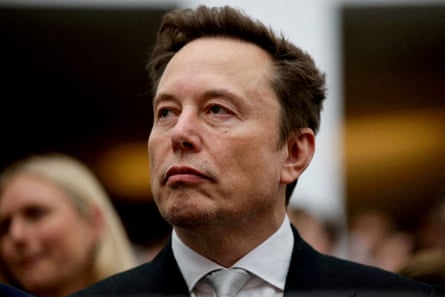
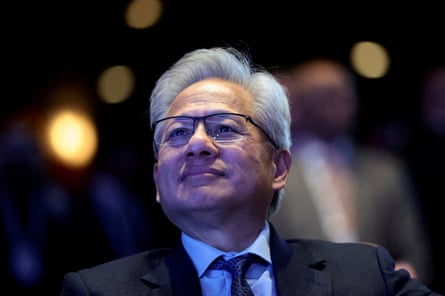
Trump allies expected to face scrutiny by congressional panels looking, in part, at how Trump’s pay-to-play modus operandi has financially and politically benefited them include Space X mogul Elon Musk, Nvidia founder Jensen Huang, and crypto titans such as Binance founder Changpeng Zhao.
Trump’s own wealth soared by $2.7bn since he won the presidency again in 2024 – due in good measure to “crypto ventures and overseas deals”, according to a Forbes report in September.
Additionally, Trump’s sons, Eric and Donald Jr, have notched sizable financial gains in tech, crypto and other areas since Trump won again, and are expected to face Capitol Hill inquiries into ways their Oval Office ties may have benefited them.
White House and justice department lawyers in November sent threatening letters to key congressional Democrats, warning they could face scrutiny, and perhaps criminal charges, if they investigated some of Trump’s big-money patrons and their federal contracts.
Scholars and legal experts who have tracked some of Trump’s financial moves, boosting his personal fortune and increasing the wealth of his big patrons, see ample evidence that the ties between Trump and some of his leading donors and business allies have hurt American democracy.
“The personal wealth of Trump, his family, and those in his inner circle, as well as Trump’s vanity projects, are being funded by the very tech titans whose own wealth and power has been boosted by this administration’s policies and actions,” Cornell economist Eswar Prasad said in an email.
Prasad earlier this year raised red flags about Trump’s dealings with “crypto tycoons”, telling the Guardian: “Trump and his family have hardly been shy about cozying up to crypto tycoons, and have been quite brazen in their pay-for-play approach to this sector.”
While the Hill investigations are in planning stages, tech leaders led by Elon Musk have clearly been big winners in the second Trump administration.
Trump and Republicans forged especially close ties with Musk, the world’s richest man, who spent almost $300m in 2024 to help Trump win, and then about $450m in the midterms in mostly failed efforts to help GOP candidates.
According to an in-depth report this fall from the nonpartisan Democracy Defenders Fund, Musk firms secured $6bn in government contracts while he was leading Trump’s “Doge” drive to cut federal spending, and another $10bn in contracts since he left his post last year.
Moreover, the study found 25 federal agencies or departments have “taken actions benefiting or potentially benefiting his businesses”.
The DDF report – Trump and Musk, 17 Months Later – also found that Musk’s net worth “more than doubled since he left Doge in May 2025, growing from approximately $419bn to between $900bn and $1tn”.
“The central finding is that the current government ethics framework allows the world’s richest person – a major political donor and former government official – to earn billions from federal contracts while his companies receive favorable treatment across government,” the report concluded.
Before the elections, Musk on X vowed to hit back against those who go after him, writing: “Those who pick fights with me should understand that I will find out who is really pulling the strings and come for them.”
Separately, Huang, who resigned as Nvidia CEO after reports of an affair with an alleged Chinese spy spurred fears of China gaining significant access to Nvidia’s valuable microchips, looks to have benefited from the president’s pay-to-play governing style.
In a stunning twist, 11 days after Huang quit, and facing clear pressure from Trump and others in his administration, Nvidia announced Huang would return as CEO, a move which fueled bipartisan concerns and calls for hearings next month.
Huang in 2025 was among the biggest known donors to Trump’s prized ballroom, reportedly giving $25m to finance the venture, according to Public Citizen, a liberal watchdog.
Moreover, Trump’s financial disclosures in 2026 revealed Nvidia stock trading over 100 times since he returned to office with a combined transaction value between 27m and 97m, according to Citizens for Responsibility and Ethics in Washington (Crew).
Trump has said all his stocks are managed solely by independent outside advisers and he has no role in stock trading. Trump has also repeatedly denied any conflicts of interest or quid pro quos as president.
Trump and his billionaire commerce secretary Howard Lutnick reportedly ignored national security intelligence warnings and allowed Nvidia to sell its advanced chips to the Singapore-based datacenter firm Megaspeed, which was until August 2025 run by Alice Huang, the alleged spy who had an affair with Jensen Huang.
According to press reports, Alice Huang was in touch with China’s spy agency for months when her firm sold some of Nvidia’s advanced chips to other datacenters in south-east Asia with China ties, and some of which were suspected of being smuggled to China, fueling bipartisan criticism and some internal administration dissent.
Separately, several major crypto companies have profited from the administration’s lax crypto regulatory oversight, including Binance, the world’s biggest crypto trading platform. Last year, in a complex deal, Binance helped the Trump family’s crypto venture World Liberty Financial, which only launched in the fall of 2024, secure a $2bn infusion from an Abu Dhabi-backed state investment fund.
Trump reported earning over $1.4bn from World Liberty and other crypto ventures in 2025, or about two-thirds of the $2.2bn in earnings his 2025 financial disclosures showed.
Responding to media questions about his stunning earnings last year, Trump told reporters: “You know why I’m profiting? Because the stock market’s going up. Everybody’s profiting.”
Binance founder Changpeng Zhao pleaded guilty in 2023 to anti money-laundering and sanctions violations, and Binance agreed to pay $4.3bn in fines and restitution to the government. Zhao, who reportedly owns 90% of Binance stock, served a four-month sentence and was pardoned late last year by Trump in a controversial move.
Since he won a second term, Trump has issued executive orders boosting the crypto industry by easing regulations and oversight by the Securities and Exchange Commission, a huge shift from under Joe Biden, which Trump promised in a talk in mid-2024 at a major bitcoin conference.
Crypto moguls and allied groups poured tens of millions into the midterms, largely trying to defeat Democrats. Legal experts and economists now see ample reason to investigate the close ties between Trump and his crypto and hi-tech oligarch allies.
Former Federal Election Commission general counsel Larry Noble said: “Despite the efforts of Musk and other tech and crypto oligarchs, they are now going to be facing members of Congress questioning their past actions and future plans, and demanding answers about their transactional and mutually beneficial dealings with Trump, not meaningless photo ops and compliments.
“They just learned that democracy is not some computer game or theoretical idea. It’s voters exercising their power in real time, and the voters were not happy.”
Prasad raised similar concerns.
He said: “Trump and his acolytes have openly peddled their influence and twisted the policy apparatus they now control in order to favor tech moguls, who have been equally open about their direct and indirect paybacks to Trump, his family and associates, and his political and other causes.”
A few incoming chairs of House and Senate panels have signaled investigations that in part will look at leading billionaires, including Musk.
Senator Richard Blumenthal of Connecticut, who will lead the permanent subcommittee on investigations, and Elizabeth Warren of Massachusetts, who will head the banking committee, are likely to continue to examine some of the tech and crypto moguls who have benefited from their close Trump ties.
New scrutiny of some Trump-allied oligarchs is also expected in the House from Robert Garcia of California, who will lead the House oversight committee and Jamie Raskin of Maryland, who is poised to run the House judiciary committee.
Raskin in an email pinpointed some specific concerns Congress will investigate, including foreign investors in World Liberty Financial and Zhao’s pardon by Trump.
“Four days before Trump took office [in 2025], a firm backed by the UAE’s national security adviser reportedly agreed to pay $500m for a 49% stake in World Liberty, the Trump family’s crypto venture,” Raskin said.
“By May, the Trump administration had announced a deal giving the UAE access to advanced American AI chips. Congress will look into whether doing business with the president’s family helped Zhao get his pardon or the UAE get access to those chips.”
Raskin also indicated that the hundreds of billions in ballroom funding by super-rich donors will be investigated.
“Some of the tech executives who sat behind Trump at his inauguration run companies now helping to pay for his billionaire ballroom. What business did those companies have before the administration when they lined up to fund his vanity project? When Democrats take the gavel, we’ll investigate the rampant conflicts in the Administration and write legislation to crack down on this pervasive self-dealing.”
In pre-emptive responses to a few Senate and House Democrats, administration lawyers in November sent strongly worded letters warning that they could face stiff scrutiny and perhaps face criminal charges if they mount aggressive probes of top Trump allies.
Attorney general Todd Blanche, a hardcore Trump loyalist, said on CNN in early November that Democrats had “done nothing but threaten everything that’s happening in this administration” and suggested that members of Congress might be criminally investigated.
Just a day later, White House counsel Will Scharf launched an extraordinary assault on Congress’s constitutional authority in a letter to Garcia claiming that oversight investigations “may cross the line into blatant criminality”. He charged Garcia with displaying intent to “transgress” congressional power.
Garcia has forcefully rebuked these legal warnings. “What Todd Blanche is doing right now is a threat,” Garcia said on CNN. “He is threatening our committee. He’s trying to stop us from doing real oversight.”
And on 11 November, Garcia released a tough rebuttal to Scharf. “It appears Donald Trump has something to hide. Let’s be clear: Congress’s authority comes from article I of the constitution, not from the permission of the White House.”
Raskin, likewise, pushed back on administration attacks.
He said: “The president’s lawyers can spare us the crackpot heckling about congressional revenge. That’s their MO, not ours. We in Congress will do our job regardless of all the heckling and tirades. In truth, they’d be better off using this time to get their records in order.”
Scholars and ex-prosecutors call the legal threats from Trump’s lawyers intimidation tactics that will not affect planned investigations and will not stand up in court.
“The Trump administration has developed a symbiotic relationship with the tech billionaires,” said former federal prosecutor Barbara McQuade, who now teaches law at the University of Michigan.
“The tech bros make campaign contributions and donations to Trump’s vanity projects, and the Trump administration protects them from accountability or regulation. Both groups fear investigations that could cut off the unchecked flow of money. These threats of criminal prosecution strike me as part of the old strategy that the best defense is a good offense.”