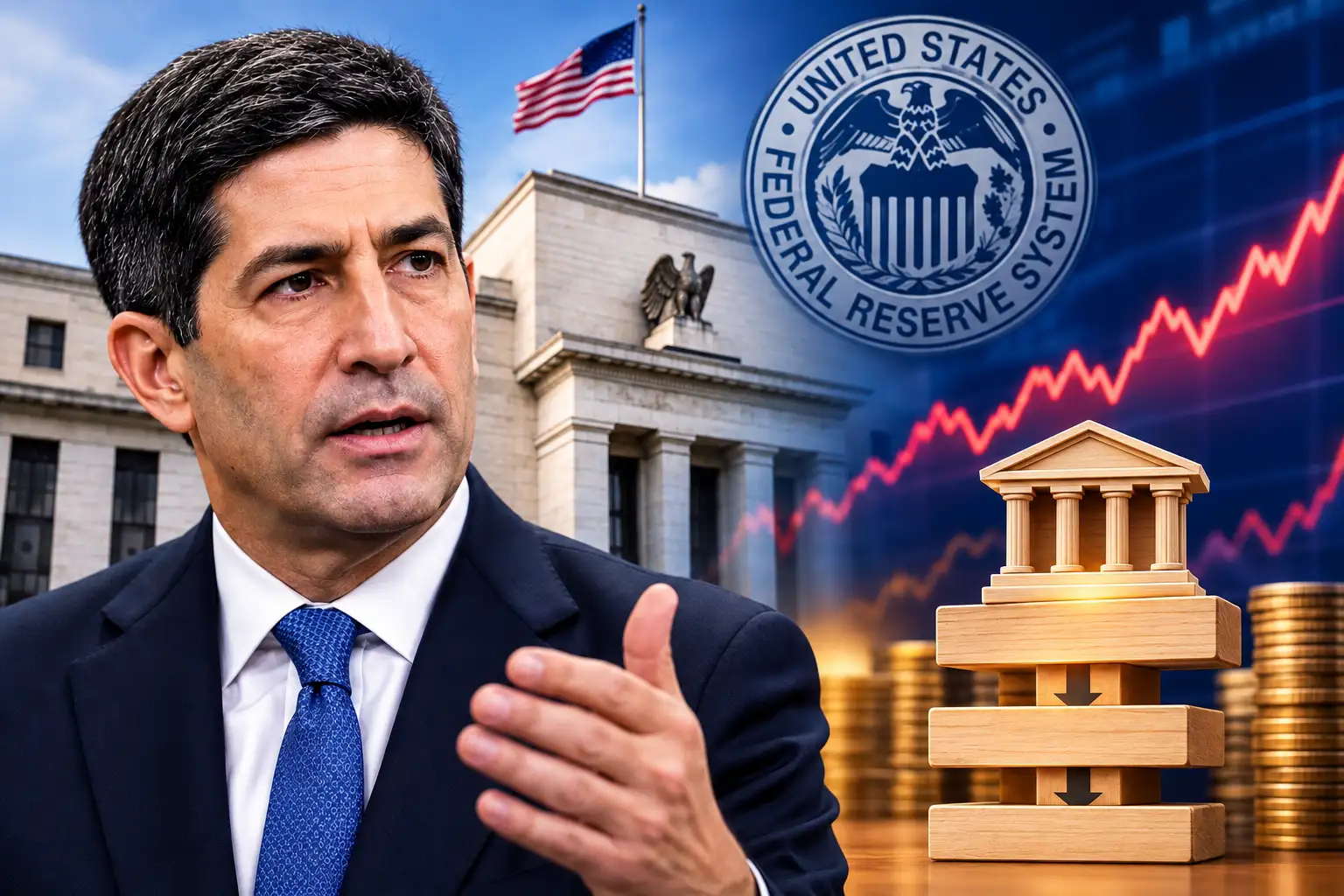
ETMarkets.com Synopsis Federal Reserve Chair Kevin Warsh is changing the central bank’s communication approach, reducing reliance on forward guidance and leaving markets to interpret economic data more independently.
The shift has triggered volatility in bond markets, with investors seeking clarity on future rate moves.
As inflation remains elevated, the Fed’s new strategy faces scrutiny ahead of key economic indicators like the July jobs report.
By Anupam Nagar, ETMarkets.com Aug 07, 2026, 01:07:00 PM IST Follow us US Federal Reserve Chair Kevin Warsh is reshaping how the U.S. central bank communicates with financial markets, placing greater responsibility on investors and the bond market to determine the path of interest rates rather than relying on detailed forward guidance from policymakers, according to Reuters.ADVERTISEMENT Just seven weeks into his tenure, Warsh’s approach is being closely watched as markets adjust to fewer signals from the Fed on the direction of monetary policy.
Investors are now being forced to interpret incoming economic data with less guidance from the central bank, adding uncertainty across financial markets.The next major test of this strategy will come with the release of the July U.S. employment report, a key indicator that could influence expectations around future rate decisions.
Market volatility rises as Fed signals weaken Markets saw heightened volatility after the Federal Reserve kept interest rates unchanged at its latest policy meeting.
While the decision was widely expected, investors were unsettled by the lack of clear guidance on the central bank’s next steps, Reuters reported.
The reaction was most visible in the Treasury market.
Longer-term bond yields surged, with the 30-year Treasury yield touching its highest level since 2007, while the benchmark 10-year yield rose to levels last seen in January 2025.Oil prices had also climbed ahead of the Fed meeting amid geopolitical tensions linked to the Iran conflict, fuelling concerns over inflation.
Although oil prices and Treasury yields later moderated, uncertainty over the Fed’s communication strategy continues to weigh on investor sentiment.ADVERTISEMENT A departure from the era of forward guidance The Federal Reserve expanded its use of forward guidance after the 2008 financial crisis, when interest rates were pushed close to zero.
While this approach reduced surprises, critics argued it limited the central bank’s flexibility to respond quickly to changing economic conditions.ADVERTISEMENT ADVERTISEMENT Warsh, however, believes markets are capable of assessing economic developments on their own and that the Fed should focus on current conditions rather than attempting to predict future outcomes.Investors must now price risks independently Reuters reported that several market participants believe Warsh is encouraging investors to take greater responsibility for evaluating economic risks instead of relying heavily on central bank guidance.ADVERTISEMENT A reduced reliance on forward guidance means investors must assess inflation, growth and labour market data independently, potentially making market pricing more reflective of underlying economic conditions rather than Fed projections.Some analysts argue that this could strengthen monetary policy by preventing markets from becoming overly dependent on central bank forecasts.ADVERTISEMENT Inflation remains the biggest challenge The strategy, however, faces criticism as inflation remains above the Fed’s long-term target.Reuters reported that some economists believe reduced communication works best when inflation is already under control and policymakers are close to achieving their objectives.
With inflation still hovering near 4%, critics argue that less guidance could increase uncertainty at a time when investors are looking for clarity on the Fed’s commitment to price stability.Bond yields reflect an uncertainty premium Some market strategists believe investors are demanding higher returns on government bonds to compensate for greater uncertainty around future monetary policy, according to Reuters.Even with reduced forward guidance, markets continue to closely track every Fed statement, policy vote and press conference for clues about how policymakers may respond to economic data.Other Federal Reserve officials have also continued sharing their views publicly, ensuring that markets still receive policy signals even if the chair becomes less explicit.Markets await data for the next signal Warsh’s communication strategy has yet to answer the key question: how will investors interpret future policy decisions in an environment with fewer Fed signals?While the central bank wants markets to respond more directly to economic data, investors are still trying to predict how policymakers will react to those same developments.
The July employment report will be the next major test of whether markets can adapt to a Fed that provides less forward guidance and relies more heavily on incoming economic data, Reuters reported.