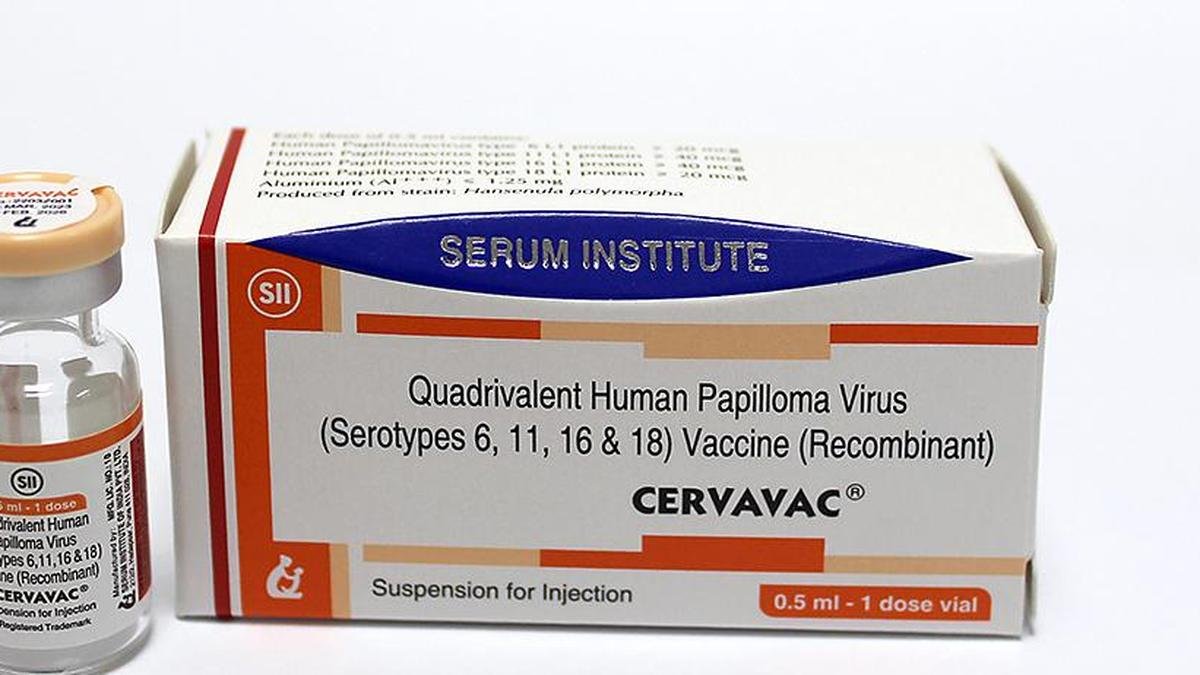
The story so far: The Serum Institute of India’s indigenously developed quadrivalent human papillomavirus (HPV) vaccine, CERVAVAC, has received prequalification from the World Health Organization (WHO), allowing the vaccine to be procured by United Nations agencies and potentially supplied to countries running HPV immunisation programmes. The WHO lists its prequalification as effective from September 25, 2026.
. CERVAVAC is India’s first indigenously developed gender-neutral quadrivalent HPV vaccine and targets HPV types 6, 11, 16 and 18. It is licensed in India for girls and boys aged 9 to 26 years.
CERVAVAC is the first Indian-made quadrivalent HPV vaccine to receive WHO prequalification. This prequalification means the vaccine has met WHO standards for quality, safety and efficacy, following evaluation of data, samples and manufacturing sites.
Globally, cervical cancer caused an estimated 604,000 new cases and 342,000 deaths in 2020. In India, where cervical cancer remains a public-health burden, the national HPV vaccination programme was launched on February 28, 2026, targeting about 1.2 crore 14-year-old girls with a free single dose; more than 80 lakh doses had been administered by September this year, according to the Union Health Ministry. India’s national HPV vaccination programme uses Merck’s Gardasil-4, a quadrivalent vaccine protecting against HPV types 6, 11, 16 and 18.
India also has an indigenous quadrivalent vaccine, CERVAVAC (now WHO-prequalified) and access to other HPV vaccines, including Gardasil 9 and Cervarix, through the private market.
What exactly is WHO prequalification?
WHO prequalification’s biggest significance is access. A vaccine that has already been licensed in India can now potentially enter international procurement channels used to supply national immunisation programmes, particularly in low- and middle-income countries.
WHO prequalification is not a marketing authorisation or regulatory approval. For the prequalification, the vaccine undergoes assessment of its quality, safety and efficacy, including evaluation of data, testing of samples and inspection of manufacturing facilities. A vaccine that meets WHO standards is placed on the WHO List of Prequalified Vaccines, making it eligible for procurement by United Nations agencies and giving countries an internationally recognised assurance about the product and manufacturing standards.
What is HPV and why is this important for prevention?
HPV is an extremely common sexually transmitted infection. Most infections clear naturally, but persistent infection with high-risk HPV types can lead to cervical cancer. WHO estimates that persistent infection with high-risk HPV types causes more than 95% of cervical cancers. HPV can also cause anal, vulval, vaginal and some other cancers, as well as genital warts.
The vaccine is a cancer-prevention vaccine and not just a vaccine against an infection.
WHO’s priority target is girls aged 9–14 years, before exposure to HPV. The organisation recommends either a one- or two-dose schedule for this age group, depending on the vaccine and national programme.
The four HPV types targeted by CERVAVAC are important for different reasons. HPV 16 and 18 are high-risk types responsible for a large proportion of cervical cancers. Types 6 and 11 are responsible for most anogenital warts. The quadrivalent vaccine therefore provides protection against both cancer-associated HPV types and genital warts.
Its indication for both sexes also matters. Although cervical cancer is the largest component of the HPV disease burden, HPV can cause disease in men, including anal cancer and genital warts.
What could the WHO listing mean for India?
CERVAVAC’s WHO prequalification does not automatically mean that it will now be substituted into the Indian government programme. Vaccine selection for a national programme involves considerations including regulatory status, evidence, price, supply capacity, presentations, logistics and programme requirements.
But the new status gives India another WHO-prequalified HPV vaccine from a domestic manufacturer. It could also potentially strengthen competition and supply security if CERVAVAC is considered for future procurement.
How many other Indian vaccines have WHO prequalification?
India already has a substantial presence on the WHO prequalified-vaccine list.
Serum Institute is among the largest Indian participants. The company has WHO-prequalified vaccines covering a wide range of diseases, including BCG, diphtheria-tetanus-pertussis combinations, hepatitis B, Haemophilus influenzae type b, measles, measles-rubella, measles-mumps-rubella, meningococcal disease, pneumococcal disease, polio, rabies, rotavirus, rubella and malaria, among others.
Other Indian manufacturers with WHO-prequalified vaccines include Bharat Biotech, Biological E, Zydus Lifesciences, GreenSignal Bio Pharma, Haffkine and Panacea Biotec, among others.
Bharat Biotech’s Typbar-TCV, for example, was the first typhoid conjugate vaccine to receive WHO prequalification; Zydus’s ZyVac TCV received WHO prequalification in September 2026.
What is different about CERVAVAC?
The HPV milestone is distinctive because, until now, WHO’s prequalified HPV portfolio consisted of vaccines manufactured outside India. WHO’s HPV product-choice document lists bivalent vaccines such as Cecolin, Cervarix and Walrinvax, quadrivalent Gardasil, and nonavalent Gardasil-9. CERVAVAC was previously nationally licensed but was not WHO-prequalified.
Its inclusion therefore adds an Indian-made HPV vaccine to the global WHO-prequalified pool.
For India, the larger significance is that a vaccine developed and manufactured domestically can now potentially contribute not only to India’s cervical-cancer prevention programme but also to HPV vaccination programmes elsewhere.
The WHO’s global target is to have 90% of girls fully vaccinated against HPV by age 15, alongside screening and treatment targets for women. By the end of 2025, HPV vaccination had been introduced in 165 countries, but global first-dose coverage among girls was only about 33%, well below the 90% target.