The Story So Far: After a gap of 36 years, the J&K Police’s special cell State Investigation Agency (SIA) filed a charge sheet in the killing of Kashmiri Pandit Sarla Bhat, who worked as a nurse at Srinagar’s Sher-i-Kashmir Institute of Medical Sciences (SKIMS).
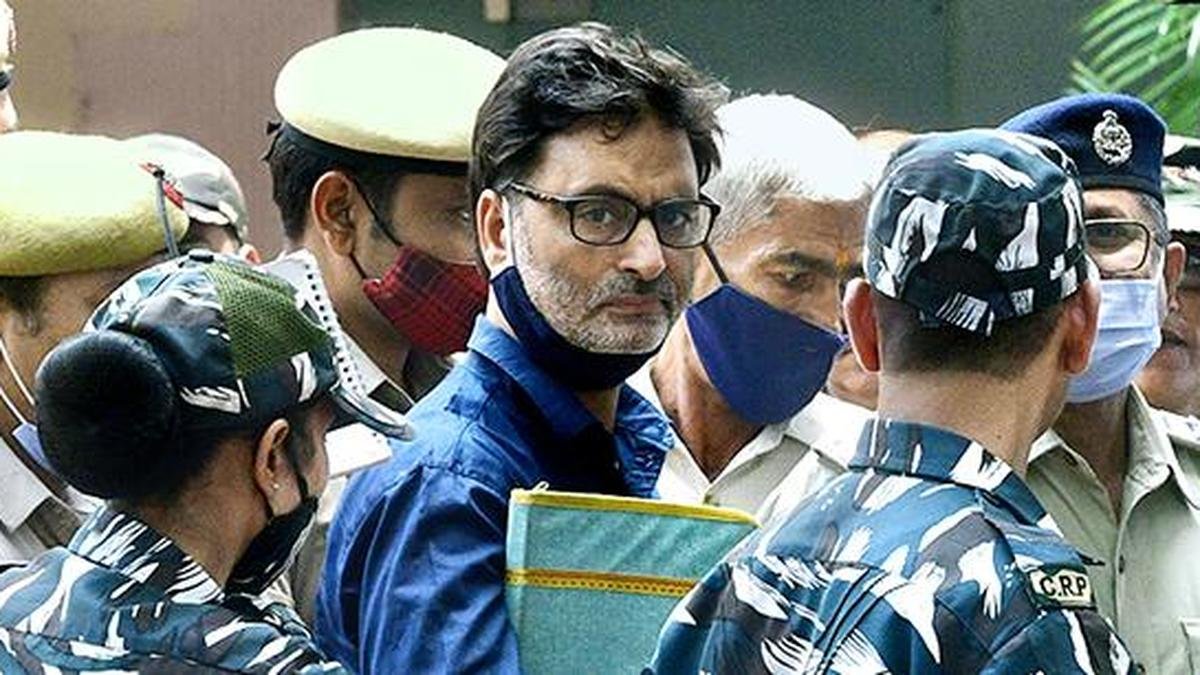
The charge sheet named Jammu Kashmir Liberation Front (JKLF) chief Yasin Malik as one of the five accused.
Out of the five accused, only two, including Malik, are still alive.
The SIA, which started re-investigating the case in 2020, decided to initiate proclamation proceedings against the absconding terrorist, Khurshid Ahmad Chalkoo, “the man who pulled the trigger”.
He is believed to have exfiltrated to Pakistan Occupied Kashmir (POK).
Meanwhile, the SIA charge sheet does not mention any rape.
What is the significance of this case?
The killing of the 27-year-old Pandit nurse was among the first cases of targeted killing of Kashmiri Pandits in the Valley following the armed insurrection in 1989.
According to official listing, the first Pandit killing took place on September 14, 1989 of Pandit Tika Lal Taploo, an advocate and senior BJP leader and then Pandit Neelkanth Ganjoo, a former judge who had sentenced JKLF founder Maqbool Bhat to death in a murder case.
These targeted killings eventually led to mass migration of Kashmiri Pandits outside Kashmir valley.
The SIA said Sarla Bhat was abducted from the vicinity of SKIMS on 18 April 1990, subjected to brutal torture and physical assault, and horrendously killed by automatic rifle fire at Omer Colony, Malbagh, Srinagar.
The filing of the charge sheet is seen by the family and the entire Pandit community as a step towards justice.
The magnitude of the migration, the militant violence triggered, can be gauged from the fact that over 60,452 Pandits registered themselves as migrants by 2014, as the community was displaced to different parts of the country, including Jammu that is winter capital of J&K.
In plea for death penalty, NIA cites Yasin Malik’s Pakistan contacts and militant ties Why was there a delay in the charge sheet?
Kashmir witnessed targeted killings of both Muslims, mostly affiliated to the National Conference (NC), and Pandits in the 1990s.
Local youth in hundreds joined militant ranks and started attacking security forces across the length and breadth of the Valley.
It was only after JKLF chief Malik declared unilateral ceasefire in 1994 that the group’s violence ebbed.
As part of an unwritten agreement between JKLF and the then Central governments, no cases were pursued against Malik.
A pointer to that was in 2009 when the Srinagar wing of the Terrorist and Disruptive Activities Prevention Act (TADA) court stayed the trials and directed that proceeding “to remain in abeyance” in two key cases faced by Malik, which included the killing of Indian Air Force men in Srinagar’s Rawalpora area and kidnapping of ex-Union minister Mufti Muhammad Sayeed’s daughter in 1989.
On re-opening of the case, the SIA said it remained unresolved “owing to the extraordinary circumstances prevailing during the peak years of terrorism in Jammu & Kashmir.
It said the atmosphere of fear, intimidation and terror created by terrorist organisations had severely impacted the ability of witnesses to come forward and disclose material facts.
The Sarla Bhat case became one such symbol of the dark chapter of terrorism that engulfed the Kashmir Valley, said the SIA in the charge sheet.
What does it mean for JKLF chief Malik?
The 59-year-old separatist is currently in the Tihar Jail.
He faces sentence on two counts of life imprisonment and five 10-year prison sentences in a terror funding case in 2022.
However, the National Investigation Agency (NIA) has sought the death penalty in the case.
Besides, Malik also faces fresh trials in two other major cases, including the kidnapping and the Indian Air Force attack.
His outfit was also banned in 2019 under provisions of Unlawful Activities Prevention Act (UAPA).
The JKLF has distanced itself from the murder of Bhat.
According to the banned JKLF, Malik on April 8, 1990, just 10 days before the gruesome murder of Bhat, jumped from a five-storey building in Narwara, Srinagar, to evade his arrest during a BSF raid.
The JKLF claimed that Malik suffered a head injury, which caused his facial paralysis, in the incident.
The JKLF claimed that the organisation had launched its own investigations into the killing “but could not carry it forward due to the continued raids by security forces on JKLF leadership”.
The fact remains that it will be the third major case of terror from the 1990s against Malik and he could face the death penalty if the charges are proven in the court.
Eyewitness identifies JKLF chief Yasin Malik as the ‘shooter’ in 1990 attack before a special court Why is it tipped as a landmark development by police?
The police’s SIA termed the charge sheet as a landmark development and a defining moment in J&K’s fight against terrorism.
The 737-page charge sheet was compiled after an “exhaustive investigation, bringing together a formidable body of oral, documentary, forensic, ballistic, medical and electronic evidence accumulated over decades and meticulously analysed”.
It says the charge sheet marks a historic milestone in the pursuit of justice for victims of terrorism and stands as one of the most significant breakthroughs in the investigation of legacy terror crimes in Jammu and Kashmir.
The charge sheet, the SIA said, sends a powerful and unequivocal message that time can never become a shield for terrorism.
It said neither the memory of the victim nor the quest for justice faded with time.
It said evidence collected during investigation demonstrates that the murder formed part of JKLFs systematic campaign of targeted terrorist violence intended to spread fear among innocent civilians, particularly members of the Kashmiri Pandit community, create conditions for their forced displacement from the Kashmir Valley and advance the secessionist agenda of the terrorist organisation.
It said no amount of time, concealment or geographical distance can permanently shield perpetrators from accountability.
It also stands as a testament to the unwavering commitment of SIA Kashmir and the Government of India to uncover the truth behind even the oldest unresolved terrorist crimes and ensure that those responsible are held accountable.
It sends a strong and unmistakable message that terrorism has no limitation period, justice has a long memory, and the law will ultimately catch up with those who believe they can escape accountability through fear, violence or the passage of time.