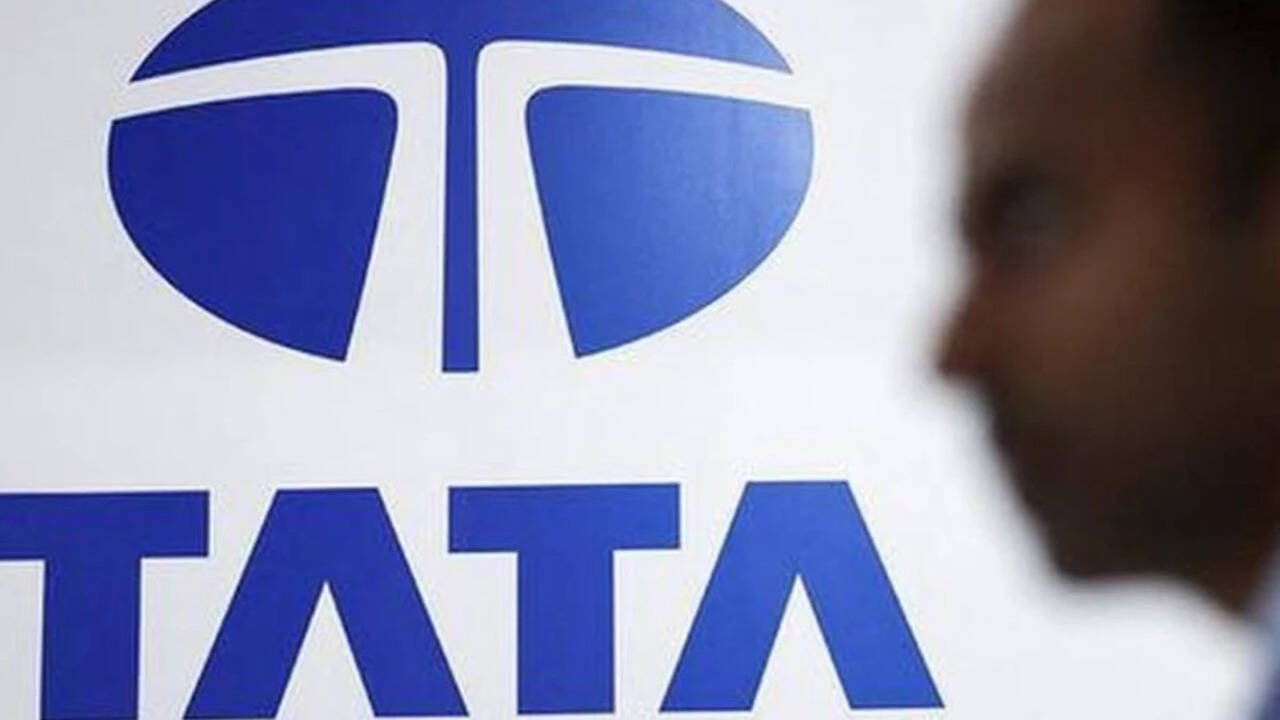
India’s central bank is said to have rejected Tata Sons Pvt.’s plea to get a waiver from a regulatory rule that requires it go for a public listing.
The entity that sits at the heart of the $185 billion Tata Group empire that spans IT services, steel, hospitality and consumer goods has resisted a stock exchange listing for years as this would subject it to tighter regulatory oversight and force it to reveal more of the group’s internal dealings.
But the pressure has been mounting in recent months. The Reserve Bank of India tweaked the definition of shadow lenders in May, reviving the debate on whether Tata Sons could be forced to list. In June, the regulator reaffirmed a framework for identifying systemically important shadow lenders, keeping Tata Sons on the hook.
The latest RBI missive makes it even harder for the Tata family to hold out against a listing and the closer scrutiny of its affairs that this would entail. Minority shareholders in the company’s various businesses will be watching as an IPO could affect Tata’s ability to shift capital between its cash-rich established businesses and newer, less profitable ventures.
What is Tata Sons?Tata Sons is a holding company of the Tata Group that comprises 26 listed companies, including industrial heavyweight Tata Steel Ltd., IT firm Tata Consultancy Services Ltd., automaker Tata Motors Ltd. and utility Tata Power Company Ltd.
Approximately 66% of Tata Sons’ equity capital is owned by the philanthropic Tata Trusts, while Tata Group companies — some of which are engaged in lending activities — hold about 13%. The RBI classifies Tata Sons as a systemically important core investment company within the broader category of non-banking financial companies (NBFCs), or shadow banks, as it is involved in allocating capital to group companies.
Why is Tata Sons facing pressure to list?After an Indian shadow lender defaulted on its debts in 2018, the RBI, which oversees the country’s financial system, laid down new rules to try to ensure that such crises don’t endanger the country’s wider financial system.
In 2022, it classified Tata Sons as an “upper-layer” NBFC under the rules. This meant it now deemed the company, with a balance sheet exceeding 1.5 trillion rupees ($15.7 billion), big enough to pose a systemic risk. The RBI’s rules require such businesses to list their shares on the stock market within three years as a way to force them to be more transparent about their activities and financial performance.
Since then, Tata Sons’ owners have taken various steps to convince the RBI that it should not be categorized as a shadow lender so it can avoid going public. In 2024, it applied to surrender its NBFC license and cleared its outstanding debts.
However, the latest rule changes introduced earlier this year by the RBI, which are due to take effect on July 1, gave Tata Sons less wiggle room to dodge a listing. The revised framework applies not just to companies that lend to or borrow from listed businesses in the same group, but to any holding company that invests in group companies that do so themselves.
While Tata Sons has pared its own debts, its affiliated companies, including wholly-owned subsidiary Tata Capital, are still raising money from individuals and institutions.
The RBI circular stipulated that an NBFC can’t de-register if it deals directly with customers in its day-to-day business. This is not the case with Tata Sons, but it is with Tata Capital.
How did the company respond to the RBI’s circular?Trustees at Tata Trusts, chaired by Noel Tata, were making intense efforts to maintain the private status of Tata Sons, arguing that the work that had been done to strengthen the company’s balance sheet should exempt it from a mandatory listing, according to people familiar with the matter.
Tata Sons has not responded to a request for comment on whether they’ll go ahead with a listing. A representative for RBI didn’t respond to a query on whether it has rejected Tata Sons’ petition for an IPO waiver.
How did Tata Sons avoid an IPO so far?Tata Sons originally faced a deadline of September 2025 to launch an initial public offering of its shares, which it missed. Following discussions with the RBI, the company’s leadership halted the preparations in the expectation that they would get an official extension to the deadline.
Instead, RBI has piled additional pressure on the Tata family to list the business since its May circular.
Why does the Tata family prefer keeping Tata Sons private?Tata Sons sits at the center of the Tata empire and its status as a private company controlled by Tata Trusts has helped to cement the family’s authority over the group’s array of businesses. An IPO could substantially loosen Tata Trusts’ grip on Tata Sons and make it harder for Tata Sons’ directors to block unwanted takeover attempts.
Tata Sons has plowed billions of dollars into Tata Group businesses including its digital services arm and a venture into semiconductors. It has also helped to prop up the unprofitable national flag carrier Air India, which reported record losses for the year to March following a plane crash in June 2025 and airspace closures due to the Iran war.
A listing of the holding company would force it to make regular disclosures on its operations and financial dealings, showing how money is channeled through the Tata empire and ultimately forcing its owners to be more accountable for how its capital is spent.
If Tata Sons lists, who wins?A significant minority shareholder of Tata Sons — Shapoorji Pallonji Group — is calling for a public listing of the Tata Group holding company, insisting that such a move is essential to unlock the company’s value for investors.
It’s not the first time that SP Group has locked horns with the Tatas. Former Tata patriarch Ratan Tata and Tata Sons then-chairman Cyrus Mistry, a scion of the founding family that runs SP Group, were entangled in a year-long feud in 2016.
SP Group needs to monetize its stake in Tata Sons, which is worth billions, to pay down a pile of costly private debt. If Tata Sons’ shares are listed, it will be easier for SP Group to get a good price for its stake and repay that debt.