By Chris Doyle Director of the London-based Council for Arab-British Understanding (CAABU).
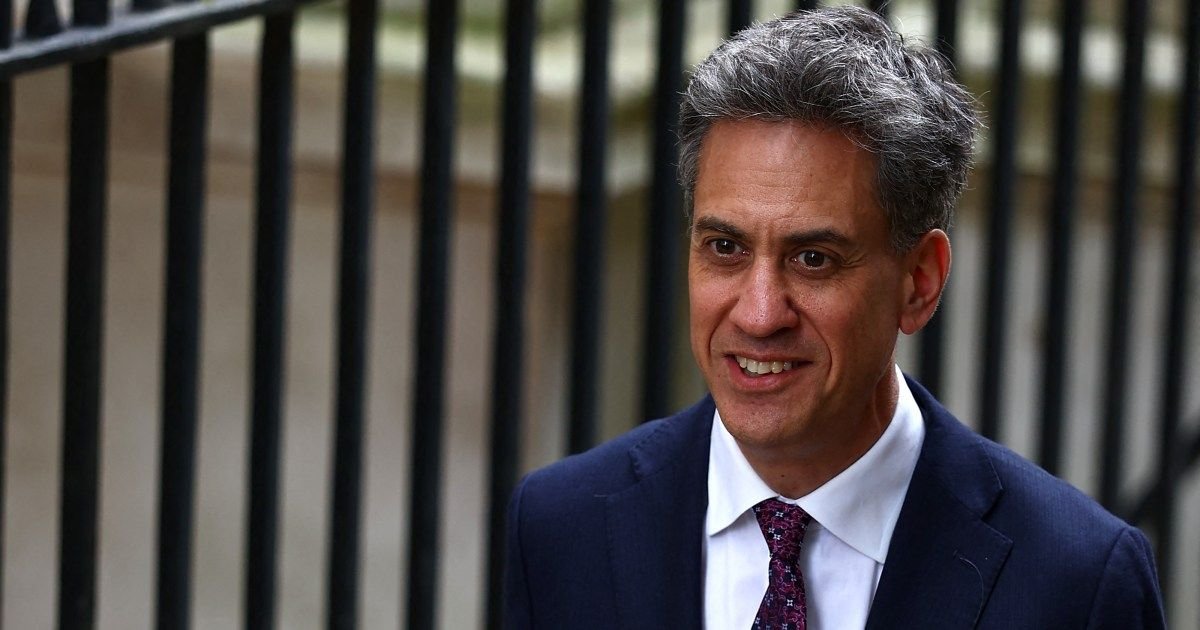
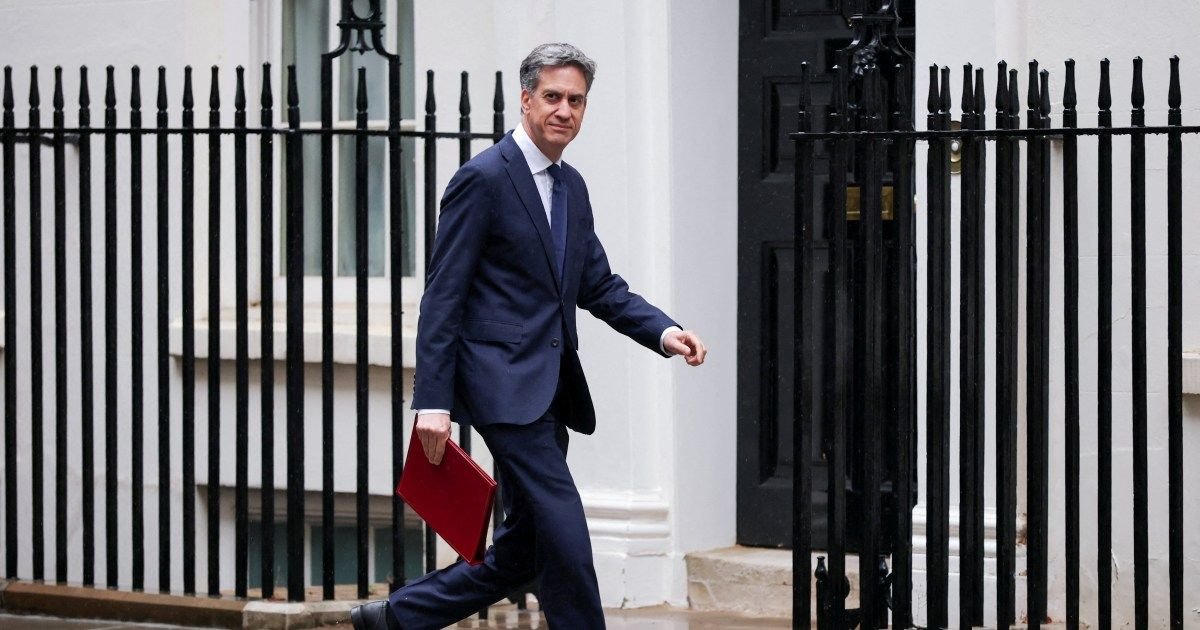
British Foreign Secretary Ed Miliband arrives at 10 Downing Street to attend a cabinet meeting, in London on September 8, 2026 [Isabel Infantes/Reuters] Fifty-nine years after Israel established its first illegal settlement in the occupied Palestinian territory, the United Kingdom has imposed a ban on trade with Israeli settlements.
It is not before time, as the settler population numbers more than 750,000 residing in more than 140 formal settlements and more than 390 outposts and farms.
The ban comes as British Foreign Secretary Ed Miliband has promised a “comprehensive reset” in relations with Israel.
This term is loaded – one he repeated multiple times in a meeting with me this week.
A reset implies a realignment of the whole relationship, a strong term to choose to define the trajectory.
Is this a divorce, or a temporary separation?
Is it just rhetoric or something more substantive?
The foreign secretary told me he is determined to lead on this policy and do what he can to deter not just Israel’s settlement frenzy but its unparalleled aggression on the Palestinian people.
Is this seismic?
Historically, it has been a close relationship with frequent road bumps but no crashes; a few marital spats but no more.
In 1917, Britain authored the Balfour Declaration and presided over a disastrous mandate period in Palestine, leaving with war and ethnic cleansing in its wake.
In recent decades, the UK and Israel have enjoyed cosy relations, intense trade, defence and security cooperation, only interrupted by British statements of concern – occasionally deep concern – over Israel’s treatment of the Palestinian population.
March 2023 marked the high point of the British-Israeli relationship.
The two governments signed the 2030 Roadmap for Bilateral Relations, envisioning close collaboration in all sectors, especially tech and security.
Advertisement Then Prime Minister Rishi Sunak cemented this with fulsome support for Israel following the October 7 Hamas atrocities.
Sunak stated: “I am unequivocal.
We stand with Israel, not just today, not just tomorrow, but always.” The UK-Israel relationship started deteriorating when Labour took over in 2024, not least due to the imposition of a partial arms ban.
But Labour Prime Minister Keir Starmer was reluctant to hold Israel to account.
Within the UK, he was largely viewed as a warm friend of Israel and was widely accused within his own party of having done little to nothing to stem the genocide, implementing only partial measures at the last moment.
At no point did Starmer ever accuse Israel of violating international law in Gaza.
Yet in Israeli leadership circles, Starmer and his government were viewed as inherently anti-Israel, even as friends of Hamas who echoed the Palestinian group’s talking points.
This view became more widespread after the UK’s recognition of the State of Palestine in 2025 and the sanctioning of two Israeli ministers, Bezalel Smotrich and Itamar Ben-Gvir.
Since Andy Burnham took over in late July, the British tone has shifted dramatically.
The evasive, hesitant rhetoric of Starmer has vanished, replaced by more strident statements placing the clear blame on Israel for its actions.
Burnham signalled a change even before he took his post.
“Labour’s initial response to the treatment of Gaza caused huge hurt.
We got it wrong and I am sorry for that,” he wrote on social media in early July.
Downing Street has confirmed Burnham has yet to speak to Israeli Prime Minister Benjamin Netanyahu.
Foreign Secretary Miliband has been even more forthright.
In his statement in response to the Israeli decision to move forward with tenders for E1, he pledged “a comprehensive set of measures to respond to Israeli government policies.” Comprehensive is another powerful term to let loose.
Actions against arms sales are not ruled out.
All of this has shocked the Israeli political establishment.
The assumption has been for years that European powers like Britain talk loud but would never wield a stick.
Official Israeli responses have framed the British government as anti-Semitic, whose policies are designed to appease the British Muslim vote.
Netanyahu led the way by referring to the UK as the “Islamic Republic of Britain.” The Israeli Foreign Minister Gideon Saar fumed, “If Britain acts against the state of Israel, the state of Israel will act against Britain.
We have tools.” Smotrich demanded the expulsion of the British ambassador to Israel, a measure the UK might reciprocate.
Advertisement The US Ambassador to Israel, Mike Huckabee, further fuelled the flames: “The Brits have lost it.
The Jew hate of their government knows no boundaries and knows no facts.” Perhaps he did not know that Miliband is Jewish himself and a son of Jewish refugees.
Apart from upping its hostile rhetoric, what can Israel do?
It can press the US to punish the UK.
It can impose its own sanctions.
It can kick the UK out of the International Gaza Support Centre, the body set up by the Board of Peace to monitor aid flows into Gaza.
But it is highly likely that much of the retaliation will be taken out on Palestinians.
There may be announcements of new settlements and other such measures to show Israel will proceed despite British sanctions.
At this point, is there a way back for the UK-Israeli relationship?
With Netanyahu in power in Israel, and with a Labour government in charge in London, the answer is a clear no.
If Netanyahu is dethroned and replaced by Gadi Eisenkot, a thaw might be possible.
The danger here is that any new Israeli government may be more diplomatic, less brash, but still pursue the same strategic policy towards the Palestinians.
It is the policy, not the personnel, that matters.
The British government has to stay the course until Israel abandons its settlement industry.
It should not be swayed by vague promises or less abrasive language.
The measure of success can only be real change on the ground.
The views expressed in this article are the author’s own and do not necessarily reflect Al Jazeera’s editorial stance.